


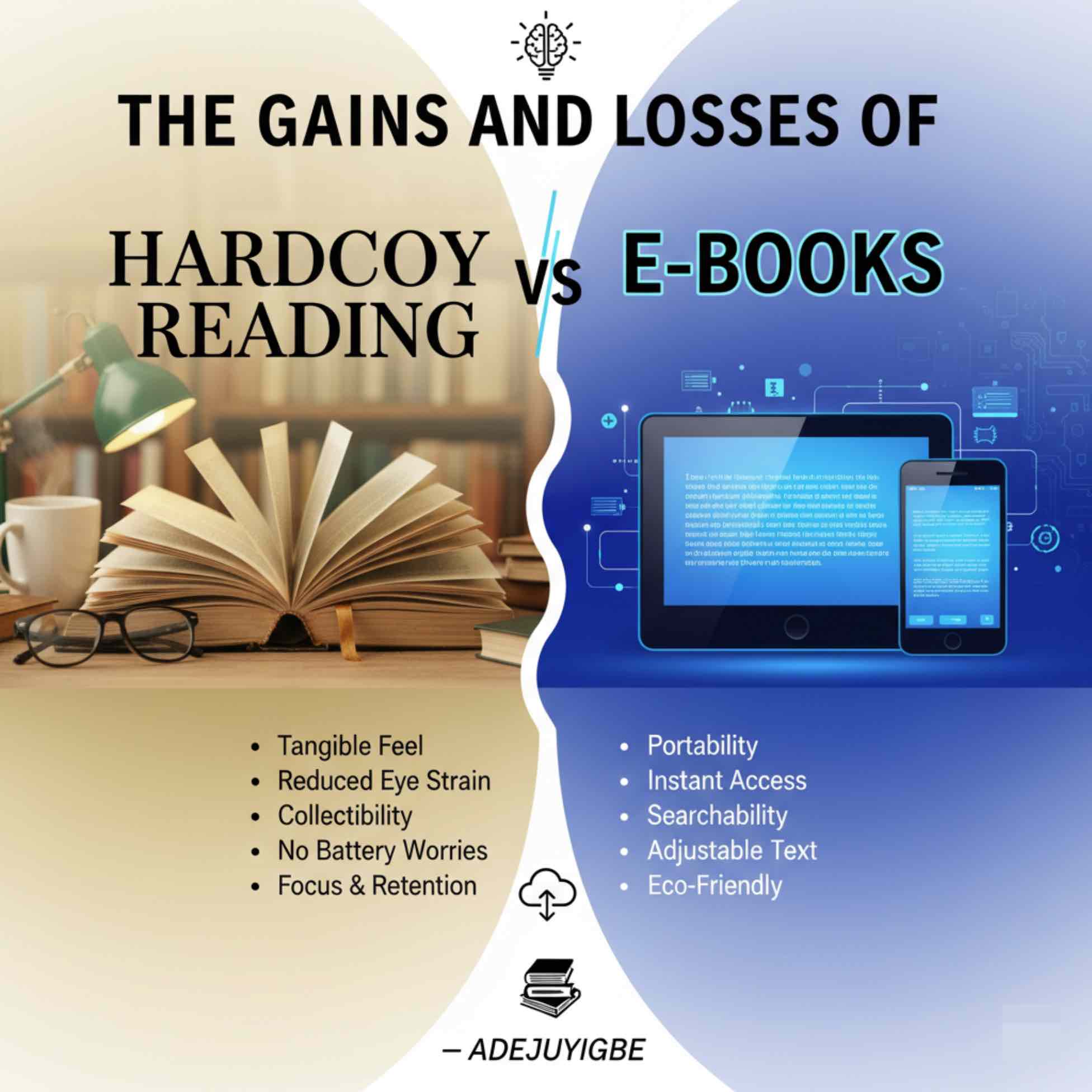
In today’s digital age, readers are often faced with a choice between traditional hardcopy books and modern e-books. Each format has its unique benefits and drawbacks, making the decision largely dependent on personal preferences and lifestyle.
Hardcopy books offer a tactile and sensory experience that digital books cannot replicate. The physical feel of turning pages, the weight of a book in hand, and even the smell of paper contribute to a nostalgic and immersive reading experience. Many readers also report better focus and information retention when reading from paper, as it minimizes distractions.
Additionally, hardcopy books require no power source and are easy to share, gift, or collect. However, they can be bulky, expensive, and less accessible to people with visual impairments or those who rely on reading aids.
On the other hand, e-books provide convenience and functionality. A single device can store thousands of books, making them ideal for travel and commuting.

Features such as adjustable text size, built-in dictionaries, highlighting tools, and even text-to-speech support make e-books especially accessible and user-friendly. They are often more affordable and can be purchased or downloaded instantly. However, prolonged screen time may cause eye strain, and the need for a charged device can interrupt reading.
Furthermore, reading on digital platforms can invite distractions from notifications or apps.
Ultimately, the choice between hardcopy books and e-books depends on the reader’s priorities—whether it’s the sensory pleasure and focus of physical reading, or the efficiency and features of digital access.
For many, a balanced combination of both formats offers the best of both worlds.
Summary Table:
| Feature | Hardcopy Books | E-Books |
|---|---|---|
| Portability | ❌ Bulky | ✅ Very portable |
| Eye Comfort | ✅ Less strain | ❌ More strain (screens) |
| Features (search, etc.) | ❌ None | ✅ Many built-in tools |
| Battery Required | ✅ No | ❌ Yes |
| Storage | ❌ Takes space | ✅ Digital storage |
| Reading Experience | ✅ Tactile, immersive | ❌ Less sensory interaction |
| Accessibility Features | ❌ Limited | ✅ Customizable text/audio |
| Cost | ❌ Often higher | ✅ Often cheaper |
