


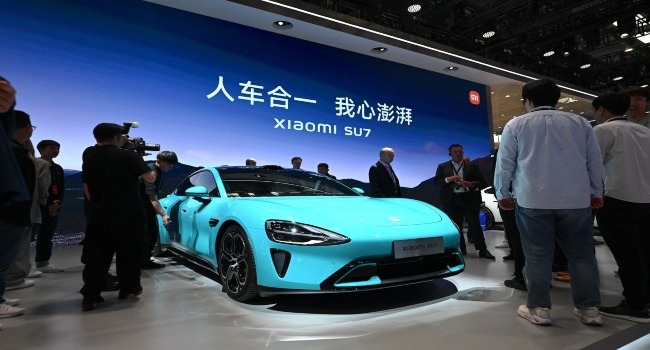
Chinese consumer tech giant Xiaomi will remotely fix a flaw in the assisted driving system on over 110,000 of its popular SU7 electric cars, the firm and regulators said Friday, months after a deadly crash involving the model.
The State Administration for Market Regulation said Xiaomi’s highway assisted driving system showed insufficient recognition, warning, and handling ability in some extreme driving conditions. That risked collision if drivers failed to promptly intervene, the regulator said.
Xiaomi will remotely upgrade standard SU7 models manufactured before August 30, 2025, the company said in a Q&A on the X-like social media platform Weibo. Remote recalls have become standard practice among automakers.
The announcement reignited online discussion of the fatal SU7 crash. Three students died in March after their Xiaomi SU7 hit a concrete barrier on an expressway in eastern Anhui province. Before the crash, the vehicle was in Xiaomi’s Navigate On Autopilot assisted driving mode, traveling at 116 kilometers per hour (72 miles per hour), according to a company statement at the time. While traveling on a highway section with roadworks, the vehicle detected an obstacle ahead, issued a warning, and handed control to the driver, Xiaomi said. But seconds later, the vehicle hit a barrier at around 97 km/h.

Footage posted online showed a car in flames on the highway and later the burned-out wreckage. Xiaomi founder Lei Jun said on social media he was “heavy-hearted” and that his company would cooperate with a police investigation.
The crash sparked discussion online about Xiaomi’s assisted driving functions, why the car caught fire, and whether the doors could be opened in an emergency. On Friday, a hashtag related to the recall was viewed more than 70 million times on X-like microblogging platform Weibo.
Launched in March 2024, the SU7 marked an ambitious foray by the consumer electronics and smartphone giant into China’s competitive EV market. By this July, Xiaomi had delivered more than 300,000 SU7s, Bloomberg reported, citing the state-owned China Automotive Technology and Research Center.
