


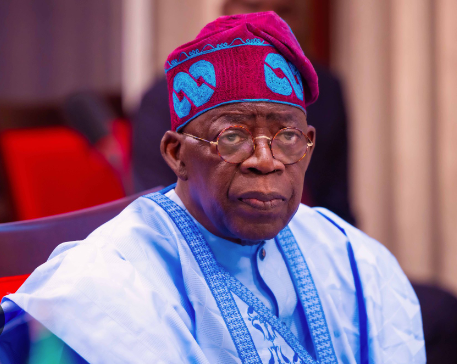
President Bola Tinubu has urged for a complete reform of the global financial architecture governing Africa’s mineral resources.
Represented by Vice President Kashim Shettima, Tinubu emphasized the need for African nations to finance their own mineral sectors and assert greater control over global supply chains. This move aims to safeguard African sovereignty and unlock the continent’s mineral economy for its benefit.
According to Tinubu, “We must take the bull by the horns in financing our future. Never again shall we wait for capital to trickle in. With sovereign funds, blended vehicles, and innovation tools like the Africa Mineral Token, Africa shall finance Africa.” He stressed that African nations must work together to build a stronger, more self-sufficient economy.
The President called for collective efforts from development partners, sovereign wealth funds, and private partners to support Africa’s mineral economy. He highlighted the importance of moving up the value chain by processing raw minerals into finished goods within Africa, promoting industrialization and job creation. Tinubu noted that “We must end the ignoble cycle of exporting rocks and importing finished goods. From beneficiation to green manufacturing, Africa must build industries on African soil.”

Tinubu commended countries that have taken steps to ban raw mineral exports, promoting domestic beneficiation. He cited examples of countries like Zimbabwe, Gabon, and Kenya, which have implemented or planned restrictions on raw mineral exports. “Nigeria, Uganda, Zimbabwe, Burkina Faso, Mali, Botswana, Gabon, and Ghana are already leading this new age of equal exchange, enforcing bans on the export of raw minerals to promote domestic beneficiation,” he said.
The President pledged Nigeria’s commitment to catalyzing a mineral-led renaissance under the Renewed Hope Agenda. He emphasized the need for African leaders to demonstrate collective leadership and work towards rewriting the story of Africa’s mineral economy. Tinubu called for a communiqué of clarity, a framework for action, and a spirit of unity to emerge from the dialogue.
The event was attended by key stakeholders, including the UN Assistant Secretary-General and Regional Director for Africa, UNDP, Ahunna Eziakonwa, and European Union Commissioner for International Partnership, Jozef Stkela. Eziakonwa emphasized the need for leaders on the continent to ensure partnerships that deliver technology transfer, beneficiation, and create jobs. She noted that “Rather than to be subjected to extreme exploitation, which is already happening, and being extracted without appropriate value.”
