


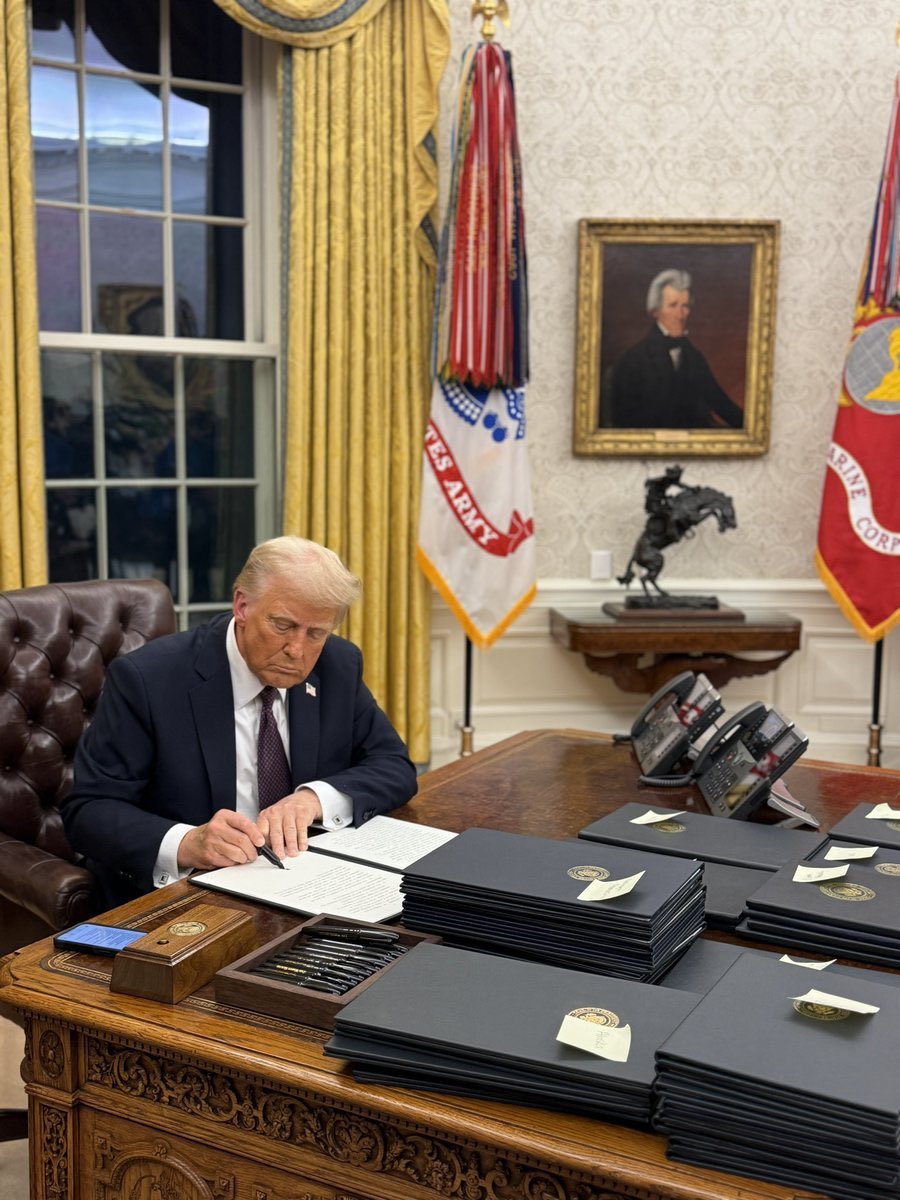
US President Donald Trump has announced a 100% tariff on all movies made outside the United States, sparking uncertainty in the Hollywood industry.
Trump claimed that the US movie-making business has been “stolen” by other countries, justifying the steep levy. “Our movie making business has been stolen from the United States of America, by other Countries, just like stealing ‘candy from a baby’,” he said in a social media post.
The move signals Trump’s willingness to extend protectionist trade policies into cultural industries, raising uncertainty for studios that depend heavily on international box-office revenue and cross-border co-productions. Studio executives are unsure how the tariff would be enforced, given the global nature of modern film production, financing, and post-production.
Shares of Netflix dropped 1.5% in early trading following the announcement. The impact of the tariff on the film industry remains unclear, with questions surrounding its implementation and potential consequences. “I’d never heard of a 100% tariff before,” film director Wes Anderson said, poking fun at the proposal at the Cannes Film Festival.

The tariff’s legal basis is also uncertain, with some arguing that films are a form of intellectual property and part of the global trade in services. Co-productions with foreign studios have become more common, adding to doubts about how such films would be classified.
Indian film makers are concerned about the potential impact on their industry, which earns a significant portion of its revenue from the US market. “Any increase in ticket prices resulting from these tariffs would directly affect audience turnout,” said producer Madhu Bhojwani.
The US film industry generates over 2.3 million jobs and $279 billion in sales, according to the Motion Picture Association. However, the industry is still struggling to regain momentum after the Hollywood strikes and the COVID-19 pandemic.
Trump’s tariff announcement has left many questions unanswered, including how the tariffs would be implemented and their potential consequences for the film industry. As the situation unfolds, industry stakeholders will be watching closely for further developments.
