


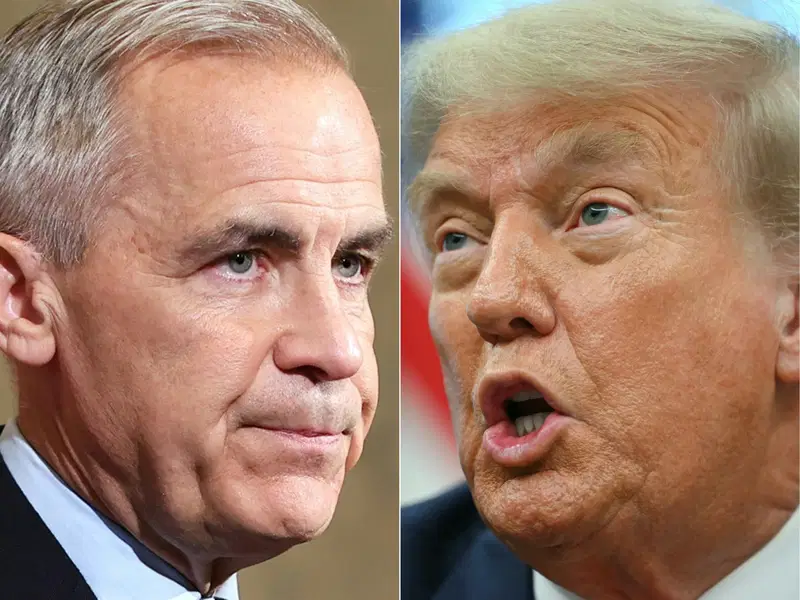
U.S. President Donald Trump has announced the termination of all trade negotiations with Canada, citing a controversial advertisement funded by the Ontario government.
The ad, which aired on major U.S. television networks, featured edited audio from a 1987 speech by former President Ronald Reagan criticizing tariffs and advocating free trade. Trump called the ad “fraudulent” and accused Canada of attempting to influence U.S. decisions regarding his tariff policies.
The advertisement reportedly cost around $75 million and was launched by Ontario Premier Doug Ford in response to tariffs imposed by the Trump administration on Canadian steel, aluminum, and automotive products earlier this year. Premier Ford defended the campaign as a necessary step to protect Ontario’s economy and industries, saying the ad aimed to highlight the economic risks posed by the U.S. tariffs.
The Ronald Reagan Presidential Foundation also weighed in, criticizing the ad for misusing Reagan’s words without authorization. The foundation emphasized that the edited clips misrepresented Reagan’s position, noting that while he supported free trade, he also recognized situations where tariffs were appropriate. A spokesperson stated, “This ad does not reflect Reagan’s actual stance on trade policy and should not be considered historically accurate.”

In response to Trump’s decision to end trade talks, Canadian Prime Minister Mark Carney expressed disappointment, emphasizing that Canada remains committed to fair and balanced trade relations. Carney added that Canada would explore alternative markets and strengthen partnerships with other nations to mitigate the impact of U.S. tariffs on Canadian businesses and workers.
Experts warn that this escalation could have far-reaching consequences for the United States-Mexico-Canada Agreement (USMCA) and broader economic relations between the two countries. Economists note that prolonged trade disruptions may affect supply chains, industry competitiveness, and consumer prices in both nations, potentially stalling economic recovery in key sectors.
As trade tensions mount, the diplomatic standoff underscores the fragile state of U.S.-Canada relations under Trump’s administration. Observers suggest that without careful negotiation, these developments could lead to prolonged disputes, forcing both governments to seek alternative strategies to protect their economic interests while preserving bilateral cooperation.
