


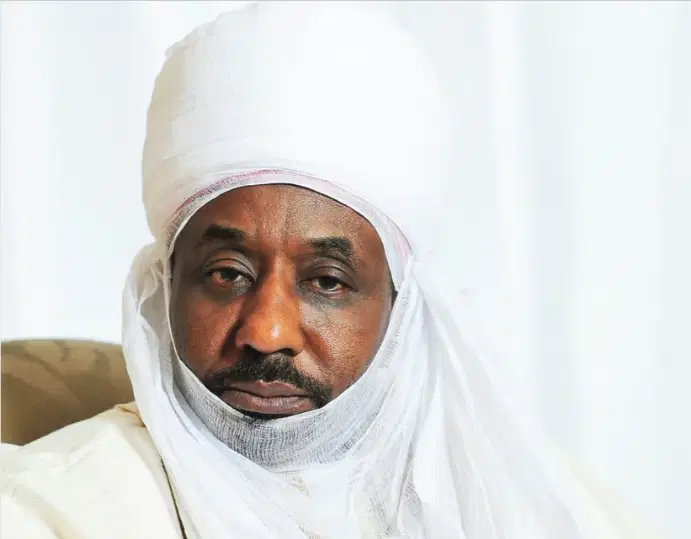
The Emir of Kano and former Governor of the Central Bank of Nigeria (CBN), Muhammadu Sanusi II, has called on ministers and presidential aides to stop excessive praise of the president and instead provide candid, constructive feedback.
He emphasized that sycophancy undermines governance, hinders national development, and prevents leaders from making informed decisions.
Speaking at the Oxford Global Think Tank Leadership Conference and Book Launch in Abuja, Sanusi highlighted that Nigeria’s leadership crisis is worsened by a culture where those who speak the truth are often labeled as enemies of the state. He criticized the tendency of officials to offer flattery during official functions rather than honest, practical advice, warning that such behavior weakens institutional integrity.
Sanusi commended the Tinubu administration for key economic reforms, including the removal of the fuel subsidy and the unification of exchange rates. He described these measures as “painful but necessary steps” and stressed that they would succeed only if accompanied by disciplined spending, proper oversight, and prudent management of resources.

The Emir also raised concerns about wasteful government practices, urging urgent steps to reduce unnecessary expenditures. He questioned the need for a cabinet of 48 ministers, pointing out the financial burden it imposes on the nation, and called on leaders to model sacrifice and live modestly while promoting accountability.
Highlighting the importance of integrity in public service, Sanusi warned that blind loyalty and sycophancy remain some of Nigeria’s greatest obstacles to progress. He urged government officials to prioritize national welfare over personal interests and to offer honest advice, even when it is unpopular or uncomfortable.
The conference, themed “Reimagining Leadership and Governance in a Changing Africa,” brought together policymakers, development experts, and academics. Participants discussed strategies for effective governance, institutional reforms, and ways to build a culture of accountability, courage, and service in public office.
