


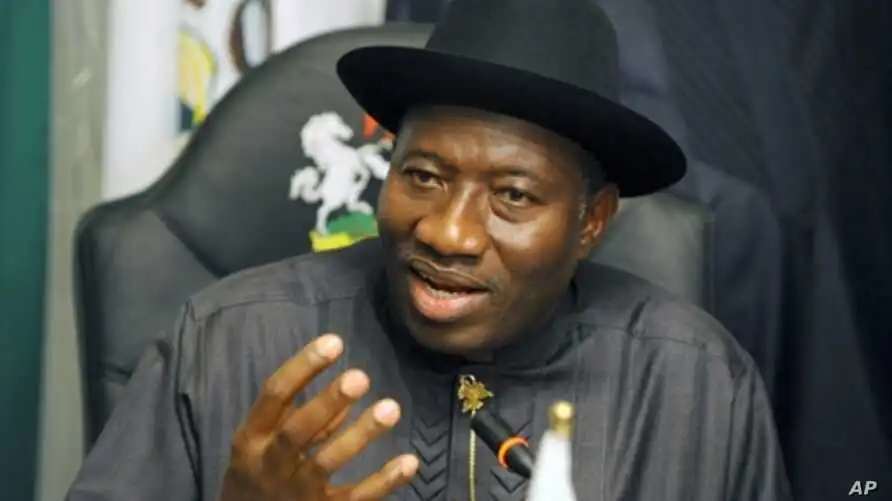
Former Ekiti State Governor, Kayode Fayemi, has criticized former President Goodluck Jonathan for lacking the political will to remove the fuel subsidy during his administration, despite support from key stakeholders.
Fayemi made this assertion while speaking at the Oxford Global Think Tank Leadership Conference in Abuja, where he discussed Nigeria’s economic policies and leadership challenges.
He revealed that many governors under Jonathan’s administration, including himself, were in favor of removing the subsidy, acknowledging its economic inefficiencies. However, he noted that Jonathan hesitated to take decisive action, which he believes was due to political considerations and fear of public backlash.
Fayemi emphasized that the failure to remove the subsidy during Jonathan’s tenure has had long-term implications for Nigeria’s economy. He argued that the subsidy regime perpetuated corruption and misallocation of resources, hindering the country’s development.

The former governor also reflected on the 2012 “Occupy Nigeria” protests, which were sparked by Jonathan’s attempt to remove the subsidy. He admitted that the protests were politically motivated, with opposition parties, including the Action Congress of Nigeria (ACN), leveraging the issue to undermine Jonathan’s administration.
Fayemi’s comments have reignited debates about the political dynamics surrounding fuel subsidy removal in Nigeria. Critics argue that political interests often overshadow national development goals, leading to policy indecision and economic challenges.
As Nigeria continues to grapple with the issue of fuel subsidy, Fayemi’s reflections serve as a reminder of the complexities and political maneuvering that influence critical policy decisions in the country.
