

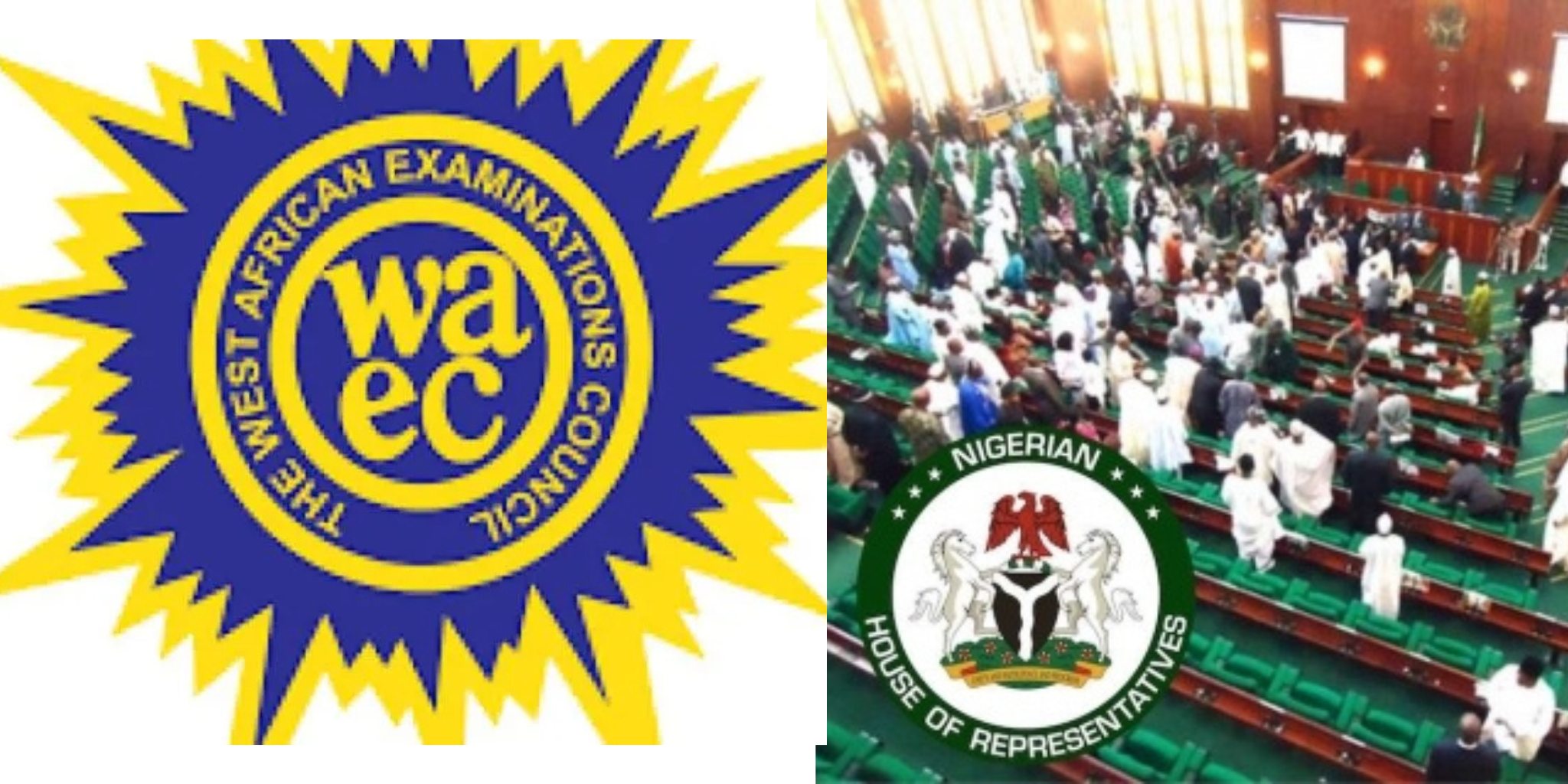
In a dramatic turn in Nigeria’s education reform efforts, the House of Representatives has directed an immediate suspension of the planned full transition to Computer-Based Testing (CBT), by WAEC for the 2026 sitting of the West African Senior School Certificate Examination (WASSCE).
What Triggered the Motion
The resolution followed a motion of urgent public importance moved by Kelechi Nwogu, during a plenary session of the House of Representatives. He warned of an impending “massive failure of candidates intending to write the 2026 WAEC examination using CBT… capable of causing depression and death of students.”
The Concerns Raised
Among the key concerns raised by the House:
-
Many schools, especially in rural areas, lack functional computers, stable electricity, internet access, and adequately trained computer‐teachers. The motion claims that over 25,500 schools that are expected to present candidates for 2026 may not be ready.
-
The transition from traditional pen-and-paper to full CBT is argued to be unrealistic in the timeframe given—since candidates must write multiple subjects including theory and practicals. The House fears the rushed move could lead to widespread failure, psychological distress, and social consequences.

-
The need for a phased preparation period was emphasised: budgetary provisions for infrastructure, teacher recruitment, standby generators, computer halls, internet access, and monitoring of private schools’ readiness were all cited as prerequisites.
The Reps’ Directive
According to the adopted resolution:
-
The Federal Ministry of Education and WAEC should immediately halt the planned 2026 CBT rollout.
-
The Committees on Basic Examination Bodies, Digital and Information Technology, Basic Education and Services, and Labour, Employment and Productivity are mandated to interface with relevant stakeholders (education, technology sectors), and report back within four weeks.
-
The 2026, 2027, 2028 and 2029 budgets should include provisions for infrastructure improvements – e.g., recruitment of computer‐teachers, construction of computer halls with internet, supply of standby generators, monitoring readiness of private schools. The minimum suggested implementation time for full rollout is the 2029-2030 academic session.
Contrasting the Government/WAEC Position
It is important to note that prior to this, the Federal Government and WAEC had publicly reaffirmed their commitment to full CBT adoption by 2026. For example:
-
In April 2025, the Minister of Education, Dr. Tunji Alausa announced a directive for WAEC and the National Examinations Council (NECO), to adopt CBT by 2026.
-
WAEC’s Head of the National Office, Amos Dangut, in September 2025, said that CBT roll-out had begun and that “…no candidate will be left behind in the transition.”
Thus, the Reps’ suspension sets up a direct tension between legislative concerns and executive/agency ambitions.
Implications & What Comes Next
The suspension has immediate and longer‐term implications for students, schools, and Nigeria’s examination system:
-
For Students: The delay offers relief to many who may not have had access to the required hardware/internet/training; but it also invites uncertainty around when the transition will actually take place.
-
For Schools and States: The directive places pressure on states, school boards, and private schools to ramp up infrastructure, teacher training and digital readiness ahead of any future rollout.
-
For WAEC & Reform Efforts: WAEC now must balance its institutional objective—to migrate to CBT to curb malpractice and enhance credibility—with the readiness realities on the ground.
-
For Policy and Budget: The instruction to include infrastructure in upcoming budgets means education funding will come under sharper scrutiny; states and federal agencies will have to show concrete plans, metrics of readiness, and timelines.
Key Takeaways
-
The Reps’ decision reflects pragmatic caution: the legislative arm is signalling that the ambition to migrate fully to CBT is laudable, but the timing is arguably too aggressive given current state of infrastructure.
-
The move highlights the digital divide in Nigeria’s education sector—especially between urban and rural, well-resourced and underserved schools.
-
It also emphasises the interconnectedness of educational reform: you cannot simply change the exam medium without ensuring teachers, equipment, power, connectivity and support systems are in place.
-
The suspension does not mean that CBT has been abandoned—it means the 2026 timeline is off, and a more measured, scheduled rollout is being demanded.
-
For stakeholders (students, parents, teachers, policy-makers), monitoring the follow-up reports from the mandated committees will be crucial to see how the transition is re-phased, funded, and executed.
Conclusion
The House of Representatives’ decision to suspend the 2026 rollout of CBT for the WASSCE by WAEC marks a significant recalibration in Nigeria’s exam reform path. While the goal of digitising examinations to enhance integrity remains valid, this latest move underscores the need for ground‐level readiness, equity of access, and realistic timelines.
As our country moves forward, the success of the transition will depend not just on the technology, but on whether every student—regardless of location—can effectively access and participate in the new system.
