

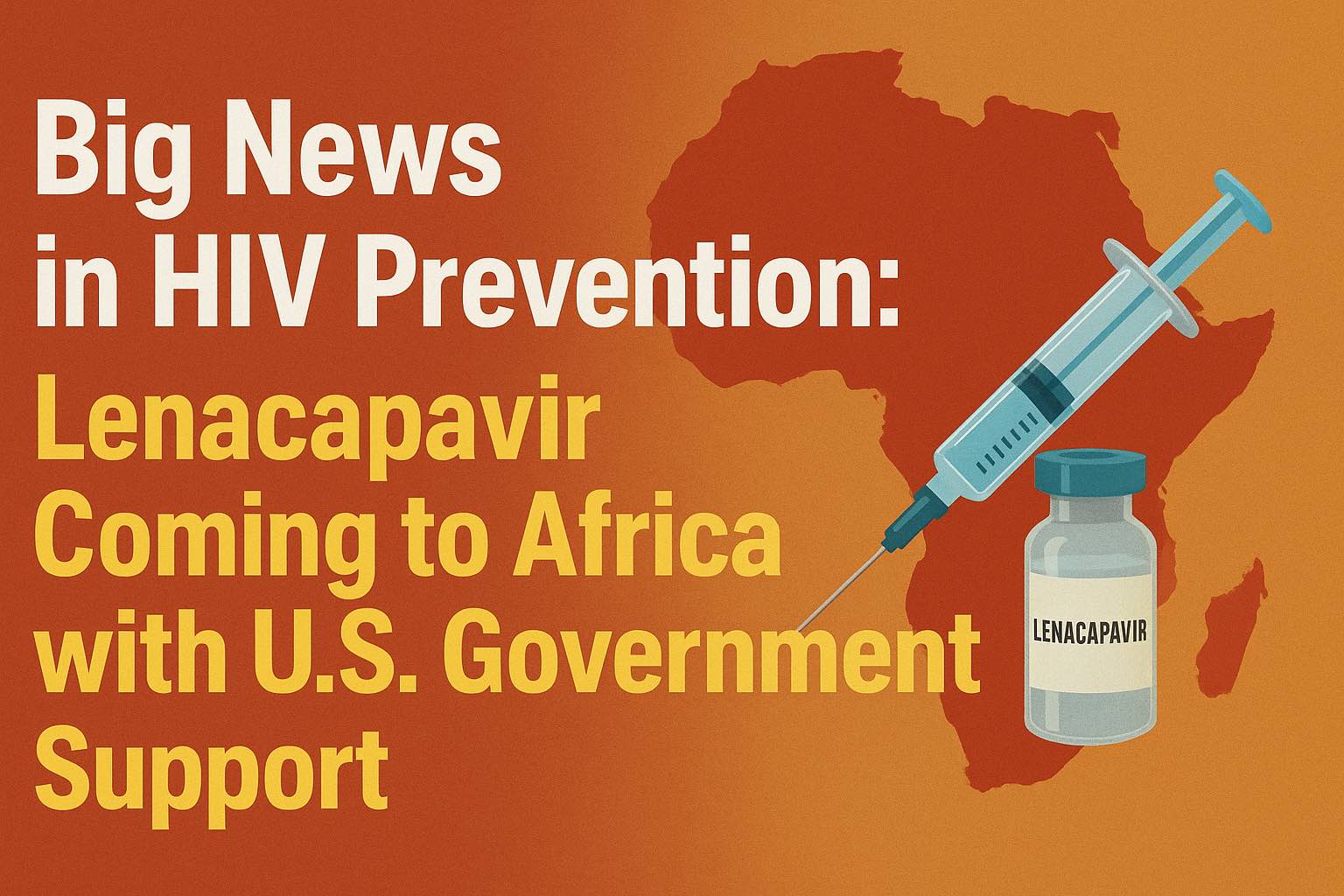
The delivery of Lenacapavir, a groundbreaking long-acting HIV prevention medication, to Eswatini marks a watershed moment in global health and a powerful illustration of what strategic public-private partnerships can achieve.
Announced today by the U.S. Department of State, Gilead Sciences, and the Global Fund, this initiative underscores the potential of American innovation combined with international collaboration to confront one of the world’s most persistent epidemics.
America First in Global Health: A New Approach
For decades, U.S. investments in Africa have saved millions of lives, yet critics argue they often foster dependency. Brad Smith, Senior Advisor at the Bureau of Global Health Security and Diplomacy, laid out the “America First Global Health Strategy,” which aims to:
-
Strengthen local health systems

-
Build market-driven partnerships
-
Leverage U.S. innovation for scalable solutions
This strategy signals a subtle but important shift: the U.S. is not just donating medicine—it is investing in sustainable health infrastructure that allows countries to gradually stand on their own.
Lenacapavir: A Game-Changer in HIV Prevention
At the center of this initiative is Lenacapavir, a twice-yearly injection that has shown near-perfect efficacy in preventing HIV. Eswatini, a country with one of the highest HIV prevalence rates, is the first to receive shipments, marking a milestone in public health delivery.
Unlike traditional daily oral PrEP, Lenacapavir’s six-month dosing schedule promises better adherence and less stigma for high-risk populations. With two million doses committed by mid-2027, this rollout could redefine prevention strategies across the continent.
Partnerships That Matter
The initiative underscores the importance of collaboration. Daniel O’Day, CEO of Gilead Sciences, emphasized that this is the first HIV medication to reach Sub-Saharan Africa the same year as U.S. approval—a feat made possible through partnerships with governments and the Global Fund.
Peter Sands, Executive Director of the Global Fund, highlighted that innovation alone isn’t enough; rapid deployment at scale is key. By pooling resources and expertise, these organizations aim to ensure that the most vulnerable populations gain timely access to life-saving treatment.
Challenges and Opportunities
Despite the promise, challenges remain. Supply is initially limited, with only 600,000 doses available in 2026, requiring careful prioritization. Countries must also navigate education, demand creation, and integration with existing PEPFAR-supported infrastructure to maximize impact.
Yet the initiative presents an opportunity for a paradigm shift. By prioritizing local systems and high-risk populations, the U.S. and its partners are moving from a model of dependency to one of self-reliance. This is a blueprint not just for HIV, but for future global health interventions.
Looking Ahead
Lenacapavir’s rollout represents more than a medical breakthrough; it is a statement about the future of global health collaboration. If executed effectively, it could:
-
Reduce new HIV infections in Sub-Saharan Africa
-
Empower countries to manage their own health priorities
-
Serve as a model for innovative public-private partnerships
The success of this initiative will depend on continued commitment, thoughtful distribution, and strong collaboration with local governments. If these pieces align, we may witness a pivotal moment in the fight against HIV—one where innovation meets sustainability, and lives are saved not just today, but for generations to come.
