

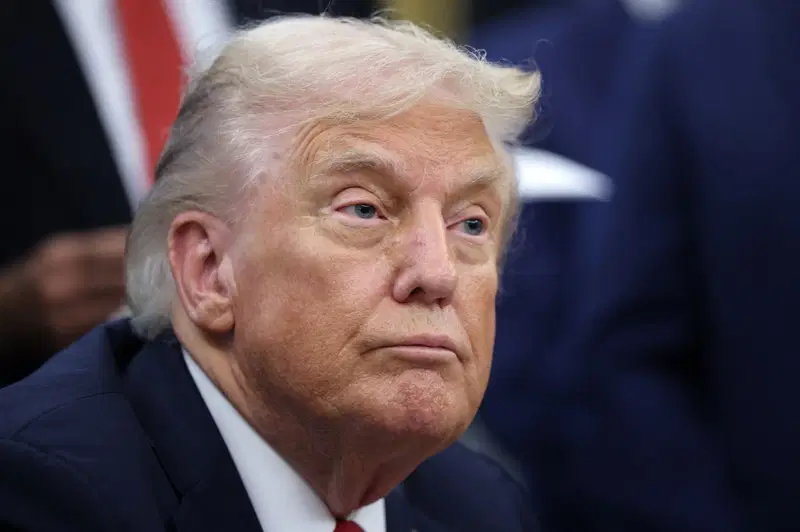
US President Donald Trump has signed an executive order initiating moves to classify specific chapters of the Muslim Brotherhood in Lebanon, Egypt and Jordan as foreign terrorist organisations.
The directive marks a significant shift in Washington’s approach to the pan Islamist movement, which was founded in Egypt in 1928 and later expanded across the Arab region. According to the order, the selected chapters “engage in or facilitate and support violence and destabilization campaigns that harm their own regions, United States citizens, and United States interests.”
The Muslim Brotherhood, established by Egyptian teacher Hassan al Banna, has long promoted the revival of Islamic principles in society as a way to counter Western influence. Over time, its role has varied from political participation to underground activism across several Middle Eastern countries. With the new US designation process now underway, authorities could freeze any assets linked to the named branches in the United States and restrict entry for individuals associated with the group.
Following Trump’s directive, the responsibility now falls to Secretary of State Marco Rubio and Treasury Secretary Scott Bessent to complete the procedures required to outlaw the targeted chapters. The Muslim Brotherhood is already banned in several countries, including Egypt and Saudi Arabia. Jordan also prohibited the group earlier this year, accusing it of stockpiling weapons and plotting to destabilize the kingdom, despite its longstanding popularity among segments of the Jordanian public.

Jordan’s government has previously tolerated the group’s activities even after the country’s top court ruled for its dissolution in 2020. However, the latest allegations and security concerns prompted a firmer stance. In Egypt, the organisation has been outlawed since 2013, when then president and Brotherhood leader Mohamed Morsi was removed from office in a military coup led by Abdel Fattah al Sisi, who has remained in power ever since.
Reactions to the US president’s move have emerged from international stakeholders, including Israel. Danny Danon, Israel’s Ambassador to the United Nations, commended the decision, saying, “This is an important decision not only for the State of Israel but also for neighboring Arab countries that have suffered from Muslim Brotherhood terrorism for decades.” His comments reflect a broader regional concern over the group’s influence and activities.
In Europe, similar apprehensions have surfaced. Earlier this year, French President Emmanuel Macron directed his government to draw up measures aimed at curbing the spread and perceived influence of the Muslim Brotherhood in France. The coordinated actions across different countries suggest growing international scrutiny of the organisation’s role in political and security matters.
