


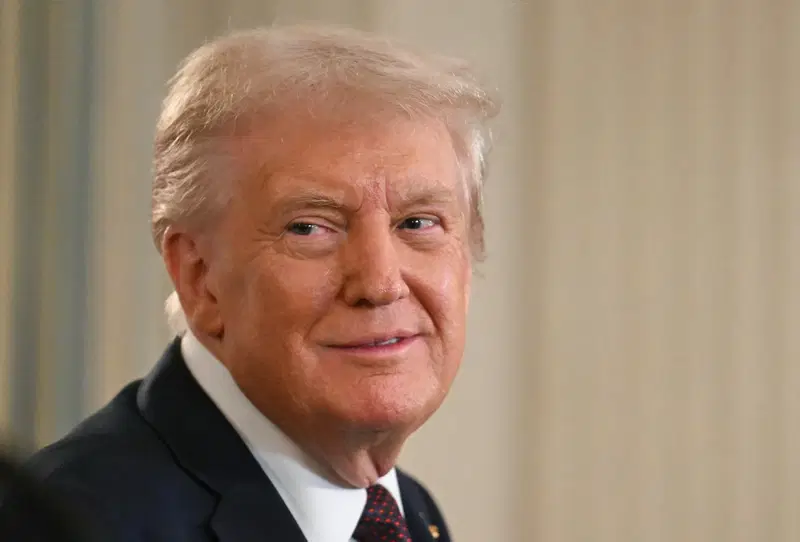
US President Donald Trump announced on Tuesday that he is sending his envoy, Steve Witkoff, to Moscow next week to meet Russian President Vladimir Putin as part of efforts to finalize a deal to end the war in Ukraine.
Trump posted on his Truth Social platform that there were “only a few remaining points of disagreement,” though European leaders remain skeptical and Russian attacks continue across Ukraine.
Trump expressed hope to meet “soon” with both Putin and Ukrainian President Volodymyr Zelensky, emphasizing it would be “ONLY when the deal to end this War is FINAL or, in its final stages.” He later told journalists aboard Air Force One that his son-in-law, Jared Kushner, might accompany Witkoff to Moscow to support the negotiations.
The peace process is built around a US-drafted 28-point proposal, which reportedly originated from a discussion between Witkoff and Putin’s foreign policy advisor. According to a transcript obtained by Bloomberg, Witkoff recommended creating a 20-point plan similar to previous agreements in Gaza, urging Putin to present it to Trump. The updated 28-point plan has since been revised to include more of Kyiv’s interests, with officials describing the amendments as “significantly better.”

Despite optimism from US negotiators, including Dan Driscoll who said the talks are “going well,” European leaders have voiced concerns. French President Emmanuel Macron warned that “there is clearly no Russian willingness” for a ceasefire or to accept the new, more Ukraine-friendly proposal. Meanwhile, the conflict persists, with Russia launching strikes on Zaporizhzhia that wounded 18 people and damaged multiple apartment blocks, and deadly attacks hitting Kyiv overnight.
The initial peace plan faced criticism for favoring Moscow, including restrictions on Ukraine joining NATO and the potential ceding of territory. The revised plan, however, addresses some of Kyiv’s concerns, including raising the cap on Ukraine’s future military forces from 600,000 to 800,000 personnel. Ukrainian negotiator Rustem Umerov said there is “common understanding on the core” of the deal, but remaining details require direct talks.
With Russia still occupying roughly a fifth of Ukrainian territory, the war continues to cause widespread devastation and displacement. British Prime Minister Keir Starmer cautioned that “there’s still a long way to go and a tough road ahead.” Ukrainian soldiers, like Sergeant Ivan Zadontsev, acknowledged the need for negotiations to achieve a temporary respite from the ongoing conflict.
