


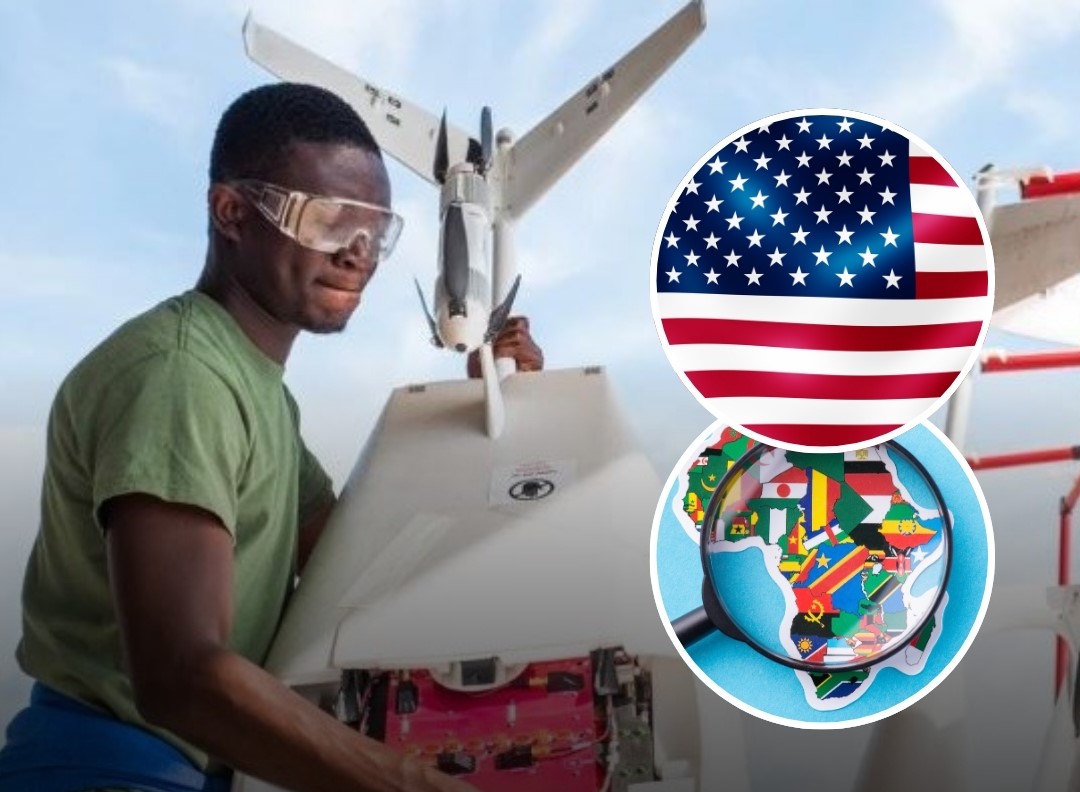
Introduction: A New Model of Global Health Assistance
At the U.S. State Department’s Digital Press Briefing on Zipline Drone Delivery and the America First Global Health Strategy, senior U.S. officials and private-sector innovators unveiled what may be the most consequential restructuring of American global health assistance in decades.
The partnership between the U.S. Government and Zipline Africa is not merely a technological upgrade — it represents a strategic ideological pivot: from decades-long aid dependency to short-term catalytic investments designed to drive self-sufficiency, local ownership, and economic growth in African health systems.
Key Voices at the Briefing
Senior Bureau Official & Acting Global AIDS Coordinator, Bureau of Global Health Security and Diplomacy, Jeffrey Graham articulated the philosophical and operational heart of the America First Global Health Strategy: targeted U.S. investments that “end the culture of dependency” and enable African governments to “run their own health systems within five years.”
Caitlin Burton – Chief Executive Officer of Zipline Africa, presented the human and technological face of the partnership — from life-saving case stories to large-scale health metrics showing reductions in maternal mortality, malaria complications, malnutrition, and missed treatments.

The New Landscape: Why Zipline Matters
Zipline’s model — autonomous delivery drones flying 24/7 to distribute medical products on demand — presents African governments with a leapfrog opportunity. Much like bypassing landline telephony for mobile networks, African health systems can bypass century-old supply-chain limitations and move directly into AI-enabled automated logistics.
Burton emphasized that Zipline is not just a transport solution but a full-stack medical supply-chain system whose reliability rewrites how governments deliver care. From increased treatment rates to facility-visit surges, Zipline’s impact shows that infrastructure innovation can be a direct driver of improved population health.
Strategic Alignment: Why the U.S. Is Backing This Model
During the press briefing, Graham repeatedly stressed that the partnership supports:
-
U.S. manufacturing and job creation
-
American technological leadership
-
Private-sector–led foreign assistance
-
Reduced long-term U.S. spending abroad
-
Self-sufficient African health systems
In essence, the U.S. gets to strengthen its geopolitical position while advancing concrete, measurable public health gains.
Questions From the Press: Spotlight on Key Inquiries
Two of the most precise and strategically relevant questions came from Adejuyigbe Adegoke Francis – Publisher, Fishe News (Nigeria). His queries probed into deployment visibility and technological impact — issues central to public trust, policy clarity, and future health metrics.
Q: Adejuyigbe Adegoke Francis
“Which Nigerian health facilities… will benefit from the Zipline drone delivery system?”
Summary of Response
Caitlin Burton clarified that:
-
The selection of facilities is driven entirely by the Nigerian Government.
-
Initial focus is on BHCPF (Basic Health Care Provision Fund) facilities, designed as one high-functioning primary-care center per ward.
-
Nigeria plans 14,000–17,000 such facilities, roughly half already operational.
-
Zipline’s first operational priority is integrating with and serving these BHCPF facilities, ensuring reliable supply chains.
-
Expansion will later cover additional state and community health facilities.
Editorial Analysis
This question cuts to the heart of public accountability: Nigerians want clarity on where and how this multiyear, multi-country investment will be felt.
The response highlights government-led prioritisation, which reinforces national ownership and aligns with the America First strategy’s push for local leadership.
Q: Adejuyigbe Adegoke Francis
“What impact will American-made AI robotics and autonomous logistics technologies have on overall health outcomes in Africa?”
Summary of Response
Jeff Graham and Caitlin Burton jointly responded, noting that:
-
This technology enables leapfrogging over outdated infrastructure.
-
The most difficult part of health logistics — last-mile delivery — is overcome through autonomous drones.
-
AI-enabled systems create uninterruptible, highly efficient supply chains.
-
Zipline’s model shifts health systems away from measuring logistics inputs to measuring health outcomes:
-
Higher treatment rates
-
Reduced maternal mortality
-
Decreased severe malaria cases
-
Dramatically improved reliability of life-saving supplies
-
Editorial Analysis
Adegoke’s second question advanced the conversation from logistics to outcomes — a critical reframing. The answer underscored that the real value lies not in drones themselves, but in the system-wide, population-level health gains they unlock. That reframing aligns with global trends pushing public health systems to embrace data-driven, automation-enabled care.
Sustainability: A Core Theme Repeated Throughout
Both Graham and Burton reinforced that:
-
The U.S. is making short-term, catalytic investments.
-
African governments will fund and run the systems long-term.
-
Zipline’s infrastructure integrates directly into domestic budgets, creating:
-
local jobs
-
technology transfer
-
tax revenue
-
stable supply networks
-
This ensures that the initiative will not fade when U.S. funding cycles end.
Broader Geopolitical Implications
The briefing made clear that this initiative is partly about keeping the U.S. a partner of choice at a time when global competition — especially from other major powers investing heavily in Africa — is escalating.
By backing advanced U.S.-made technologies that African governments are already embracing, the U.S. strengthens:
-
its diplomatic influence,
-
its private-sector footprint,
-
and its strategic presence in key regions.
Conclusion: A Transformational Moment
The America First Global Health Strategy, paired with Zipline’s cutting-edge infrastructure, marks a shift toward efficient, locally owned, tech-forward public health systems. It is not just an overhaul of distribution logistics — it is a redefinition of what 21st-century global health assistance can look like.
And through the sharp, grounded questions posed by journalists like Adejuyigbe Adegoke Francis, the public gets a clearer view of how these promises will translate into real-world outcomes for millions across Africa.
