

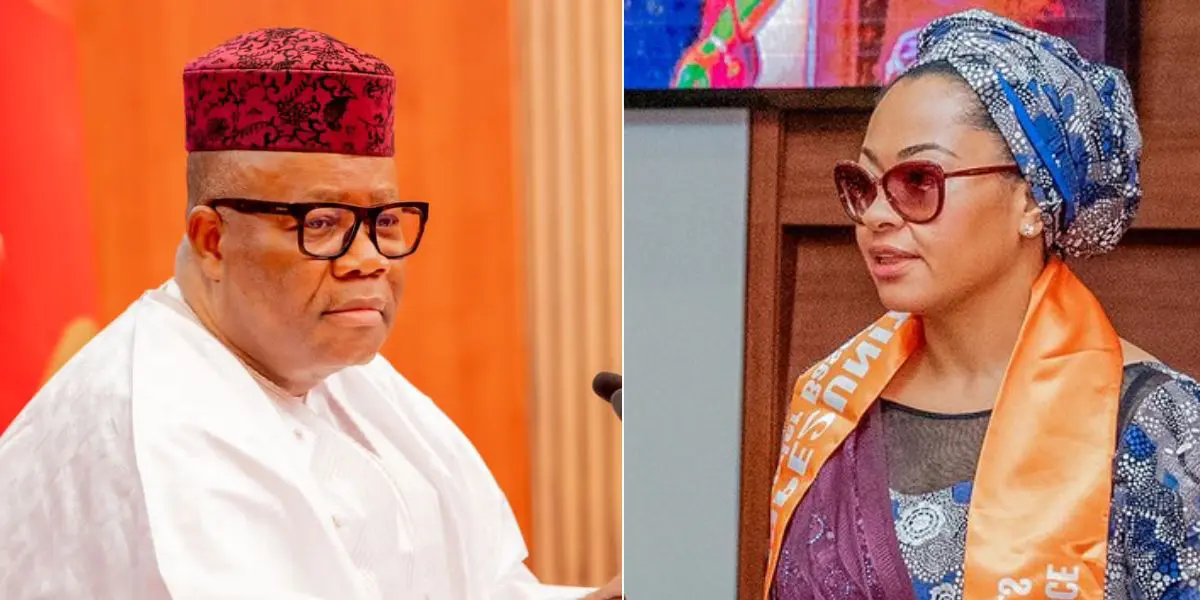
Nigeria’s political arena erupted on Friday, 5 December 2025, as the Senate President, Godswill Obot Akpabio, launched a staggering ₦200 billion defamation suit against Senator Natasha Akpoti-Uduaghan—an escalation that now sets the stage for one of the most consequential legal face-offs in recent memory.
The Allegations
According to filings before the High Court of the Federal Capital Territory (FCT), Akpabio alleges that Senator Akpoti’s televised and online interviews amounted to a calculated smear campaign, accusing him of sexual harassment.
His legal team argued that the allegations—broadcasted across major media platforms and amplified by millions online—subjected the Senate President to “national humiliation, ridicule, and grave reputational injury.”
Akpabio is seeking sweeping remedies:
-
₦200 billion in financial damages,

-
Deletion of all online publications containing the allegations,
-
Compulsory apologies to be aired repeatedly on national television, radio, and digital platforms.
Court records indicate that after initial attempts to serve Senator Natasha Akpoti directly failed, a judge authorised substituted service through the Clerk of the National Assembly on 6 November 2025, clearing the way for the case to proceed.
Natasha Akpoti-Uduaghan Responds
In her response, Senator Natasha Akpoti-Uduaghan confirmed receipt of the lawsuit and expressed readiness for the legal battle. She noted that she had previously been prevented from presenting her petition to the Senate Committee on Ethics and Privileges, as Senate leadership claimed a related matter was already before the courts. According to her, this decision effectively shielded Akpabio from scrutiny within the Senate.
“With the court now in play, I finally have the platform I was denied,” she said.
“I’m ready to prove everything,” she continued, insisting she will show that she was sexually harassed—and that her refusal to acquiesce triggered “sustained political intimidation and retaliation.”
Her message to the Senate President was unambiguous:
“See you in court, Godswill Akpabio.”
Background
The allegations trace back to early 2025, when Natasha publicly accused Akpabio of sexual advances during interviews on an online appearances. Following her complaint, the Senate suspended her for six months. Akpabio, meanwhile, denied the allegations, insisting he holds utmost respect for women.
The dispute has expanded into a web of related lawsuits, including claims by Akpabio’s wife for separate defamation damages, illustrating the complexity and high stakes of the matter.
Implications for Nigeria’s Political System
Beyond personal reputations, the trial is poised to test our national political institutions:
-
Judicial Precedent: The case could influence how sexual harassment and defamation claims are handled against high-ranking politicians.
-
Power Dynamics: It highlights the dangers of authority being leveraged to silence victims and suppress accountability.
-
Public Trust: The outcome may affect citizens’ confidence in the legislature and political institutions.
-
Media and Reputational Management: The demands for deletion of content and public apologies underscore tensions between freedom of expression and protection from reputational harm.
What to Watch
-
FCT High Court proceedings, including witness lists, documents, and media evidence.
-
Whether Natasha’s sexual harassment claims can withstand judicial scrutiny.
-
Public, civil society, and political reactions regarding accountability, gender, and power.
-
Potential reforms in anti-harassment mechanisms within Nigeria’s National Assembly and other institutions.
The explosive legal battle now heads into full litigation, drawing nationwide attention as both sides prepare evidence, witnesses, and media records.
All eyes are on the FCT High Court, where this landmark confrontation is set to unfold—potentially reshaping Nigeria’s approach to sexual misconduct, defamation, and political accountability at the highest levels of public office.
