

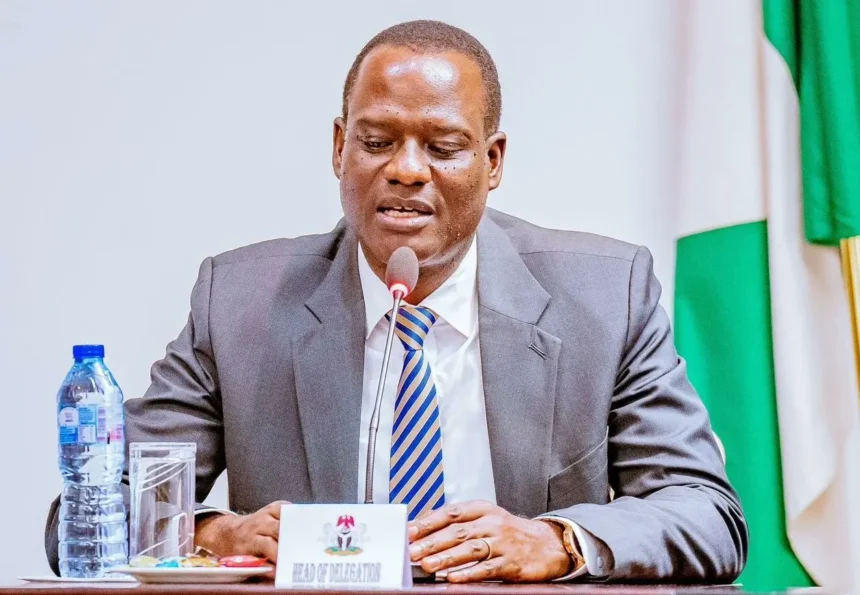
Taiwo Oyedele, Chairman of the Presidential Fiscal Policy and Tax Reforms Committee, has stated that the new tax reform laws will mandate commercial banks to report accounts with a quarterly turnover of ₦25 million or more to the tax authorities.
Speaking during a media parley on Friday, Oyedele explained that the tax reforms raised the reporting threshold from ₦10 million to ₦25 million per quarter for individuals, which translates to ₦100 million for companies.
“What this one has done is that it has raised the threshold for reporting your bank account. I think it was ₦10 million before, but it is now ₦25 million, which translates to ₦100 million,” Oyedele said.
TIN Linking Requirement
Oyedele highlighted that the requirement for individuals and businesses to link their Tax Identification Number (TIN), to bank accounts was first introduced under the Finance Act of January 13, 2020, covering accounts used for business or income purposes, including salary earners.
Since then, many Nigerians have been complying voluntarily with the TIN requirement. Oyedele noted that this provision has now been embedded in the new tax reform laws.

“But because the level of tax awareness in Nigeria is so poor, people are finding out so many things for the first time. They just assume that the new tax law is introducing them. This one is actually not,” he said.
He clarified further that the current tax law already requires banks to file customers’ information, but the new law makes it mandatory for accounts exceeding ₦25 million per quarter (individuals), or ₦100 million (companies).
No Direct Withdrawal From Accounts
Oyedele also addressed public concerns that the new tax rules could allow authorities to withdraw money directly from personal or business accounts.
“Even if you have N1 billion in the account, nobody can debit your bank account. That’s why I took you through the process: if you’re not paying your taxes, they write to you, you respond, there is a final assessment, and then you go to court. It’s a long process,” Oyedele said.
He emphasized that neither the Federal Inland Revenue Service (FIRS), the Central Bank of Nigeria (CBN), nor banks have the authority to unilaterally withdraw funds from accounts.
“No one has the power to debit your account. In the law, there is what we call power of substitution. In some countries, they use a garnishee order… This is the extreme case when the bank is informed that the affected party owes money to the government and has refused to pay,” he explained.
Oyedele reassured Nigerians:
“Nobody is taking any amount from their bank account. Whether your account has 50k or 50 million, nobody is taking anything from the bank account.”
Implementation Timeline
The federal government gazetted Nigeria’s new tax reform laws on September 9, with implementation set to begin January 1, 2026. The reforms aim to streamline tax administration, expand the tax base, and increase compliance, while still safeguarding the rights of taxpayers.
