

A civil society group has sounded a stern alarm, alleging a covert plan to arrest and intimidate prominent opposition figures ahead of the 2027 general elections. The warning was issued on Tuesday in Abuja by Adekunle O. Adebayo, a public affairs analyst and the group’s coordinator, who claimed that the reported strategy risks undermining democratic norms and could edge the country toward one-party dominance.
Allegations of Targeted Arrests
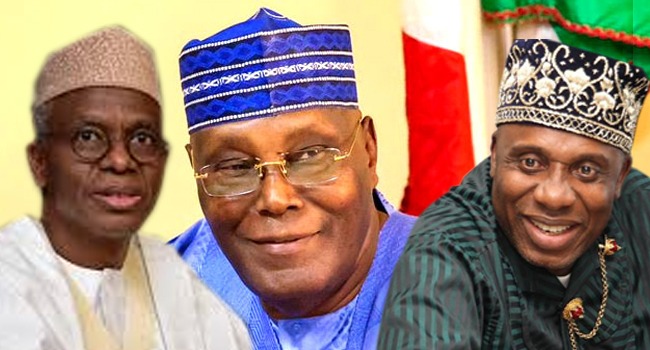
According to the statement from the group—operating under the platform “Bí a bá pa ìtàn mọ́, ìtàn á pa wa” (When truth is suppressed, it eventually destroys those who suppress it)—several high-profile opposition figures have purportedly been marked for arrest. These include:
-
Atiku Abubakar, former Vice President of Nigeria
-
Rotimi Amaechi, former Minister of Transportation

-
Nasir el-Rufai, former Governor of Kaduna State
The group also named other political figures allegedly targeted, such as Isa Ali Pantami, Rauf Aregbesola, and Kashim Ibrahim Imam, among others.
Claims of a Covert Security Directive
The alarm raised by Adebayo and his colleagues indicates that the purported arrests are not spontaneous law-enforcement actions but part of a coordinated multi-agency directive. He alleged that this directive was secretly orchestrated from the Office of the National Security Adviser (ONSA), and is being executed by a task force involving anti-corruption, intelligence, and financial crime agencies.
The group described this alleged initiative not as genuine law enforcement but as a political project aimed at weakening opposition forces and disrupting emerging coalition platforms.
Broader Strategy Allegations
In addition to the arrests, the statement outlined what it described as broader tactics in the alleged plan, including:
-
Selective and prolonged detentions without charge
-
Coercing politically exposed persons to defect to the ruling party
-
Interference with legitimate opposition meetings
-
Engineered intra-party factionalism
-
Use of litigation to exhaust opposition resources
These actions, the group warned, effectively transform the justice system into a tool of political advantage rather than one of equal application under the law.
Constitutional Rights and Democratic Implications
The group stressed that if these plans are carried out, they would violate fundamental provisions of the 1999 Constitution (as amended), particularly rights to personal liberty, freedom of association and expression, equality before the law, and judicial independence.
The alarm was not only directed internally but also appealed to civil society organizations, Nigerians, and the international community to remain vigilant and monitor developments closely to protect democratic institutions. According to the group, failing to check these alleged tactics could see Nigerian democracy exist only in form while real power consolidates through coercion and selective justice.
Context and Political Climate
These allegations arrive at a sensitive moment in Nigeria’s political calendar, as major opposition figures seek to consolidate platforms ahead of the 2027 elections. Some of the named individuals—especially Atiku Abubakar, Amaechi, and el-Rufai—have been active voices in opposition coalition efforts and criticisms of the current administration, raising the stakes of the claims.
Atiku, for instance, has in the past publicly condemned the detention of fellow opposition figures by federal agencies as politically motivated—a backdrop that underscores the deep mistrust between opposition forces and federal institutions.
