


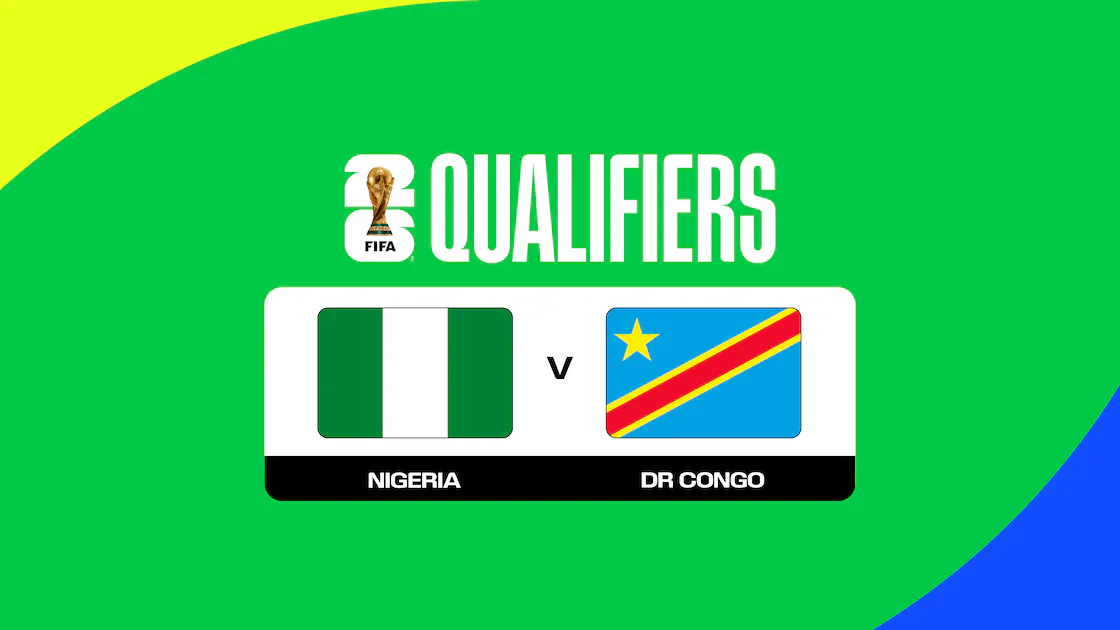
Nigeria’s hopes of reaching the 2026 FIFA World Cup have taken a dramatic turn off the pitch, following a formal petition filed by the Nigeria Football Federation (NFF), against the Democratic Republic of Congo (DR Congo), over alleged player ineligibility.
With global attention fixed on the case, confusion intensified this week after unconfirmed reports claimed that FIFA had already ruled in Nigeria’s favour — a claim the NFF has firmly denied.
Here’s everything to know about the developing situation.
The Background: A Crushing Playoff Defeat
Nigeria’s Super Eagles were eliminated from the decisive African qualifying playoff after losing to DR Congo over two legs. The tie ended level on aggregate before DR Congo triumphed via a penalty shootout, advancing to the next stage of qualification for the 2026 World Cup.

Rather than accept elimination, the NFF filed an official complaint with FIFA, challenging the eligibility of certain DR Congo players who featured in the match.
The Core of Nigeria’s Petition
At the heart of Nigeria’s case is the allegation that DR Congo fielded players who were not fully eligible under FIFA’s nationality and association-switch regulations.
Dual Nationality Concerns
Nigeria argues that some players involved held dual nationality at the time of the match. DR Congo’s domestic laws reportedly do not generally recognise dual citizenship for adults, raising questions about the legitimacy of those players’ national status.
FIFA Clearance Procedures
Under FIFA statutes, players switching national associations must complete a formal approval process before representing a new country. Nigeria’s petition contends that this process may not have been properly completed in certain cases.
The NFF’s argument is not merely about dual citizenship itself, but whether all regulatory steps required by FIFA were followed before the players took the field.
Confusion Over FIFA’s Ruling
On Monday, unconfirmed reports began circulating on social media and some online platforms claiming that FIFA had ruled in Nigeria’s favour and that the Super Eagles would be reinstated.
However, the NFF quickly moved to dismiss those reports.
Ademola Olajire, Director of Communications for the Nigeria Football Federation, clarified that:
“There is no decision from FIFA at this time. Any claims that a ruling has been made are false.”
As of now, FIFA has not officially announced any verdict regarding the petition as filed by NFF.
What Happens Next?
FIFA’s Disciplinary Committee is expected to review:
-
Documentation submitted by both football federations
-
Player nationality records
-
Association-switch approvals
-
Compliance with FIFA eligibility statutes
Until FIFA makes a formal announcement, both teams remain in suspense.
Possible Outcomes
Petition Upheld
If FIFA determines DR Congo fielded ineligible players:
-
The match could be forfeited.
-
Nigeria could be awarded a technical victory.
-
The Super Eagles might be reinstated into the qualification pathway.
Petition Dismissed
If FIFA finds no breach:
-
DR Congo’s victory stands.
-
Nigeria’s 2026 World Cup campaign officially ends.
Partial Sanctions
FIFA could impose administrative penalties without altering the match result, depending on its findings.
Broader Implications
This case underscores the increasing complexity of nationality regulations in modern international football, where many players possess multiple citizenship options and switch associations under evolving FIFA rules.
It also highlights how World Cup qualification battles are no longer decided solely on the pitch, but sometimes in legal and regulatory chambers.
The Current Reality
Despite widespread speculation, there is no confirmed FIFA decision yet. Claims that Nigeria has already won the case are premature and officially denied by the NFF.
Until FIFA issues a formal ruling, both Nigeria and DR Congo — along with millions of fans — must wait for clarity on who will move forward in the race to the 2026 FIFA World Cup.
The drama, for now, remains unresolved.
