


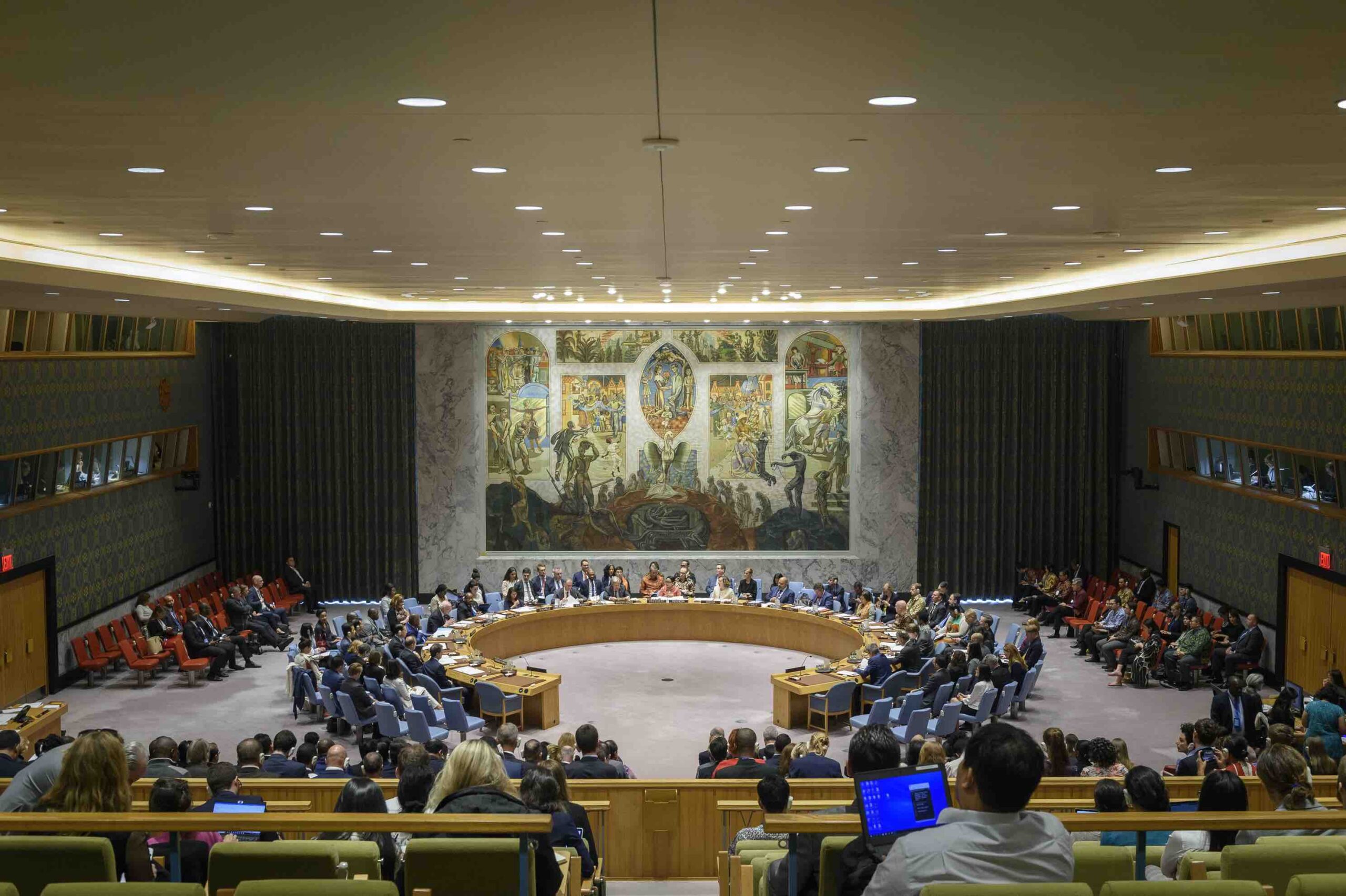
At a February 25, 2026 briefing of the United Nations Security Council, Andrew Curiel, Deputy Political Coordinator at the United States Mission to the United Nations, delivered remarks underscoring both progress and persistent challenges in the Central African Republic (CAR).
Speaking before the Council, Curiel thanked the briefers for their insights and highlighted what he described as a “key milestone” in the country’s stabilisation process: the historic elections held in December.
These elections, conducted with the support of the United Nations Multidimensional Integrated Stabilisation Mission in the Central African Republic (United Nations Multidimensional Integrated Stabilisation Mission in the Central African Republic), marked a significant step toward consolidating democratic governance and peaceful political processes.
The successful organisation and implementation of the elections demonstrated the CAR government’s commitment to political dialogue over armed confrontation—an important shift in a country long affected by cycles of violence and instability.

Progress on the 2019 Political Agreement
Curiel emphasized advances in the peace process, particularly regarding implementation of the 2019 Political Agreement for Peace and Reconciliation.
Of the 14 armed groups that signed the agreement:
-
Thirteen are now formally demobilising.
-
Nine have already been considered completely dissolved and disarmed.
This development represents tangible progress toward dismantling non-state armed structures that have historically challenged state authority. Demobilisation and disarmament are foundational to long-term stability, as they reduce the risk of renewed conflict and open pathways for reintegration and reconciliation.
In addition, restoration of state authority has accelerated. According to the briefing, deployment of public officials has increased by 65 percent since 2024—an indicator that government institutions are steadily returning to previously underserved or contested regions.
MINUSCA’s Evolving Role
The peacekeeping mission, MINUSCA, has been central to these gains. From providing election security to facilitating disarmament efforts and protecting civilians, the mission has played a multidimensional role in CAR’s stabilisation.
However, Curiel stressed that success now demands a strategic reassessment.
As conditions improve, MINUSCA must:
-
Consolidate security gains.
-
Refocus resources on core security functions in priority areas.
-
Transition responsibilities to the CAR government in a timely and sustainable manner.
This recalibration is not a sign of retreat but of maturation. The ultimate objective of any peacekeeping mission is not permanence but self-sufficiency—building national capacity to the point where international intervention is no longer required.

Persistent Security Challenges
Despite measurable progress, the situation remains fragile in certain regions.
Curiel expressed concern about:
-
Lingering insecurity in southeastern CAR.
-
Spillover effects from the conflict in neighboring Sudan.
-
Ongoing contestation of state authority in remote areas.
These dynamics illustrate the interconnected nature of regional conflicts and the importance of border security. Armed actors, trafficking networks, and displaced populations can exacerbate instability, particularly where state presence is limited.
Concentrating MINUSCA’s resources in these priority areas, Curiel argued, will enable the mission to more effectively counter emerging threats and protect recent gains.

The Imperative of Security Sector Reform
Looking beyond immediate stabilization, Curiel underscored the necessity of long-term structural reform.
Lasting peace in the Central African Republic will require:
-
Comprehensive security sector reform.
-
Development of a professional and accountable national defense force.
-
Strengthening of institutions capable of protecting civilians and securing borders.
A capable national security apparatus is essential not only for preventing internal conflict but also for managing regional security pressures. Accountability and professionalism, he noted, are key to ensuring public trust and preventing abuses that could undermine fragile peace.
A Measured Optimism
Curiel concluded with a balanced message to the Security Council: appreciation for progress, coupled with vigilance.
The Council should recognise and support the peace and security gains achieved in recent months. Yet, these successes must not lead to complacency.
The focus must now shift toward:
-
Consolidation of progress.
-
Phasing out activities that are no longer necessary.
-
Responsible transition of duties to national authorities or other stakeholders.
Improved security, he emphasized, is an essential benchmark—but not the final one. The true measure of success will be the creation of conditions under which MINUSCA itself is no longer needed.
In this vision, international engagement is not an end in itself, but a bridge to sovereignty, resilience, and sustainable peace for the people of the Central African Republic.
