


In a major step towards addressing Nigeria’s nutrition challenges, the National Council on Nutrition (NCN), chaired by Vice President Kashim Shettima, has set up a specialised Nutrition Financing Subcommittee. This subcommittee’s primary task is to develop a comprehensive funding structure aimed at financing Nigeria’s nutrition interventions.
The move is seen as a critical effort to bridge existing gaps in nutrition service delivery and ensure that promises made by the government translate into tangible results on the ground.
Urgency of Nutrition Financing
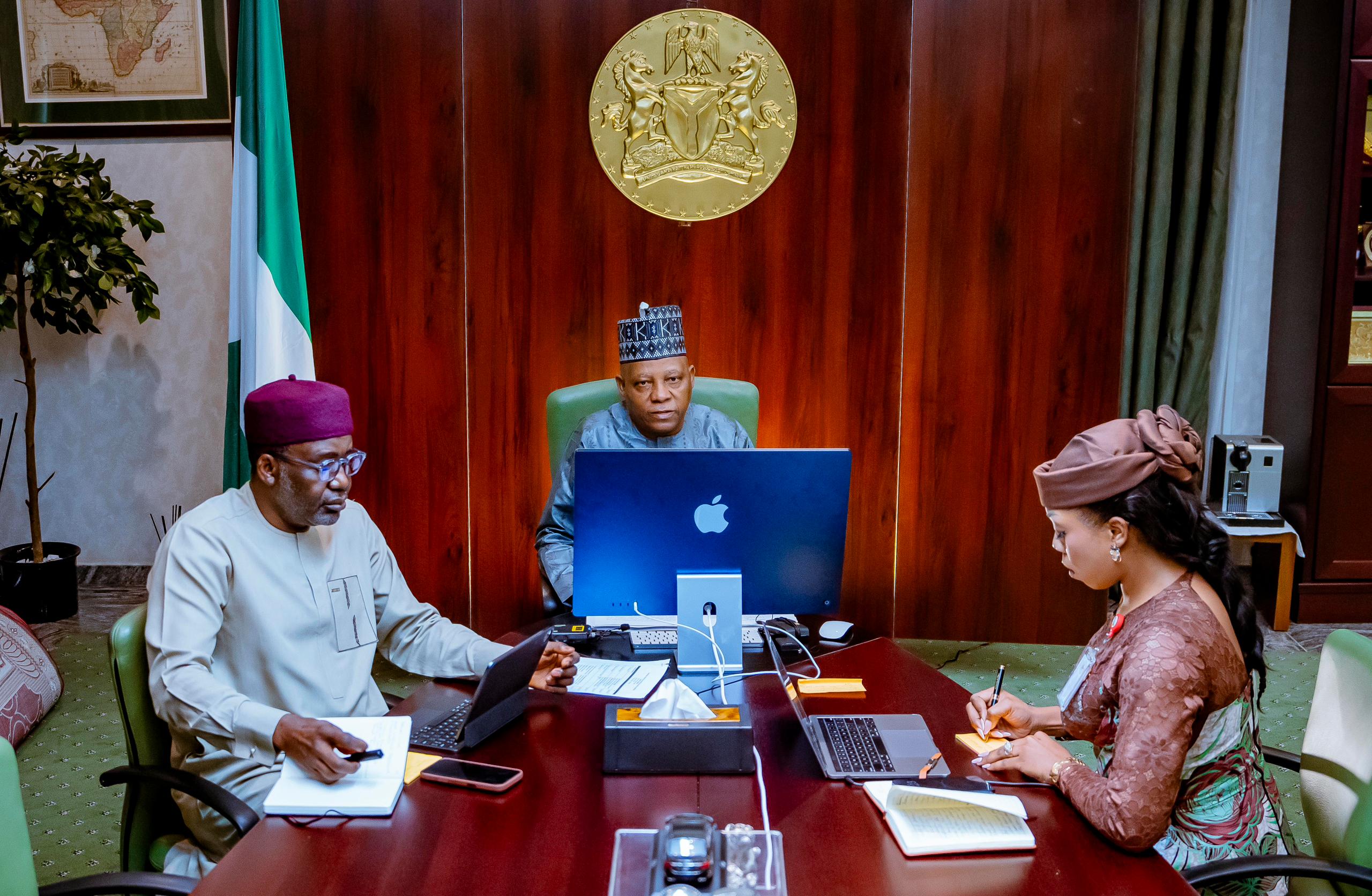
Vice President Shettima emphasized the need for urgent and sustainable nutrition financing to ensure that Nigeria’s nutrition goals are effectively achieved. During the virtual meeting of the NCN held on Thursday, the Vice President called for ring-fencing nutrition financing.
This approach would guarantee that funds allocated to nutrition are properly protected and used exclusively for this purpose, preventing misuse or diversion.

Shettima stated that Nigeria must not only ensure the adequate allocation of funds for nutrition-related projects but also ensure that these funds are timely released and effectively utilised.
“Budgeting without release is not financing. Allocation without predictability is not reform. Nutrition must be protected,” he stressed, adding that every Ministry, Department, and Agency (MDA), must be held accountable for the actual impact of nutrition financing on the lives of Nigerians.
The Vice President also underscored the importance of the National Nutrition Bill, which is currently in the pipeline. He urged its swift passage, noting that the establishment of a strong legal and institutional framework was essential to sustain the progress of nutrition interventions in the country.
The Role of the Nutrition Financing Subcommittee
The Nutrition Financing Subcommittee, which was formed during the meeting, is tasked with developing a financing roadmap within 30 days. This roadmap will outline clear strategies and structures for financing Nigeria’s nutrition initiatives and will be presented to both the National Council on Nutrition (NCN), and the National Economic Council (NEC), for further review and adoption.
The committee will be co-chaired by Prof. Muhammad Ali Pate, the Coordinating Minister of Health and Social Welfare, and includes key stakeholders such as the Ministers of Education, Water Resources, Women Affairs, and Science and Technology.
Additionally, the Deputy Chief of Staff to the President and the Senior Special Assistant to the President on Public Health are part of the committee. The Ministry of Budget and Economic Planning has been designated as the Secretariat of the subcommittee.
The committee will also include development partners and private sector players, including the Aliko Dangote Foundation, ensuring that a broad coalition is involved in the design and execution of the funding structure.
Subnational and Community-Level Engagement
The Vice President acknowledged that nutrition outcomes are ultimately determined within households and communities, and therefore, a subnational approach is essential.
He called on state governors to take swift action at the state level to ensure the timely implementation of nutrition programs. Furthermore, local governments, community leaders, and frontline workers are expected to play an active role in the successful delivery of nutrition interventions.
The NCN emphasized that women, who are central to household nutrition, childcare, and food systems, must be placed at the heart of these efforts. Shettima stated that women’s voices, leadership, and participation must be integrated into the planning, decision-making, and implementation of nutrition programs at all levels.
Key Challenges in Nutrition Financing
One of the key challenges facing Nigeria’s nutrition efforts is the gap between promises made and real change on the ground. This gap is often exacerbated by insufficient funding and a lack of clear financial accountability mechanisms.
To address these challenges, Shettima urged the need for budget tagging and tracking of nutrition funds to ensure that allocations are used effectively and that outcomes are measurable.
“Without ring-fencing nutrition financing, the gap between promises made and lives changed will continue to widen,” the Vice President warned, stressing that nutrition financing must go beyond theoretical allocations and be executed with measurable impact.
The Importance of the ANRiN 2.0 Project
The Vice President also highlighted the Accelerating Nutrition Results in Nigeria (ANRiN), 2.0 project, which aims to address gaps in nutrition service delivery, particularly in high-burden states. The project is an important tool in improving nutrition outcomes in the country, and the NCN has called for a concerted effort to scale it up across more states.
The Vice President encouraged state governors to take proactive steps to implement nutrition projects at the subnational level, ensuring that resources allocated to nutrition initiatives are effectively utilized.
“If our efforts are to succeed, they must not stop at the federal level,” Shettima said. “We need stronger subnational ownership and deeper grassroots engagement.”
The Role of Development Partners and Stakeholders
The NCN meeting also received updates from key stakeholders, including the Governor of Kwara State, Alhaji Abdulrahman AbdulRazaq, and representatives from the Aliko Dangote Foundation and UNICEF. These partners reiterated their commitment to supporting nutrition-focused projects across the country.
The development of the State Council on Nutrition (SCN), has also gained momentum, with nine states—Abia, Adamawa, Borno, Cross River, Jigawa, Plateau, Rivers, Yobe, and Zamfara—already inaugurated. More states are expected to follow suit. These councils play a pivotal role in coordinating nutrition interventions at the local level, aligning with the overarching goals of the NCN.
Conclusion
The establishment of the Nutrition Financing Subcommittee marks a significant step towards ensuring that Nigeria’s nutrition interventions are adequately funded and effectively implemented.
By developing a clear and sustainable financing structure, the government aims to bridge the gap between promises and outcomes, ensuring that every Nigerian, especially women and children, benefits from improved nutrition. The commitment of the NCN, alongside development partners, private investors, and subnational governments, is crucial to achieving a well-nourished Nigeria for all.
As the NCN continues to focus on accountability, financial transparency, and effective resource utilisation, it remains committed to improving nutrition outcomes across all 774 Local Government Areas of Nigeria. With strategic collaboration and commitment from all sectors, the vision of a healthier and well-nourished nation is becoming increasingly attainable.
