

The 2023 Nigerian presidential election continues to generate legal and political discourse. A notable contribution to this debate came from Justice Ayo Salami, a retired President of the Court of Appeal, who argued that Peter Obi was not qualified to contest the election under the Labour Party.
This report merges prior analytical context with Justice Salami’s detailed remarks, examining his claims, legal implications, and the broader reaction within Nigeria’s judicial and political landscape.
Context of the Statement
Justice Salami made his remarks in Ilorin during a courtesy visit by the Wole Soyinka Centre for Investigative Journalism (WSCIJ), where he was honoured for his contributions.
The award was presented by:
- Dapo Olorunyomi
- Motunrayo Alaka
During the event, Salami addressed both:
- The qualification of Peter Obi in the 2023 election
- Broader concerns about judicial competence in Nigeria
Background: The 2023 Presidential Election
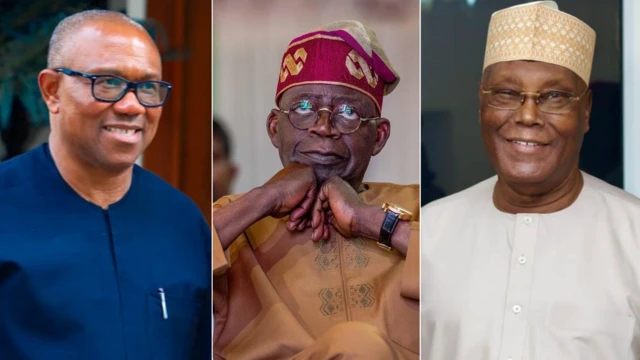
The election, conducted by the Independent National Electoral Commission (INEC), featured major candidates including:
- Bola Tinubu (APC – winner)
- Atiku Abubakar (PDP)
- Peter Obi (Labour Party)
Obi emerged as a significant opposition figure after defecting from the PDP to the Labour Party shortly before the primaries.

Justice Salami’s Core Argument
Disqualification Claim
Justice Salami stated unequivocally:
“Peter Obi ought not be allowed to contest the 2023 presidential election.”
His argument is based on party membership and nomination rules, specifically:
- By the time Obi left the PDP after losing its primary, the Labour Party had already submitted its list of members to INEC.
- According to the Nigerian Constitution, independent candidacy is not allowed.
- Therefore, Salami questioned how Obi could validly become the Labour Party candidate if he was not formally on its membership register at the relevant time.
Comparative Example
Salami referenced a similar issue involving Abba Kabir Yusuf, arguing:
- A candidate’s party register is superior to a membership card
- If a candidate’s name is not in the register, their candidacy should be invalid
He criticised the Supreme Court for allegedly overlooking such inconsistencies.
Criticism of the Judiciary
Beyond Obi’s case, Salami delivered a broader critique of Nigeria’s judicial system:
Judicial Competence
He argued that:
- Some judges lack adequate legal grounding
- Many are appointed without sufficient experience
- Expansion of law faculties has diluted professional quality
“Some of them have a problem with learning… they don’t have a good background to be judges.”
Questionable Judgments
Salami expressed concern about:
- Decisions from even the Supreme Court
- Judgments that appear inconsistent with legal principles
“At times… even the Supreme Court judgments, you will be astounded.”
Appointment System Issues
He criticised the federal character principle in judicial appointments, suggesting:
- Promotions may prioritize regional representation over merit
- Less experienced judges may supersede more qualified seniors
He cited his own career as an example of this systemic imbalance.
Legal Analysis of Salami’s Position
Key Legal Issues Raised
Salami’s argument hinges on:
- Timing of party membership registration
- Validity of nomination under the Electoral Act 2022
- Prohibition of independent candidacy in Nigeria
Counterpoints
Despite Salami’s reasoning:
- INEC accepted Obi’s candidacy, indicating administrative compliance
- No court disqualified Obi before or after the election
- The Presidential Election Petition Tribunal and Supreme Court did not uphold any claim that Obi was unqualified
This suggests that:
- Either the alleged irregularities were not proven
- Or they were not legally sufficient to invalidate his candidacy
Personal Influences and Reflections
Salami also reflected on influences that shaped his legal and political views:
- Wole Soyinka – whose principles and audacity he admired
- Obafemi Awolowo – whose treason trial inspired him to study law
He noted that Awolowo’s self-defense in court motivated his belief in legal preparedness for political life.
Recognition and Closing Remarks
Salami expressed appreciation to the WSCIJ for the award, noting that:
- Judicial recognition is valued across the profession
- Both competent and struggling judges seek validation
Implications of the Statement
Legal Implications
- Raises questions about strict adherence to party registration rules
- Highlights gaps between legal theory and judicial outcomes
Political Implications
- Reinforces debates about candidate legitimacy
- Adds to post-election tensions and narratives
Institutional Implications
-
Calls attention to:
- Judicial appointments
- Training and competence
- Public confidence in the judiciary
Conclusion
Justice Salami’s assertion that Peter Obi was not qualified to contest the 2023 presidential election represents a strong legal opinion grounded in constitutional interpretation, particularly regarding party membership and nomination procedures.
However, this view remains non-binding and contrasts with:
- INEC’s acceptance of Obi’s candidacy
- Judicial outcomes that did not disqualify him
Ultimately, the statement contributes to ongoing national discourse about:
- Electoral integrity
- Judicial competence
- The evolution of Nigeria’s democratic syste
