


Blood in the Red Earth
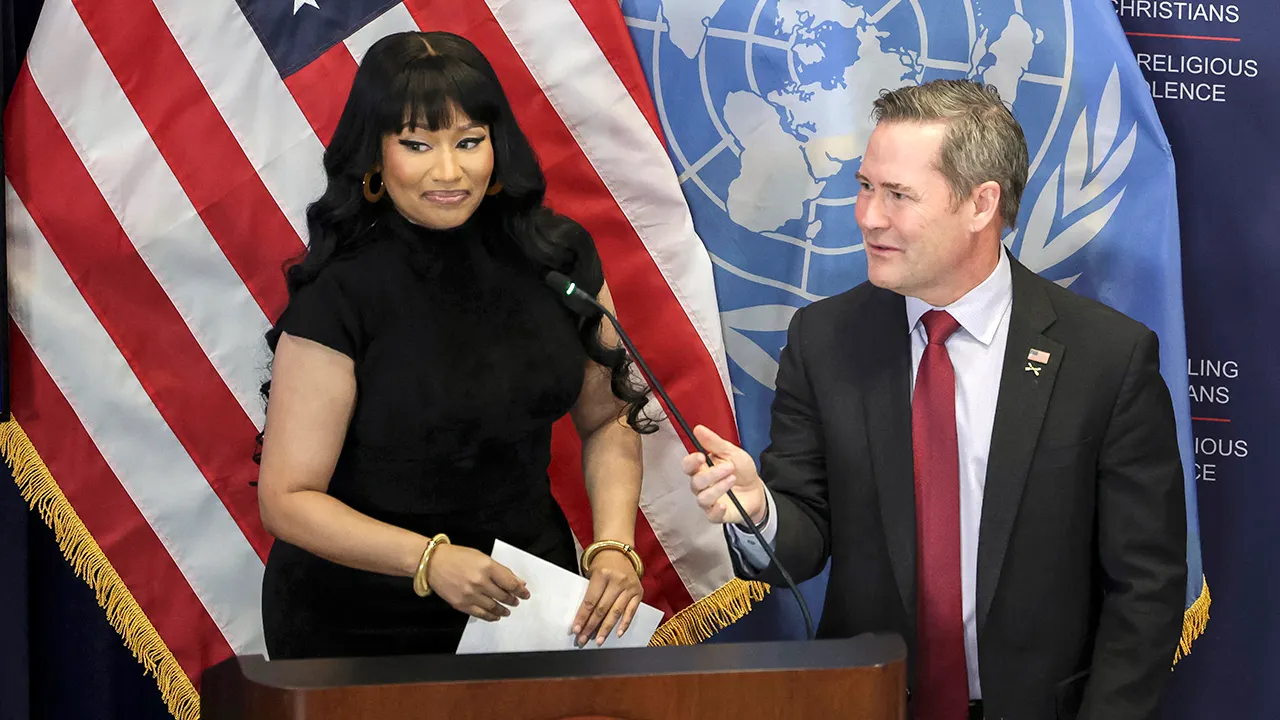
At the United States Mission to the United Nations this week, the tone was unmistakable: urgency wrapped in moral clarity. Ambassador Mike Waltz opened the event with a stark reminder that in Nigeria, blood still cries from the ground.
Ten years after the world rallied to “save the girls,” the kidnapping, rape, forced conversion, and trafficking of young Christian girls continues—not as rare horror, but as routine cruelty.
Waltz’s testimony was not diplomatic rhetoric. He recalled deploying to Nigeria in 2015, helping train elite forces to rescue the kidnapped Chibok girls. A decade later, another 25 girls were torn from their classrooms just yesterday. For many, history is not repeating—it is metastasizing.
Genocide Wearing the Mask of Chaos
The violence across Nigeria’s northern and middle-belt regions is not random, Waltz argued—it is targeted. It is ideological. And in too many cases, it is explicitly anti-Christian. Pastors beheaded, churches razed, villagers slaughtered for the “crime” of calling Jesus their Lord. Women jailed for wearing a cross. Entire congregations driven underground.


NGO reports paint an even bleaker picture: 80% of all global violence against Christians now occurs in Nigeria. Yet the world’s response has largely been silence.
A Country of Particular Concern—and a Test of Global Credibility
The U.S. designation of Nigeria as a Country of Particular Concern underscores the scale of government failure. While Nigerian officials insist terrorism affects everyone equally, an expanding body of evidence shows Christians bear a disproportionate share of targeted attacks.
Waltz framed it plainly:
“We have an entire faith that is being erased—one bullet at a time, one torched Bible at a time.”
He credited President Donald Trump with elevating the persecuted church to a level of U.S. foreign-policy priority unseen in decades, reminding the world that defending religious liberty is not political—it is moral.
Nicki Minaj Steps Into the Breach
If the ambassador delivered an indictment, Nicki Minaj delivered the emotional punch. Nervous but unflinching, she used her platform not as a celebrity seeking applause but as a witness demanding accountability.
Minaj, who has 28 million followers, reminded the audience that religious freedom is not a Western luxury but a universal right. As an artist who has seen music unite strangers across continents, she called the persecution in Nigeria “a deadly threat” that violates humanity’s shared dignity.
Her message was not partisan. It was personal, global, and direct:
“We don’t have to share the same beliefs to respect each other. But no one should live in fear for how they pray.”
Faith Under Fire—Worldwide
Minaj and Waltz both emphasized that Nigeria’s crisis is part of a larger trend. From the Middle East to South Asia, faith communities—Christian, Muslim, and others—are being targeted. Nigeria, however, stands out for the scale, frequency, and ferocity of the attacks.
The destruction of a church or mosque, Minaj argued, should “shake the foundations of the United Nations itself.”
A Call to Break the Silence
The event’s purpose was clear:
To pierce the global silence.
To humanize statistics.
To demand accountability.
Faith leaders, human-rights advocates, and survivors joined their voices, urging the world to confront a truth it has long sidestepped: Nigeria’s Christian communities are being hunted, displaced, and too often forgotten.
Solidarity Beyond Borders
Minaj spoke directly to her fans, the “Barbz,” and to a global audience:
This is not about choosing sides.
It is about resisting injustice—anywhere, against anyone.
Her message echoed Waltz’s opening: The right to worship freely is the most basic liberty. Without it, no other freedom holds.
The World Has Been Warned
As my beloved country, Nigeria stands at a crossroads—between pluralism and a widening abyss—the international community faces its own test. Will it intervene before more lives vanish into the “dark underbelly of extremism,” or will it let another chapter of religious cleansing unfold on its watch?
The blood on Nigerian soil is crying out.
And now, at last, powerful voices are crying out with it.