


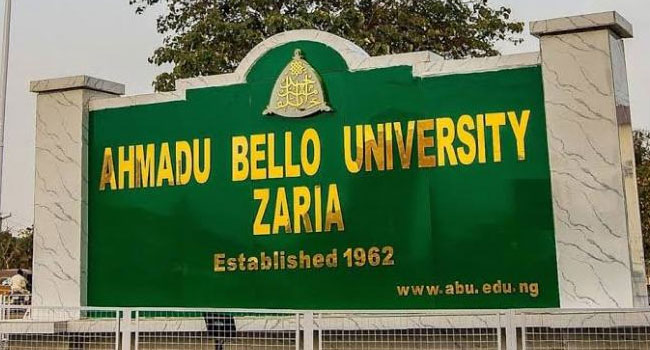
Ahmadu Bello University is taking bold steps towards self-reliance by exploring renewable energy solutions to address its high energy costs.
The university spends nearly ₦4 billion annually on electricity, a cost described as “crippling and unsustainable” by Vice Chancellor Professor Adamu Ahmed. To cushion the burden, ABU has embarked on a renewable energy drive, encouraging staff and students to innovate while seeking partnerships for sustainable energy solutions.
The Federal Government has provided an initial ₦1 billion intervention through the Tertiary Education Trust Fund (TETFund) and approved a 10-megawatt renewable energy project to support the university. ABU’s alumni community is also contributing, with the SBS Class of 1975 implementing a solar-powered project for one of the university’s CBT centers. “We’ve also reached out to our alumni, particularly the SBS class of 1975, who are already implementing a solar-powered project for one of our CBT centres,” Ahmed said. “We’re taking our destiny into our own hands while expecting continued support from outside.”
The university’s energy crisis is further being addressed through the development of a 12-megawatt solar plant, expected to be completed by December 2025. This project is part of the Renewed Hope Infrastructure Fund and aims to significantly reduce ABU’s reliance on expensive grid power. According to Professor Ahmed, the university has also established an Energy Audit and Reform Committee to identify inefficiencies and recommend cost-saving measures.


ABU has grown significantly since its inception in 1962, from four faculties and 426 students to 18 faculties, 110 departments, seven institutes, four colleges, and 17 research centers. The university has earned global recognition, including being ranked the best public university in Nigeria by Times Higher Education in 2025. ABU has also received the JAMB award for internationalization and diversity and is one of only three Nigerian universities that made the QS 2025 World University Rankings.
The university’s research capabilities are underscored by its securing of three World Bank Centres of Excellence grants worth over $15 million and a €5 million Horizon grant for an artificial intelligence project. ABU’s staff and students have registered over 30 patents locally and internationally, spanning renewable energy, pharmaceuticals, and crude oil refining technologies.
Ahmed emphasized the importance of non-kinetic approaches to addressing insecurity, advocating for dialogue, understanding, and community-driven peacebuilding. “We have the capacity, the research, and the networks,” he said. “And we are ready to lead the charge in finding lasting solutions.” The Vice Chancellor called on the university’s alumni community to support the institution through endowments, annual giving, and donations. “I call on our alumni to step up,” Ahmed said. “The Sardauna gave you opportunity; now it is time to give back.”