


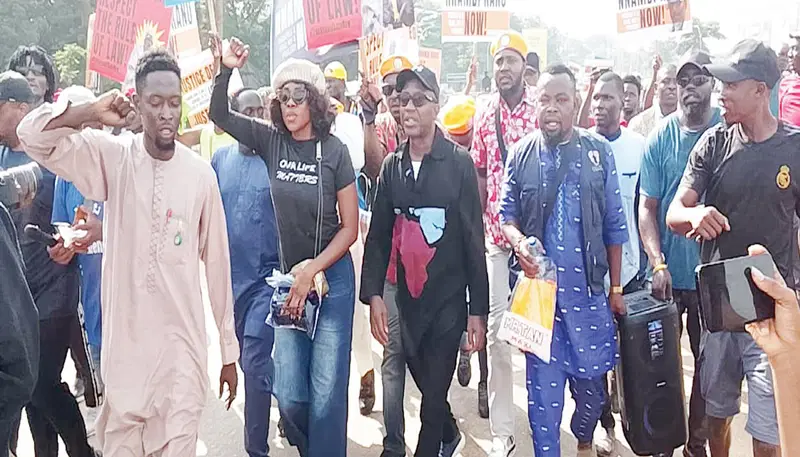
Economic activities in Nigeria’s capital, Abuja, were severely disrupted on Monday, October 20, 2025, as security forces clamped down on a protest led by Omoyele Sowore, founder of the #FreeNnamdiKanuNow movement.
The demonstration, advocating for the release of Nnamdi Kanu, leader of the Indigenous People of Biafra (IPOB), was met with a heavy security presence, including the deployment of tear gas to disperse protesters. The protest’s escalation led to significant traffic gridlocks, particularly affecting commuters from areas such as Bwari, Ushafa, and parts of Kubwa, who were unable to reach the city center.
As early as 6:00 a.m., police had blocked all access routes leading into the Federal Capital Territory, causing severe congestion and preventing workers from accessing their offices. The situation intensified in the Maitama area, where protesters gathered near the Nigeria Communications Commission (NCC) headquarters, chanting slogans like “Free Nnamdi Kanu Now.” Security forces responded by firing tear gas, causing demonstrators to scatter in various directions. Reports also indicated the use of water cannon trucks and armored vehicles to disperse the crowd.
The protest, initially intended to be peaceful, turned confrontational as tensions escalated between demonstrators and security personnel. A viral video captured Omoyele Sowore fleeing from officers allegedly firing live rounds at protesters. The Nigeria Police Force defended the use of tear gas, stating that it was in line with a subsisting court order restricting demonstrations near sensitive areas such as Aso Rock, the National Assembly, and the Force Headquarters. Force Public Relations Officer, CSP Benjamin Hundeyin, clarified that the police action was aimed at preventing potential violence and maintaining public order.

The crackdown drew criticism from various quarters, including human rights organizations and legal practitioners. Amnesty International condemned the use of force against peaceful protesters, urging the Nigerian government to respect the rights to freedom of expression and assembly. Legal experts questioned the proportionality of the security response, highlighting concerns over the alleged use of live ammunition and the detention of individuals without due process.
In the aftermath, several individuals, including Nnamdi Kanu’s lawyer, Mr. Aloy Ejimakor, were reportedly arrested and taken to the Federal Capital Territory Command. Omoyele Sowore alleged that they were beaten and detained, demanding their immediate release. The incident has sparked widespread outrage on social media platforms, with calls for accountability and an independent investigation into the events.
The protest and subsequent security response have further intensified the debate over Nnamdi Kanu’s continued detention and the broader issues of self-determination and human rights in Nigeria. Supporters of Kanu maintain that his detention is politically motivated, while the government asserts that he faces legitimate charges related to terrorism. The situation remains fluid, with ongoing discussions about the balance between national security and individual freedoms.
