

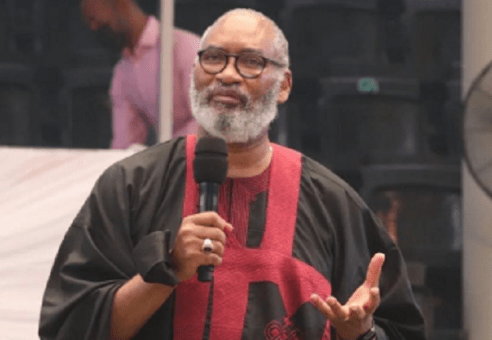
Senior Pastor of Guiding Light Assembly in Lagos, Wale Adefarasin, has refuted fresh claims suggesting that Christians in Nigeria are facing genocide, insisting that the situation has been misrepresented by Western voices.
His comments came during a sermon which has gone viral, where he stated that the killings being referenced have been ongoing for decades and should not be classified as genocide.
Adefarasin, who addressed his congregation on Sunday, said that although incidents of violence against Christians have occurred in parts of the country, the situation was not a new development. He recalled past occurrences, saying “For 40 years that I have been a Christian, there have been killings in southern Kaduna, killings on the Plateau, there have been riots.” He added that some foreign narratives were exaggerating the situation, stating “It doesn’t amount to genocide. The way the West are talking about it, it’s as if if a Christian steps on the street, his head will be blown off.”
He went further to question the sudden interest of the United States in the welfare of Christians in Nigeria. According to him, America’s recent expressions of concern may be influenced by economic motives rather than humanitarian reasons. “I’m trying to understand this sudden love for Christians. Is it because we now have one of the largest refineries in the world and no longer have to ship raw materials abroad and bring the finished products? Or is it because of the 21st century minerals that we now have in our earth that are used to generate nuclear power for electric vehicles?” he asked.

His comments followed recent remarks by the United States government linking Nigeria to religious freedom violations and the possibility of sanctions if the country fails to address reported attacks on Christians. Adefarasin, however, suggested that the timing and tone of the US concern could be connected to Nigeria’s growing economic strength and natural resources that are becoming more valuable to major global powers.
The pastor argued that Nigeria must remain cautious and discerning when responding to Western pressure, urging citizens and leaders to evaluate the motives behind foreign interventions. He advised Nigerians to remain united and avoid falling into divisions caused by external influences that may not genuinely have the country’s best interest at heart.
Adefarasin’s position has continued to attract mixed reactions among Nigerians, with some supporting his perspective and others insisting that stronger international pressure is needed to protect religious minorities. His comments have added to the ongoing national debate regarding religious freedom, foreign relations and how Nigeria responds to international scrutiny.
