


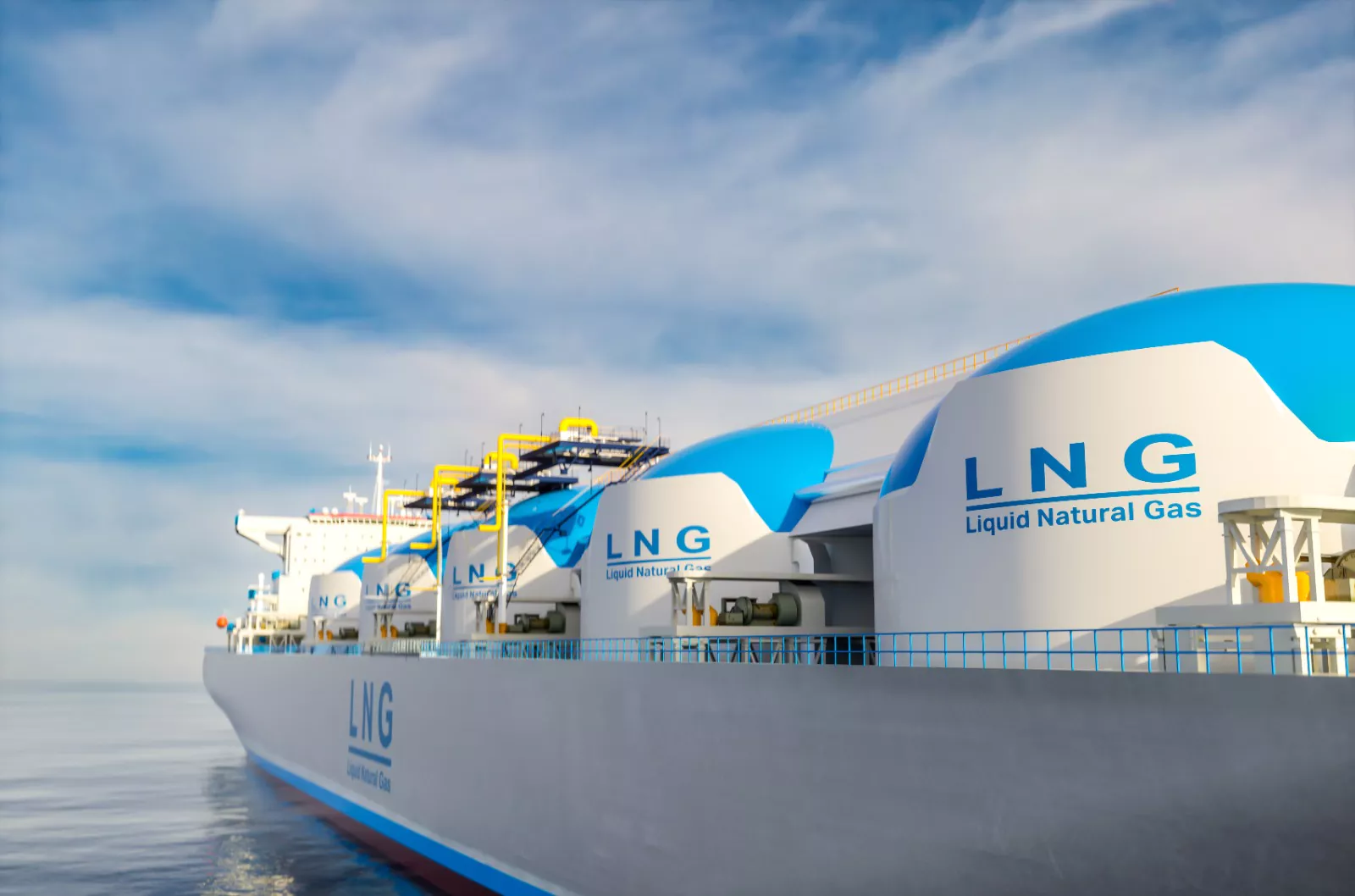
Europe’s gas market is once again under pressure. Supply chain fragility—heightened by disruptions in the Strait of Hormuz and the continent’s ongoing pivot away from Russian gas—has exposed structural vulnerabilities in global LNG flows. Spot prices are rising, competition for cargoes is intensifying, and buyers are increasingly prioritising flexibility and speed of delivery.
In this environment, Africa is no longer a peripheral supplier—it is becoming central to the solution.
Floating LNG Changes the Timeline
Floating liquefied natural gas (FLNG), technology is redefining how quickly gas can reach global markets. By placing liquefaction facilities on offshore vessels, FLNG eliminates the need for large-scale onshore plants, complex permitting processes, and years-long construction cycles.
Instead, these modular units can be deployed in a fraction of the time, unlocking stranded offshore gas reserves and converting them into export-ready LNG with remarkable efficiency. For Europe, this means faster access to new supply. For African producers, it means monetising resources that might otherwise remain untapped for decades.


Congo’s Breakthrough: Speed at Scale
Few countries illustrate this transformation better than the Republic of Congo. Through a phased FLNG strategy led by Italian major, Eni, the country has rapidly built a meaningful export platform.
The Tango FLNG unit came online in 2023, quickly followed by the larger Nguya FLNG in 2025. Together, they deliver around 3 million tons per year—equivalent to roughly 4.5 billion cubic meters of gas. Crucially, Phase 2 exports from Nguya began ahead of schedule in early 2026, underscoring the speed and execution advantages of floating infrastructure.
This is not just incremental growth—it is a structural shift in how African gas projects are delivered. With Minister of Hydrocarbons, Bruno Jean-Richard Itoua, set to speak at the upcoming Invest in African Energy Forum, Congo is positioning itself as a blueprint for fast-tracked LNG development.
Mozambique: From Pioneer to Powerhouse
Mozambique’s offshore sector further reinforces the case for FLNG. The Coral South project has already shipped more than 100 LNG cargoes to Europe since 2022, proving both operational reliability and market demand.
Its successor, Coral North, is expected to significantly expand capacity, backed by strong international financing and long-term buyer interest. Together, these projects demonstrate that FLNG is not just a niche solution—it is scalable, repeatable, and capable of anchoring national export strategies.
Why FLNG Is Winning Investor Attention
For investors navigating uncertain energy markets, FLNG offers a rare combination of speed, flexibility, and risk mitigation.
Floating infrastructure reduces exposure to onshore permitting delays and community-related disruptions. It simplifies logistics in deepwater environments and allows developers to scale production in phases, aligning capital deployment with confirmed offtake agreements. The result is a more resilient project model—one that improves returns while lowering execution risk.
In a capital-constrained environment, these advantages are decisive.
Paris as the Deal-Making Hub
The upcoming Invest in African Energy (IAE), Forum in Paris arrives at a pivotal moment. With European buyers actively seeking diversified supply and African projects moving rapidly toward production, the forum provides a direct interface between capital, policy, and opportunity.
Investors will not just hear about future prospects—they will engage with projects already delivering volumes, negotiate partnerships, and secure positions in development-ready LNG value chains.
A Strategic Shift in Global Gas Flows
Africa’s FLNG expansion is more than a regional story—it signals a broader realignment in global energy flows. As Europe recalibrates its supply sources, African LNG is stepping in as a flexible, reliable alternative capable of responding to market shocks in real time.
The implication is clear: speed now defines competitiveness in LNG. And on that metric, floating solutions give Africa a decisive edge.
The Bottom Line
Africa’s FLNG projects are not just filling a temporary gap—they are reshaping the global LNG landscape. By combining rapid deployment, cost efficiency, and scalable growth, they offer Europe immediate relief while opening a new frontier for energy investment.
In a market where timing is everything, Africa is arriving exactly when the world needs it most.