

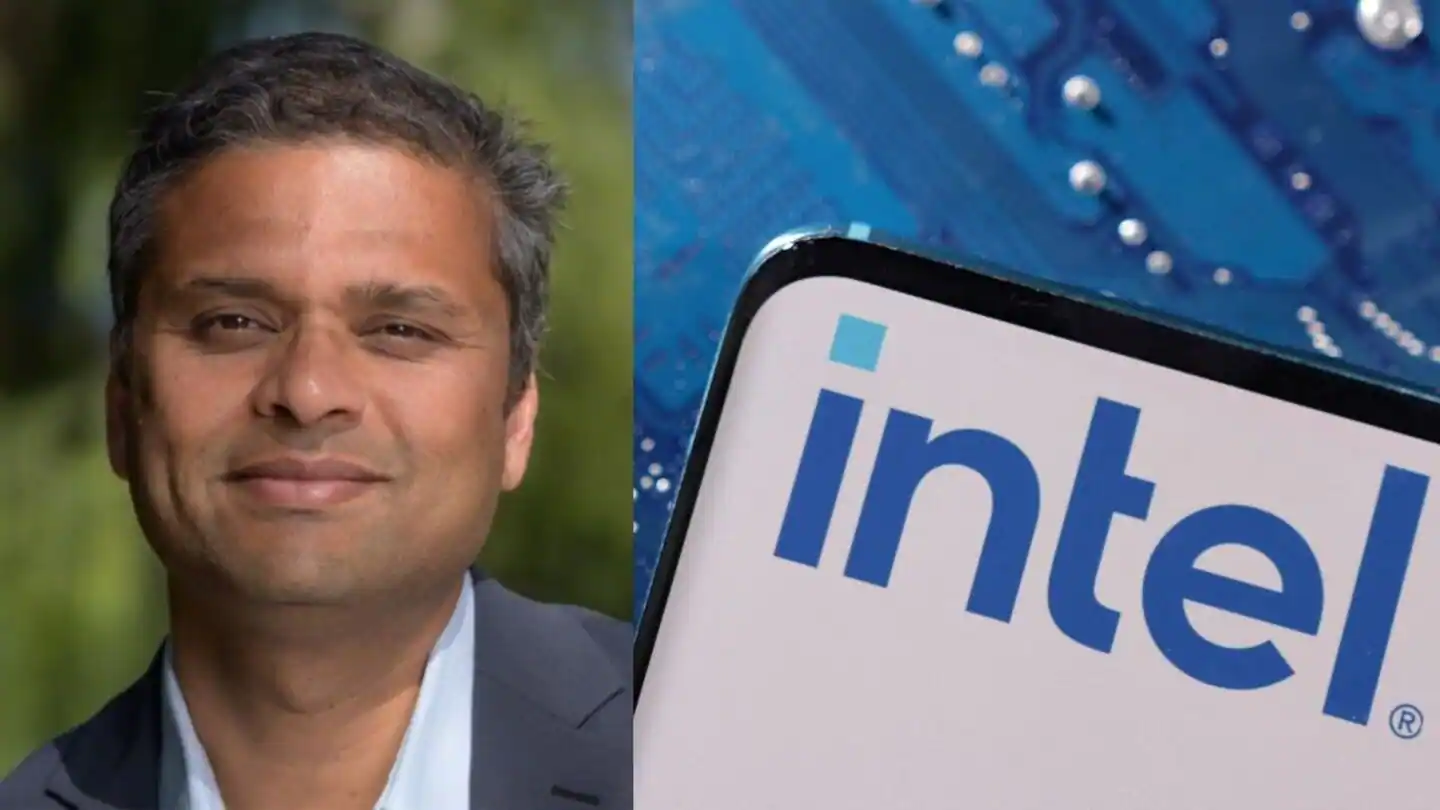
In a striking development in the tech and AI world, Sachin Katti – who until now served as CTO and Head of AI at Intel, has announced his departure from the company to join OpenAI, the organisation behind ChatGPT.
Who is Sachin Katti?
Katti’s path reads like a model of global-tech mobility and rising influence:
-
An Indian-origin technologist, he earned his undergraduate degree from Indian Institute of Technology Bombay (IIT Bombay), and later did work that placed him in the U.S. academic/industry circuit.
-
Prior to his Intel tenure, he founded and steered a startup, Uhana, focused on AI for mobile networks, which was later acquired by VMware.

-
He joined Intel in 2021 and rapidly progressed: head of the Network & Edge group, then in April 2025 promoted to the roles of Chief Technology and AI Officer.
-
At Intel he was tasked broadly with shaping the company’s AI strategy, its product roadmap, Intel Labs, and building relationships with the startup and developer ecosystem.
Why His Departure Matters
Several reasons make Katti’s move significant:
1. For Intel
-
His exit marks another leadership disruption at Intel in a year of intensive restructuring.
-
Intel has explicitly stated that its CEO, Lip‑Bu Tan, will now oversee its AI and Advanced Technologies groups. “We thank Sachin for his contributions and wish him the best,” Intel said in its statement.
-
The move raises questions about Intel’s ability to deliver on its AI ambitions, especially as it faces intense competition from companies like NVIDIA Corporation and Advanced Micro Devices, Inc. in the data-centre/AI chip arena.
2. For OpenAI
-
Katti’s move to OpenAI signals that the organisation is continuing to invest heavily in the infrastructure side of AI — not just models, but the compute, systems, and platform on which future large-scale AI will run.
-
OpenAI’s President, Greg Brockman, publicly welcomed Katti, noting that he will be designing and building compute infrastructure to power their AGI research and scale its applications.
Context: Why Now?
-
Intel has been under pressure: its data-centre AI chip efforts have lagged behind rivals.
-
Leadership upheaval has been a theme at Intel: Katti is not the only high-level executive to depart in the past months.
-
Meanwhile, OpenAI is scaling fast – compute, infrastructure, and talent are all key to its next phase. Katti’s hiring fits that narrative.
Implications to Watch
Here are some things to keep an eye on going forward:
-
Intel’s AI Roadmap: With its top AI executive gone, how will Intel maintain momentum? Will the CEO’s direct involvement fill the gap or will another leader emerge?
-
OpenAI’s Infrastructure Push: With Katti onboard, the emphasis on build-out of compute infrastructure (for AGI and beyond), may accelerate. This could shift competitive dynamics in the “AI compute stack.”
-
Talent and Leadership Flows in AI/Semiconductors: Katti’s move underscores how personnel shifts between chip companies and AI labs are becoming more consequential.
-
Broader Industry Impacts: As companies like Intel and OpenAI compete for compute scale, partnerships, manufacturing, and hardware-software integration become even more critical.
Final Thought
Sachin Katti’s transition from Intel to OpenAI encapsulates where the industry is heading: the frontier of AI is not just about models or algorithms, but the infrastructure and systems underneath.
For Intel, it’s a moment of reckoning about how it competes in an AI-first world. For OpenAI, it’s another signal that the “compute war” matters as much as the “model war.”
Sources: Financial Times, Reuters, CRN, India Today
