


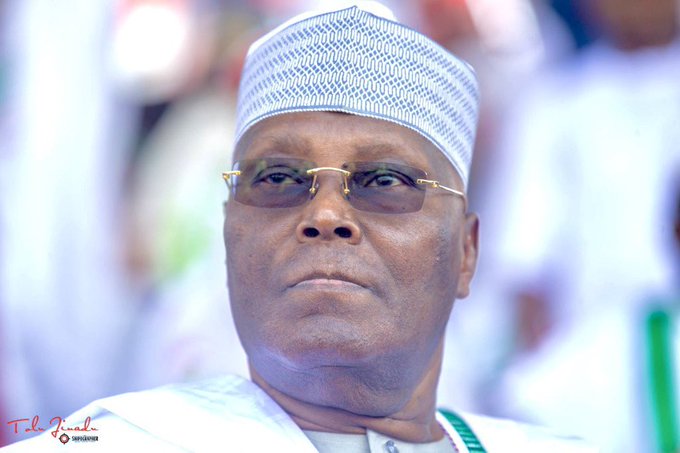
The political landscape ahead of the 2027 general elections is already taking shape, with opposition figures forming alliances to challenge the ruling party. A key development is the coalition built around the African Democratic Congress(ADC), which has attracted major political actors including Atiku Abubakar and Peter Obi.
This coalition reflects a strategic attempt to consolidate opposition strength, similar to the alliance that led to the defeat of the PDP in 2015.
Within this evolving political framework, Atiku’s Arise TV interview provides insight into:
- Leadership negotiations within the ADC
- His personal political future
- Regional power dynamics
- The strategy for defeating the ruling party
Key Statement 1: Willingness to Step Aside for Peter Obi
Atiku stated clearly that he is prepared to step aside for any candidate who emerges through a credible process, including Peter Obi.
Interpretation
- This is a consensus-building signal, aimed at avoiding internal divisions within the ADC coalition.
- It reflects recognition that a fragmented opposition could weaken chances against incumbency.
Political Significance
- Obi is widely considered a strong contender within the coalition, especially among youth and urban voters.
- Atiku’s statement reduces fears of a power struggle between northern and southern blocs.
Implication
-
Suggests a possible primary or consensus arrangement, where:
- The most electable candidate emerges
- Others rally behind that candidate
This aligns with coalition strategies globally, where opposition unity is critical.

Key Statement 2: 2027 Will Be His Final Presidential Bid
Atiku declared that the 2027 election will be his last attempt at the presidency.
Interpretation
- This signals a closing chapter in his long political career.
- It may be intended to:
- Garner sympathy and support
- Position himself as a transitional leader
Strategic Meaning
- Could appeal to:
- Older political elites seeking stability
- Younger voters demanding generational transition
Critical Analysis
However, skepticism exists:
- Atiku has contested multiple times (1993, 2007, 2011, 2019, 2023)
- Previous “last run” narratives in Nigerian politics have not always held
Still, this statement may help reduce resistance within the coalition, especially from younger aspirants.
Key Statement 3: Claim of Stronger Northern Support
Atiku asserted that he has more political support in Northern Nigeria than figures such as:
- Rabiu Kwankwaso
- Nasir El-Rufai
- Aminu Tambuwal
Interpretation
This claim highlights:
- His long-standing political networks in the North
- His identity as a northern political heavyweight
Context
Northern Nigeria remains a decisive voting bloc in presidential elections due to:
- Population size
- Voting patterns
Critical Evaluation
- Kwankwaso has strong grassroots appeal (especially in Kano)
- El-Rufai has elite and technocratic influence
- Tambuwal has institutional and political networks
Atiku’s claim is therefore:
- Strategically assertive, but
- Likely to be contested within political circles
ADC Coalition Dynamics and Internal Competition
The ADC coalition includes multiple ambitious figures, creating both strength and tension.
Major Stakeholders
- Atiku Abubakar
- Peter Obi
- Rabiu Kwankwaso
- Potential entrants like El-Rufai
Core Challenge
- Who becomes the presidential candidate?
Atiku’s statements suggest a two-track approach:
- Attempt consensus
- Resort to primaries if needed
Obi’s Position
Peter Obi has emphasized:
- Competence over ambition
- Coalition unity over personal interest
This aligns with Atiku’s public stance—at least rhetorically.
Strategic Messaging in the Interview
Atiku’s Arise TV remarks appear carefully calibrated to achieve several goals:
a. Project Unity
By saying he would step aside, he:
- Reduces fear of domination
- Encourages coalition trust
b. Reinforce Relevance
By claiming northern support, he:
- Positions himself as indispensable
c. Control Narrative
By declaring a final run, he:
- Frames himself as a legacy candidate
Implications for the 2027 Election
Scenario 1: Atiku Emerges as Candidate
- Likely strong northern backing
- Risk of alienating younger voters
Scenario 2: Obi Emerges
- Strong youth and southern support
- May need northern political structure
Scenario 3: Coalition Fractures
- Multiple candidates run
- Increased advantage for the ruling party
Broader Political Significance
The Atiku-Obi dynamic reflects a larger shift in Nigerian politics:
- Movement from party dominance to coalition politics
- Increasing importance of cross-regional alliances
- Growing influence of youth-driven movements
Conclusion
Atiku Abubakar’s Arise TV interview offers a strategic glimpse into opposition planning for 2027. His key messages—willingness to step aside, final presidential ambition, and claims of northern dominance—are all aimed at:
- Consolidating influence within the ADC
- Positioning himself as both kingmaker and contender
- Maintaining relevance in an evolving political order
However, the ultimate success of this strategy depends on one critical factor:
Whether the opposition coalition can genuinely unite behind a single candidate.
Without that unity, even the most strategic positioning may not translate into electoral victory.
