


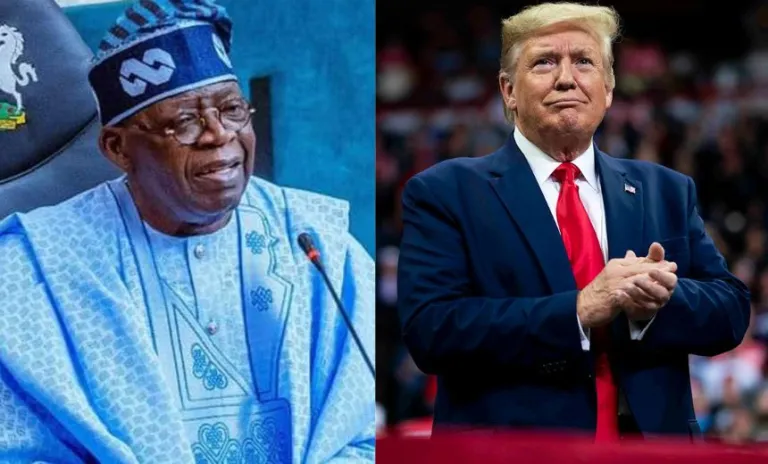
In a sharply worded statement on Friday, 7 November 2025, the African Union Commission (AUC), made clear its position: the Federal Republic of Nigeria is a sovereign state whose internal affairs must be respected — and unilateral military threats from the United States of America (USA), risk destabilising regional peace.
The current diplomatic tension stems from a series of actions by the United States:
-
President Donald Trump designated Nigeria as a “Country of Particular Concern” over what he described as the “mass slaughter” of Christians, and warned that the US might intervene militarily if the Nigerian government did not act swiftly.
-
Nigeria’s government rejected the narrative of genocide, reaffirming its constitutional guarantees of religious freedom and calling foreign boots on its soil unnecessary.
-
The AU Commission responded, noting concern at the US statements and insisting that any external engagement must respect Nigeria’s sovereignty and territorial integrity.

What the AU’s Statement Emphasises
-
Nigeria is a valued AU member, playing a significant role in regional stability, counter-terrorism, peacekeeping and continental integration.
-
The Commission recognises the complex security challenges Nigeria faces — extremist violence, banditry, communal conflict. It cautions against oversimplifying these as purely religious violence.
-
It calls on external partners (like the US) to favour diplomacy, intelligence-sharing, capacity building, and regional cooperation instead of unilateral military threats.
-
A unilateral threat of military intervention without the host nation’s consent could undermine continental peace, AU norms on non-interference, and regional stability.
Nigeria’s Response & Wider Reaction
-
Nigerian civil society and diaspora groups in the US rejected any foreign military intervention in Nigeria. They reiterated that Nigeria’s sovereignty must be upheld, even as they recognised the urgency of addressing insecurity and violence.
-
The Nigerian Senate, via deputy president Jibrin Barau, condemned the US threat as a violation of international law, demanding a retraction and apology.
-
Other external actors, including the European Union and China, expressed solidarity with Nigeria’s position, reiterating respect for its sovereignty.
Why This Matters
-
Sovereignty and International Law: At the heart of the matter is the principle that nations have the right to manage their own affairs without external coercion. The US threat raises questions about the boundaries of intervention.
-
Security vs. Cooperation: Nigeria faces serious security issues. But the mode of international assistance — supportive, respectful partnership versus unilateral action — is now under debate.
-
Regional Implications: If major powers bypass multilateral frameworks or continental institutions like the AU, the precedent could affect how conflicts and security challenges are addressed across Africa.
-
Narrative and Framing: The AU’s caution about reducing all violence to “Christian, Muslim” dynamics is important. Oversimplifying violence can hamper targeted, effective responses.
Next Step of Action
-
The US may need to recalibrate its approach: diplomatic engagement, intelligence-sharing, and capacity support may yield better outcomes than threats of force.
-
Nigeria must respond internally: improving its security architecture, accountability mechanisms and protection of communities will bolster its position.
-
The AU and other regional bodies are likely to emphasise the need for multilateral action rather than unilateral military moves.
-
Observer states and global partners are watching how this plays out — whether the US pulls back or proceeds with intervention plans, and what that means for African sovereignty norms.
In Conclusion
The AU’s message to the US is unambiguous: Respect for Nigeria’s sovereignty is non-negotiable. While support for Nigeria’s fight against insecurity is welcome, the path must be through collaboration, not unilateral force. The manner in which this tension resolves could set an important precedent for how global powers engage with African states going forward.
Sources: AU, ABC, Vanguard, AllAfrica, TheCable, BusinessDay
