


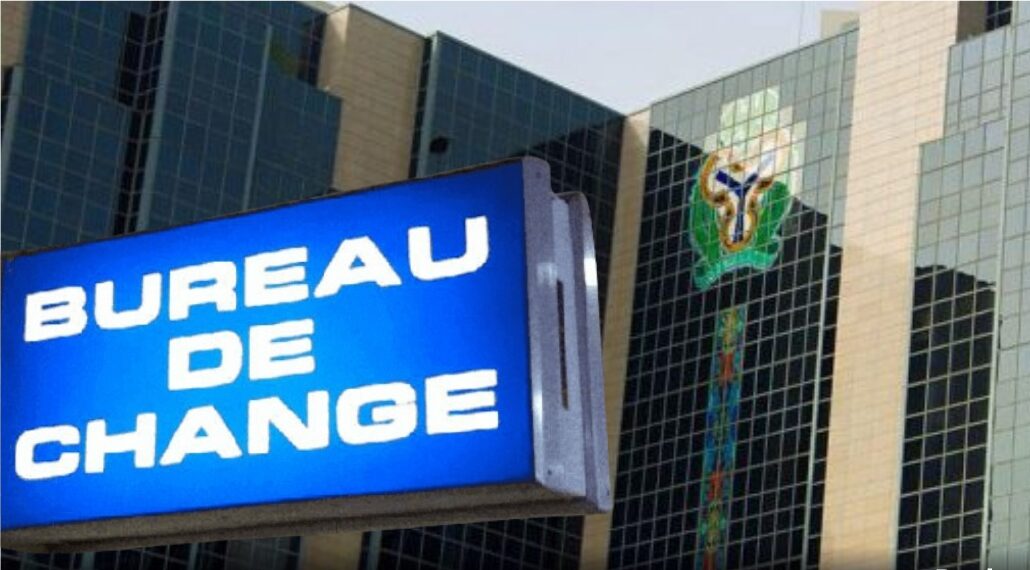
The Central Bank of Nigeria’s (CBN), approval of 82 Bureau De Change (BDC), operators under its revised regulatory framework has reignited debate across foreign exchange market. To some, the figure appears modest; to others, it represents a long-awaited reset of a sector long accused of opacity, speculation, and weak oversight.
What is clear, however, is that the licensing exercise is neither concluded nor accidental—it is a deliberate attempt by the apex bank to fundamentally reshape the retail forex landscape.
A Signal, Not a Conclusion
Announced on December 8, 2025, the approval of 82 BDC operators is best understood as a signal rather than a conclusion. The CBN has acknowledged that the process is ongoing, with assurances that more names will be added as applications are finalised. Industry operators confirm this position, noting that the number of applicants who have already met the new requirements exceeds the initial list.
For a market that had been effectively sidelined from official forex supply for years, the move suggests a cautious reopening—one anchored on control, compliance, and credibility rather than sheer numbers.

Why the Bar Was Raised
At the heart of the reform lies the CBN’s decision to dramatically raise capital requirements. Introduced in May 2024, the new thresholds require Tier-1 BDCs to hold a minimum of N2 billion in capital to operate nationwide, while Tier-2 operators—restricted to a single state—must maintain at least N500 million. This is a steep jump from the former N35 million benchmark.
The apex bank argues that the old regime encouraged weak institutions, poor governance, and regulatory arbitrage. Backed by Section 56 of the Banks and Other Financial Institutions Act (BOFIA) 2020, the revised Regulatory and Supervisory Guidelines aim to align BDC operations with broader financial-sector reforms focused on stability and transparency.
Industry Pushback, Then Adjustment
Predictably, the new capital regime met resistance. The Association of Bureau De Change Operators of Nigeria (ABCON), initially opposed the scale of the increase, arguing that it diverged from international best practices and risked excluding genuine small operators. However, reality has forced a recalibration.
ABCON President, Aminu Gwadebe, has since clarified that the licensing process is ongoing and that the 82 approved operators were simply those who had completed all requirements at the time the CBN circular was issued. According to him, many more operators have now raised the required capital and are awaiting final approval, with the CBN promising an accelerated review process.
A Sector Already on Life Support
It is important to note that the recapitalisation policy did not start the contraction of the BDC sector—it merely completed it. Long before the new capital rules, strict compliance enforcement had already thinned the field. From over 6,000 operators, the number reportedly fell to about 1,600 by 2024 due to delisting for non-compliance.
The new capital requirements have further reduced that figure by more than 95 percent, leaving fewer than 5 percent of operators able to meet the bar. From the CBN’s perspective, this outcome is not a failure but a feature: a leaner, more controllable market is easier to supervise and less vulnerable to abuse.
The CBN’s Balancing Act
The apex bank insists that only licensed operators listed on its website are authorised to conduct BDC business and has warned the public against dealing with unlicensed dealers. It has also made clear that the approvals took effect from November 27, 2025, reinforcing its zero-tolerance stance on regulatory breaches.
Yet the challenge for the CBN goes beyond enforcement. A severely reduced number of BDCs raises questions about access, competition, and regional coverage—particularly in underserved areas. Licensing more compliant operators, therefore, is not just an industry demand but a policy necessity if the BDC segment is to function effectively.
Market Expectations and the Road Ahead
Forex traders and analysts broadly agree that licensing alone will not stabilise the naira or eliminate parallel-market pressures. Without improved forex supply—from exports, diaspora remittances, and foreign investment—the impact of BDC reforms will be limited. Still, a transparent and well-regulated retail forex channel remains a critical piece of the puzzle.
The approval of 82 BDCs is a starting point. More licences are expected, and rightly so. But the days of lightly capitalised, loosely supervised BDC operations are clearly over.
Final Word
The CBN’s BDC licensing reset is a hard reform, and for many operators, a painful one. Yet it reflects a broader shift in Nigeria’s financial regulation—one that prioritises resilience over convenience and structure over numbers.
The success of this policy will ultimately depend on consistency, fairness, and the regulator’s willingness to balance discipline with access. For now, the message is unmistakable: the BDC business is back, but only for those strong enough to survive the new rules.
