


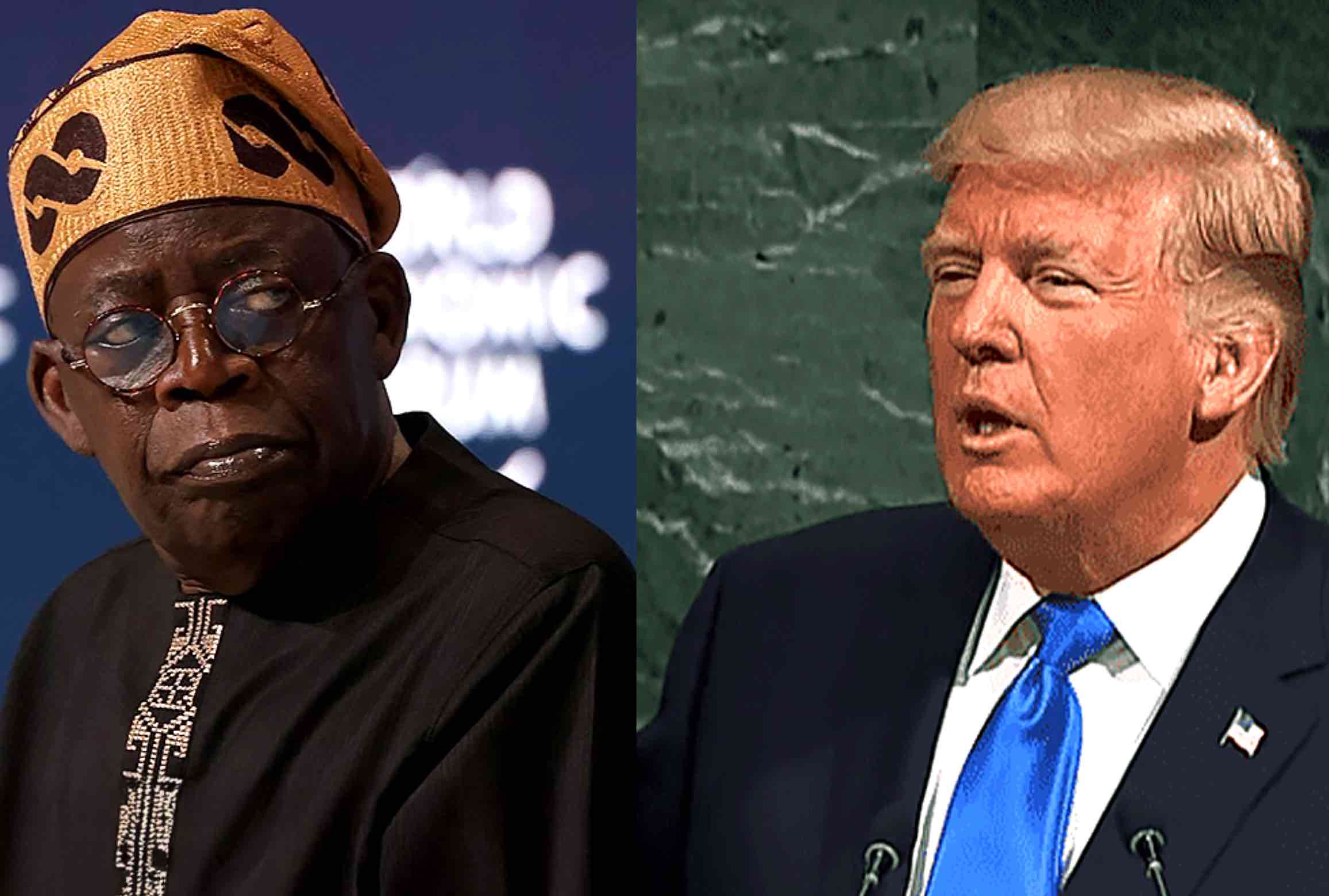
A diplomatic row has erupted between President Bola Ahmed Tinubu of Nigeria, and Donald Trump, President of the United States, following the serious allegations of religious-violence and what the U.S. describes as a “genocide” against Christians in Nigeria.
Recenlty, President Trump declared via social media that Christianity in Nigeria is facing an “existential threat”, accused “radical Islamists” of “mass slaughter”, and formally redesignated Nigeria as a “Country of Particular Concern” (CPC) for religious-freedom violations.
He followed this up with a warning: unless Nigeria acts to protect Christians he said the U.S. would stop aid and the U.S. Department of War (the language used by Trump) should be prepared for possible “military action”.
The Planned Meeting
The Nigerian presidency has announced that President Bola Tinubu will meet President Trump “in the coming days” to address the situation.
Spokesman Daniel Bwala said the agenda will include:
-
Clarification of what Nigeria calls “misconceptions” about the nature of terrorist attacks and whether they are religiously-targeted or broader.
-
Counterterrorism cooperation between Nigeria and the U.S., including arms sales and military assistance.
Neither government has publicly confirmed the date or venue of the meeting.
Key Issues at Stake
Allegations & U.S. Position
-
The U.S. claims that thousands of Christians in Nigeria are being killed, and that the government is either unable or unwilling to stop “radical Islamist” groups from targeting them.
-
President Trump instructed the U.S. to prepare for possible military intervention if Nigeria does not act.
Nigeria’s Response
-
The Nigerian government asserts that violence in Nigeria is complex, involving terrorism, banditry, ethnic conflict, not solely religious persecution.
-
President Tinubu emphasised: “religious freedom and tolerance are a core tenet of our collective identity.”
-
Nigeria’s Ministry of Foreign Affairs said the U.S. allegations “do not reflect the situation on the ground.”
Broader Implications
-
The CPC (Country of Particular Concern) designation could carry sanctions, restrictions on arms sales, and harm Nigeria’s international reputation.
-
Security cooperation between Nigeria and the U.S. is at risk — Nigeria relies on U.S. arms, training, intelligence. The Nigerian presidency acknowledged past U.S. arms sales and that Nigeria “utilised that opportunity” in counter-terrorism.
-
Internally, the narrative may deepen religious tensions, and the government is under pressure to respond credibly.
What to Watch Going Forward
-
Date & Venue of the Tinubu-Trump meeting. The details are yet to be finalised.
-
Outcome of the meeting: Will Nigeria agree to new measures, data-sharing, UN-monitored assessments, or reforms that address the U.S.’ concerns?
-
U.S. Policy Actions: Whether the U.S. will follow through on aid suspension or arms restrictions, or escalate to military options.
-
Nigeria’s domestic narrative: How will the Tinubu government manage perceptions at home — between Christian, Muslim, and other communities — given the international pressure?
-
Regional and global fallout: Other nations, humanitarian organisations, and religious groups will monitor Nigeria, and the CPC designation may influence broader geopolitical alignments in West Africa.
Why This Matters
-
Human Rights Angle: Allegations of religious-based mass violence raise urgent moral and legal questions; whether Nigeria is failing to protect a major religious group is a serious international concern.
-
Sovereignty and Intervention: The U.S. threatening military action over Nigeria sets a precedent for how external powers engage over internal security if they perceive rights violations — which may provoke pushback on sovereignty grounds.
-
Security & Stability in Nigeria: Nigeria already faces multiple insurgencies (Boko Haram, ISWAP, banditry, farmer-herder conflicts). Framing violence as religious persecution may redirect or complicate response strategies.
-
Religious Harmony: Nigeria is religiously diverse; how the government addresses these allegations may influence inter-faith relations, internal cohesion, and the narrative of national identity.
-
International Relations: Nigeria-U.S. relations are under stress; arms deals, counterterrorism partnerships, development aid may all be impacted, affecting Nigeria’s regional role in West Africa.
Let The Pen Drop Here
The imminent meeting between President Bola Tinubu and President Trump reflects a moment of heightened diplomatic tension over conflicting narratives: one side alleging mass Christian persecution in Nigeria and possible U.S. intervention, the other side rejecting the charges and defending Nigeria’s record and sovereignty, even at the time when reforms are shaping events in Nigeria.
How Nigeria responds in the coming days — through the planned meeting, through public communication, through concrete policy — will be pivotal. The situation carries significant implications not just for Christians in Nigeria, but for how the international community handles allegations of religious violence, how aid and security partnerships function, and how states balance external pressure with internal realities.
