


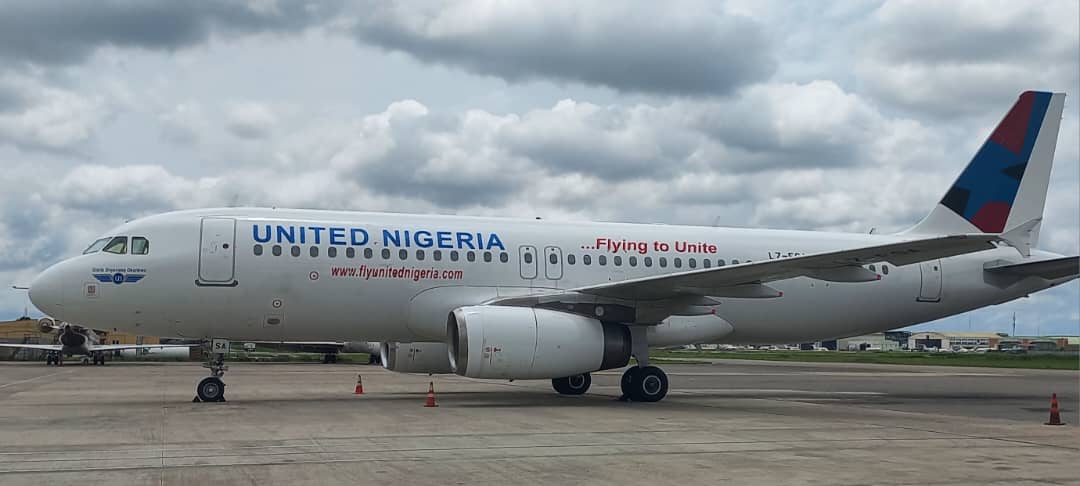
Flight operations at United Nigeria Airlines have suffered another setback after a new bird strike incident—the fifth recorded in 2026—led to the grounding of one of its aircraft, heightening worries about aviation safety and the airline’s operational stability within the domestic airspace.
The latest incident involved a CRJ-900 aircraft operating Flight UN0579 from Kano to Abuja. The aircraft reportedly encountered a bird strike while landing at the Nnamdi Azikiwe International Airport, shortly after departing from the Mallam Aminu Kano International Airport.
The development was confirmed in a statement issued on Wednesday by the airline’s spokesperson, Chibuike Uloka, who disclosed that the aircraft was immediately withdrawn from service in accordance with global aviation safety standards.
“In line with our strict and uncompromising safety standards, the aircraft has been immediately withdrawn from operations to undergo comprehensive technical inspections and any required maintenance before being returned to service,” the airline stated.
Immediate Fallout: Disruptions and Passenger Impact
The grounding of the aircraft is expected to ripple across the airline’s network, triggering delays and possible cancellations. For a carrier with a relatively lean fleet, such disruptions tend to have outsized operational consequences.


Acknowledging this, the airline appealed for patience from passengers:
“Consequently, some flights across our network may not operate as scheduled; however, safety remains our highest priority. We sincerely apologise for any inconvenience this unforeseen development may cause to our passengers’ travel plans.”
Despite the inconvenience, the airline emphasized that no compromise would be made on safety, reinforcing that every operational decision is guided by passenger protection.
A Pattern That Raises Questions
What makes this incident particularly striking is not just the event itself, but its recurrence. This marks the fifth bird strike involving the airline’s fleet within just four months, a pattern that is difficult to ignore.
While the airline maintains that each case has been handled properly:
“Each occurrence has been managed in full compliance with applicable aviation safety regulations and established operational procedures,”
the frequency of such incidents points to broader systemic concerns beyond the airline’s direct control.
Beyond the Airline: A Wider Safety Challenge
Bird strikes are not uncommon in aviation, especially during takeoff and landing phases, but repeated occurrences within a short timeframe often signal environmental and infrastructural gaps.
Attention is increasingly shifting toward:
- Wildlife hazard management around major airports
- Environmental conditions attracting birds to flight paths
- The role of aviation authorities in mitigating such risks
Airports like Nnamdi Azikiwe International Airport and Mallam Aminu Kano International Airport—both critical hubs—are now indirectly under scrutiny regarding their bird control systems.
Airline’s Position: Safety First, Confidence Intact
Despite the operational setbacks, United Nigeria Airlines reaffirmed its commitment to maintaining high safety and service standards:
“We appreciate the understanding of our valued passengers and reaffirm our commitment to maintaining the highest standards of safety and operational reliability. We will continue to take all necessary measures to optimise our operations and exceed the expectations of our passengers.”
This messaging reflects a deliberate attempt to balance transparency with reassurance, particularly at a time when repeated incidents could begin to shape public perception.
The Bigger Picture
The incident underscores a delicate intersection between safety compliance, operational efficiency, and environmental realities. While the airline has adhered strictly to protocol by grounding the aircraft, the recurrence of bird strikes highlights a vulnerability in the broader aviation ecosystem.
For passengers, the immediate concern remains disrupted travel plans. For regulators and industry stakeholders, however, the bigger question looms:
How can the aviation space better anticipate and prevent such repeated hazards?
Until that question is convincingly answered, incidents like this may continue to test both airline resilience and passenger confidence.