


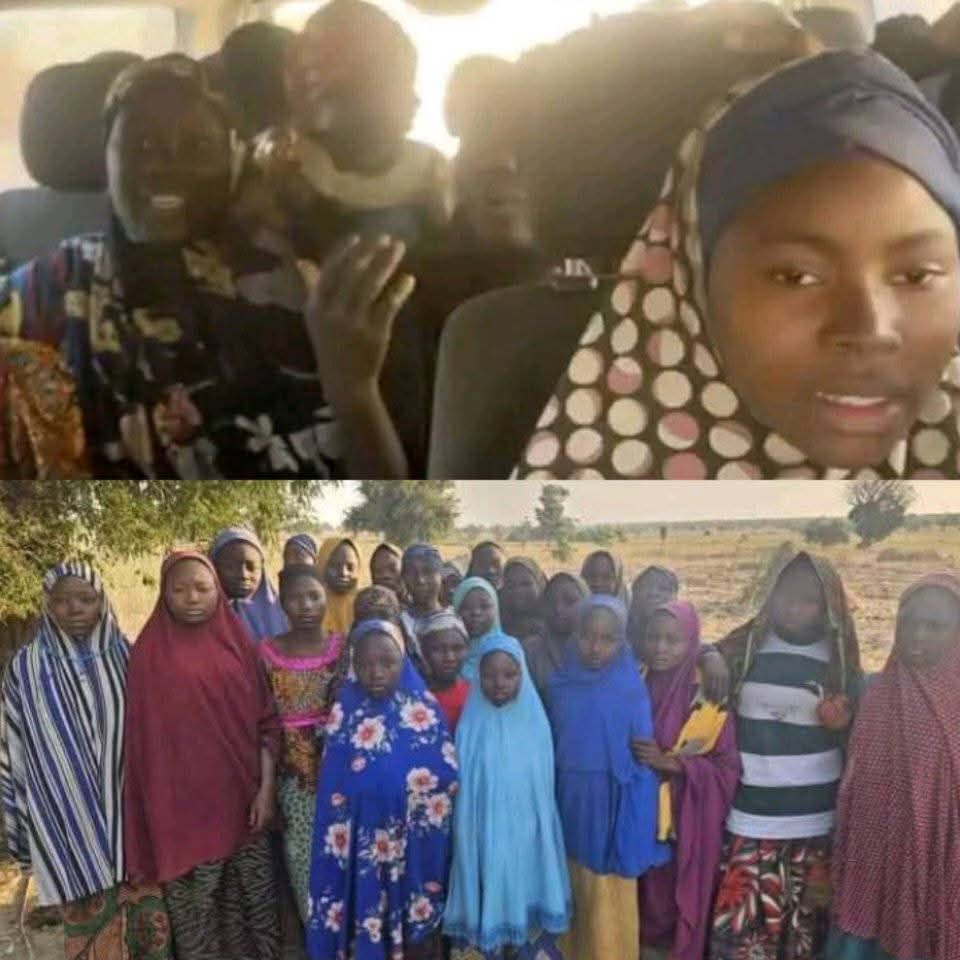
In a significant breakthrough for Nigeria’s ongoing fight against mass abductions, the twenty-four schoolgirls kidnapped from Government Girls Secondary School, Maga, in Danko-Wasagu Local Government Area of Kebbi State, have regained their freedom. Their release brings a wave of relief to families, state authorities, and a nation long tormented by relentless attacks on schools and rural communities.
Presidency Confirms Release
The news of their rescue was confirmed on Tuesday by Bayo Onanuga, the Special Adviser to President Bola Ahmed Tinubu on Information and Strategy. In a statement issued on behalf of the President, Onanuga praised the security agencies whose coordinated efforts led to the students’ safe return.
President Tinubu, expressing profound relief, said:
“I am relieved that all the 24 girls have been accounted for. Now, we must urgently deploy more boots on the ground in vulnerable areas to prevent further kidnappings. My government will provide all necessary support to achieve this.”
The President reiterated his administration’s commitment to securing Nigeria’s schools and communities, adding that the mission remains incomplete until every abducted citizen is safely back home.


Background: A Brazen Attack
The girls were abducted last Monday after bandits stormed their school hostel in a coordinated nighttime assault. The attack, which drew nationwide condemnation, saw 24 female students taken away, sparking anxiety across Kebbi State and beyond.
In response, President Tinubu immediately directed the Minister of State for Defence, Bello Matawalle, to relocate to Kebbi State. Matawalle was tasked with overseeing rescue operations on the ground and coordinating joint actions across security agencies. While commending the forces for “a series of releases” achieved in recent weeks, the President warned that “the job is not yet done.”
A Week of Terror Across Three States
The Kebbi abduction was only the first in a series of shocking attacks that unfolded across the country in the days that followed, underscoring the severity of our security challenges:
-
Kwara State: Gunmen attacked a Christ Apostolic Church in Eruku, Ekiti Local Government Area, abducting 38 worshippers during an overnight vigil.
-
Niger State: Another large gang raided St. Mary’s Catholic School in Papiri, Agwara LGA, kidnapping over 300 pupils and teachers, according to the police and the Catholic Diocese of Kontagora.
These back-to-back assaults triggered widespread outrage, with civil society, religious leaders, and education advocates renewing calls for comprehensive measures to secure schools—especially in rural communities across the North-West, where banditry remains a persistent threat.
National Outrage, National Relief
The rescue of the 24 Kebbi schoolgirls has been greeted with joy, but it has also sharpened demands for the government to go beyond reactive responses. For many Nigerians, this incident is yet another reminder of the fragility of rural education and the need for long-term structural reforms.
Security analysts warn that without fortified school infrastructures, community-based policing, and increased military presence in vulnerable regions, schools will continue to be easy targets for bandits seeking ransom or leverage.
The Road Ahead
While the rescued students undergo medical checks and reintegration support, attention now shifts to the hundreds still in captivity across multiple states. The government has vowed not to relent.
The release of the Kebbi schoolgirls is a bright spot amid a dark period. Yet it also underscores a painful truth: until Nigeria decisively dismantles the networks enabling mass abductions, no community can truly feel safe.