


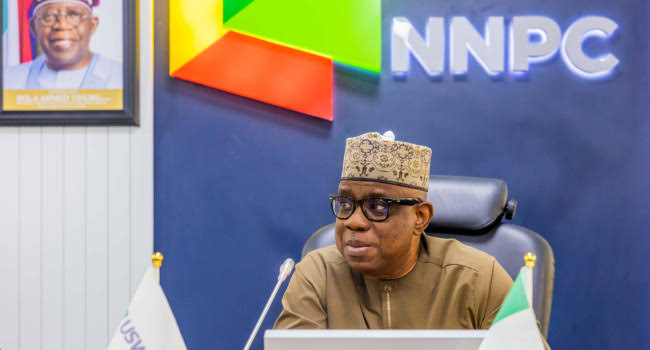
The Senate’s Committee on Public Accounts has rejected the written explanations submitted by NNPCL regarding an alleged ₦210 trillion gap in its audited accounts for the period 2017-2023. The panel has now ordered the group chief executive officer, Bayo Ojulari, to appear in person.
What Happened
-
The audit report from the Office of the Auditor‑General of the Federation (OAGF), flagged NNPCL’s financial statements between 2017-2023 as showing ₦103 trillion in liabilities and ₦107 trillion as receivables, totalling the ₦210 trillion under scrutiny.
-
The Senate committee gave NNPCL 19 specific audit queries to address and received written responses.
-
However, on the date for the company’s scheduled physical appearance before the committee (November 11, 2025), no senior NNPCL official showed up. The committee rejected NNPCL’s delegation and insisted only the GCEO’s appearance will suffice.

Senate Committee’s Position
Chairman Senator Aliyu Wadada (Nasarawa West), expressed profound displeasure at what he described as “offensive evasiveness” by NNPCL management. He stressed that the explanations submitted are contradictory and unacceptable.
Key points raised by the committee include:
-
How NNPCL claims it paid ₦103 trillion in “cash calls” in 2023 alone, yet it reported only about ₦24 trillion in crude revenue between 2017-2022 — a discrepancy the committee says is indefensible.
-
The company’s claim of ₦107 trillion in receivables, part of which it says are held in “defunct banks”, without specifying any institution or amount. The committee rejected this for lack of transparency.
-
NNPCL’s subsidiary, National Petroleum Investment Management Services (NAPIMS), is being treated as an independent entity in accounts though by law it is a unit of NNPCL — raising concerns about consolidation.
The committee declared that from now on, at every invitation of NNPCL, the GCEO must appear in person. Excuses such as “out of the country” will not be accepted.
NNPCL’s Response
While NNPCL submitted written responses to the 19 queries, the committee said those responses remain under scrutiny and were found to contain significant red flags.
NNPCL has not yet provided a full public breakdown explaining how the ₦210 trillion figure was arrived at in its audited accounts, nor how the “receivables” were verified.
Why It Matters
-
₦210 trillion is a massive sum — in one dataset it represents two halves: liabilities and assets jointly unaccounted for. This raises questions about financial stewardship in the national oil company.
-
Given that NNPCL is central to Nigeria’s oil & gas sector — which underpins much of the nation’s revenue — ineffective oversight or opaque accounting can have broad implications for budget planning, investor confidence, and public trust.
-
The Senate’s insistence on personal appearance by the GCEO signals a tightening of legislative oversight and possibly a warning to other state-owned enterprises.
What Comes Next
-
The committee will publish its report once the written responses from NNPCL have been fully evaluated. Until then, the rejection stands and further action is on the table.
-
Former officials of NNPCL and NAPIMS may be summoned if current management cannot satisfactorily explain the discrepancies.
-
NNPCL is expected to present the GCEO in person at the next scheduled hearing, under threat of contempt or escalation.
Final Word
The Senate panel’s decision underscores growing parliamentary impatience with audit-query resolutions via paperwork alone. By rejecting the explanations of NNPCL and demanding direct accountability from its top executive, lawmakers are signalling that financial oversight of the oil sector has entered a more combative phase.
As investigations proceed, all eyes will be on NNPCL’s next moves — particularly whether it can substantiate the ₦103 trillion liabilities and ₦107 trillion receivables with credible documentation, and whether the GCEO, Chief Bayo Ojulari will step up to answer in person.
