


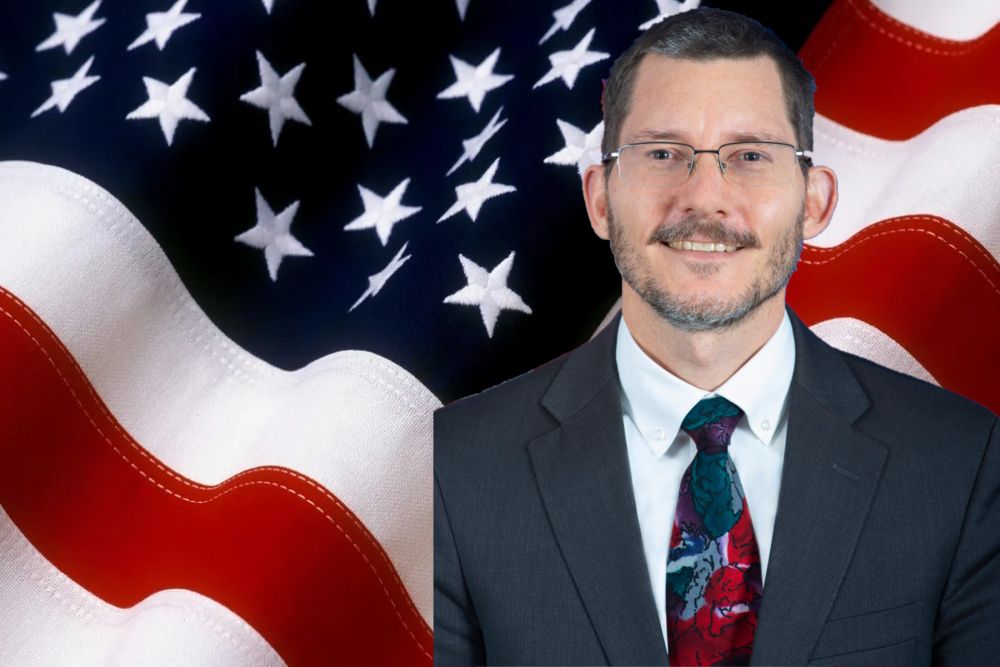
For decades, United States foreign assistance has played a dual role across the developing world—delivering tangible humanitarian gains while simultaneously, and often unintentionally, enabling corruption, dependency, and weak governance in recipient states. According to Michael C. Gonzales, U.S. Ambassador to the Republic of Zambia and Special Representative to the Common Market of Eastern and Southern Africa (COMESA), this paradox stems from a fundamental failure to align aid with accountability, reform, and national interest.
At the heart of the problem, Gonzales argues, lies moral hazard—a condition in which recipient governments take greater risks or neglect reform because they expect donors to absorb the consequences of failure.
While U.S. foreign assistance has totaled hundreds of billions of dollars globally, including more than $200 billion to Africa since 1991, the African Union estimates that the continent loses approximately $88 billion annually to tax evasion, money laundering, and corruption. The disparity, Gonzales notes, illustrates that development is constrained not by insufficient funding but by governance failures and the absence of reform-driven incentives.
Treating Symptoms Instead of Causes
Gonzales contends that U.S. assistance policy too often focused on funding short-term outputs—schools built, clinics supplied, programs launched—rather than addressing the structural causes of poverty and underdevelopment.


By prioritising symptoms over systemic reform, the United States failed both American taxpayers and citizens of recipient countries who expected aid to help create sustainable economic conditions.
For much of this period, U.S. foreign assistance lacked a coherent framework: it was unclear whether aid was charity or a strategic foreign policy instrument. As a result, assistance programs frequently did not require committed partners, credible development plans, host-government co-financing, or performance-based disbursement mechanisms.
Instead of fostering mutual accountability, Gonzales argues, the United States “infantilised” recipient governments by lowering expectations and avoiding candid discussions about responsibility and political will.
The “Soft Bigotry of Low Expectations”
According to Gonzales, donor governments routinely excused inaction or corruption by labeling failures as “capacity constraints,” while avoiding confrontations over broken commitments. This dynamic led to a pattern in which stated commitments were confused with concrete actions, and donor access to political leaders was mistaken for genuine influence.
Aid agencies frequently mischaracterised project outputs as development outcomes, and host-government permission to spend aid as evidence of shared priorities. Even when recipient leaders repeatedly demonstrated—through corrupt practices or self-enrichment—that they prioritised personal interests over national welfare, assistance was rarely withheld. Instead, donors often responded by increasing aid on the grounds that populations remained in need.
In doing so, Gonzales argues, the United States violated what he calls a central principle of international development: the donor cannot want development more than the recipient. By shielding populations from the consequences of poor governance, foreign assistance inadvertently entrenched the very corruption and misrule it sought to mitigate.
Corruption, Instability, and Security Risks
Gonzales cites multiple cases where this dynamic had destabilising consequences. From Malawi’s “Cashgate” scandal under former President Joyce Banda, to entrenched kleptocracies in Bangladesh and South Sudan, U.S. and international assistance backfilled social services hollowed out by corruption.
In more extreme cases—such as Mali under Ibrahim Keita and Guinea under Alpha Condé—systemic corruption and service delivery failures contributed to military coups and openings for terrorist organisations.
These outcomes, Gonzales warns, demonstrate that poorly structured aid does not merely waste resources; it can actively undermine governance, fuel instability, and threaten U.S. security interests.
Foreign Assistance as a Strategic Tool
Rejecting the notion of aid as charity, Gonzales frames U.S. foreign assistance as a strategic instrument designed to advance American diplomacy, security, and prosperity.
To achieve these goals, he calls for assistance that is conditional on host-government buy-in, mutual accountability, and measurable outcomes—leaving space for private-sector–driven growth.
Critics who label this transactional approach as “neocolonial,” Gonzales argues, invert reality. In his view, it is the dependency-oriented, NGO-driven development model that reflects a colonial mindset by denying developing nations sovereignty, agency, and responsibility for their own growth.
Operationalising Reform: Six Core Principles
Gonzales outlines a framework for restructuring U.S. foreign assistance around investment-oriented principles:
-
A Serious Host Nation
Echoing statements by Secretary Rubio, Gonzales asserts that U.S. taxpayers should not fund governments unwilling to reform using their own resources. Where political will is absent, assistance should be redirected elsewhere. -
The Right Focus
Aid should catalyse systemic reforms—particularly anti-corruption measures and removal of binding constraints to growth—rather than attempt to substitute for private investment or government responsibility. -
Confidence in the Business Plan
Many national development strategies, Gonzales argues, are unrealistic and unfocused. Effective assistance requires disciplined prioritisation, grounded analysis, and targeted sectoral strategies. -
Skin in the Game
Host governments must commit their own financial resources. Gonzales highlights the Millennium Challenge Corporation (MCC), model, which requires co-financing and conditions precedent—reforms completed before funds are disbursed. -
The Right Resources
Development is not primarily a funding problem. Instead, tailored technical assistance—designed to achieve specific outcomes aligned with U.S. and host-country interests—should replace diffuse, unfocused programming. -
Contracts and Performance-Based Funding
Binding agreements ratified by legislatures, coupled with performance-based disbursements, increase accountability. Assistance should be reduced or withdrawn if governments fail to meet their commitments through action.
A Strategic Reset
Under President Trump and Secretary Rubio, Gonzales sees an opportunity to candidly acknowledge past failures and adopt a more disciplined, interest-driven approach. He emphasizes that the United States is not retreating from engagement with developing nations, but rather seeking partnerships with governments willing to act as mature stakeholders.
Such engagement, Gonzales stresses, must be voluntary, transparent, and respectful of sovereignty—distinct from coercive models employed by rival powers. However, U.S. allegiance must ultimately remain with the American people, requiring responsible stewardship of taxpayer resources.
Drawing on a career dedicated to Africa and the developing world, Gonzales concludes that reforming foreign assistance can unlock immense potential. By aligning aid with accountability and national interest, the United States can help curb corruption, foster durable economic growth, and contribute to a more secure and prosperous global order—benefiting both recipient nations and Americans alike.