

Third Mainland Bridge Faces Major Rehabilitation At N3.6 Trillion, Says Minister.
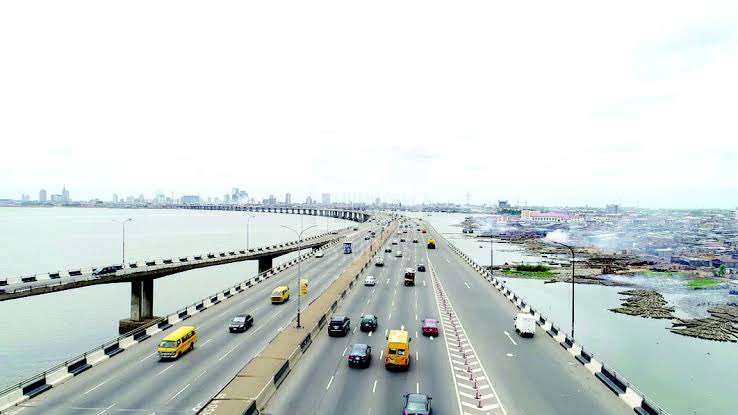
The Federal government of Nigeria has announced a significant rehabilitation project for the Third Mainland Bridge, one of the country’s most vital infrastructure assets, following the discovery of severe structural issues beneath the waterline. The Minister of Works, David Umahi, revealed that the rehabilitation is estimated to cost N3.6 trillion, reflecting the extensive damage to the bridge’s underwater components.
Speaking at a recent Federal Executive Council meeting in Abuja, Umahi disclosed that detailed assessments uncovered critical problems with the bridge’s piers and piles, primarily due to illegal sand mining, erosion, and corrosion. The 11.8-kilometre bridge, a key transport link for Lagos’ estimated 20 million residents, has been plagued by decades of neglect and environmental pressures, exacerbating the deterioration of its substructure. The minister noted that the damage is so severe that a complete rebuild, costing slightly less at N3.6 trillion, is also under consideration as an alternative to rehabilitation.

The government has mobilised seven specialist contractors to conduct in-depth investigations and prepare designs for both rehabilitation and potential reconstruction under an Engineering, Procurement, Construction, and Financing (EPC+F) arrangement. Discussions are underway with international lenders, including Deutsche Bank, to explore funding options through public-private partnerships. This approach aims to alleviate the financial burden on the federal budget, given the project’s monumental cost.
Umahi also highlighted ongoing concerns with the Carter Bridge, another critical Lagos structure, which faces similar underwater issues. The Federal Executive Council has approved N359 billion for its replacement, alongside N134 billion for the upgrade of the 152-kilometre Kano–Katsina Road. The minister stressed the urgency of addressing these infrastructure challenges, warning that delays could lead to catastrophic safety risks and even higher costs, with a potential N6 trillion price tag for reconstructing the Third Mainland Bridge if it collapses.
Previous estimates in March 2024 pegged the rehabilitation cost at N21 billion, with N6 billion already disbursed to contractor Julius Berger for initial repairs. However, recent inspections revealed far more extensive damage, prompting the sharp increase in projected costs. The government has also restricted heavy-duty vehicles from using the bridge to prevent further strain on its weakened structure.
The Third Mainland Bridge, inaugurated in 1990, remains Nigeria’s longest bridge and a cornerstone of Lagos’ transport network. Authorities are moving swiftly to finalise funding and procurement processes, with timelines dependent on securing financial agreements. The project underscores the government’s commitment to safeguarding critical infrastructure while navigating economic constraints.
As rehabilitation plans progress, Lagos residents are urged to adhere to traffic regulations, including speed limits, to ensure the bridge’s stability. The Ministry of Works has installed CCTV cameras to monitor activity and enforce compliance, with remote oversight from Abuja. The nation awaits further updates as this ambitious project unfolds, aiming to secure the future of one of Nigeria’s most iconic landmarks.
