


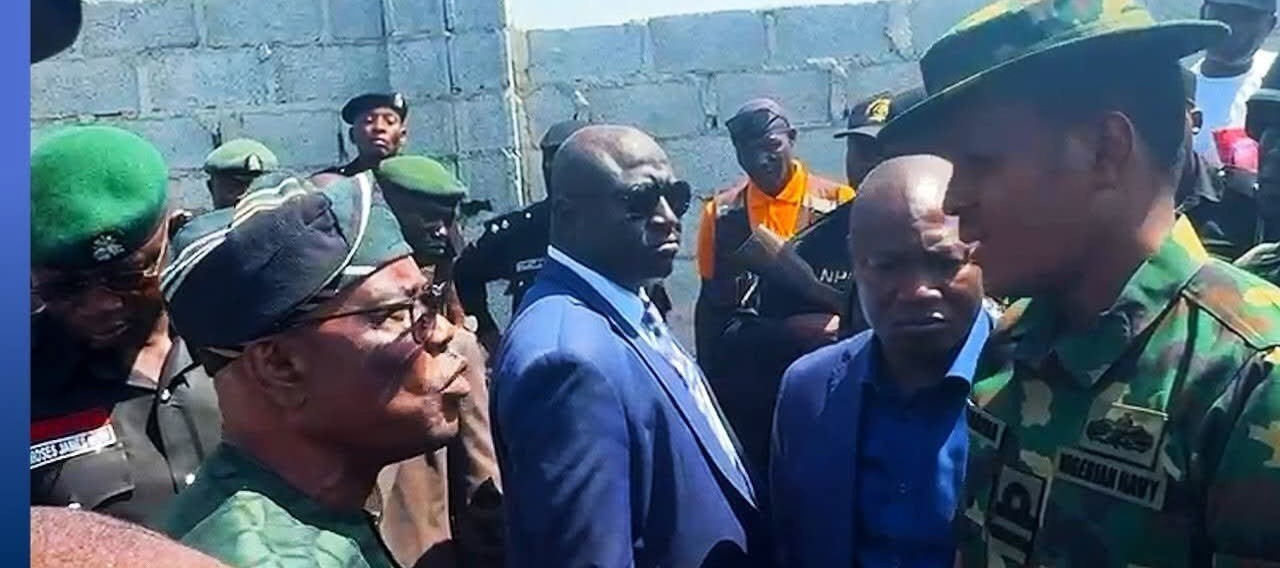
Since yesterday, a widely circulated video from Abuja has triggered a resurgence of concerns about civil-military relations, ministerial conduct and national security in Nigeria. The footage captures Nyesom Wike—Minister of the Federal Capital Territory (FCT)—in a rather heated exchange with uniformed military personnel at a land dispute site in Gaduwa District, Abuja.
Reacting swiftly, the country’s former Chief of Army Staff, Tukur Yusuf Buratai (Ret.), issued a strong statement. He described Wike’s conduct as more than mere misconduct: rather, he said, it constitutes a “clear and present danger to national security”.
He therefore demanded an immediate public apology from the minister to the President (as Commander-in-Chief), to the Armed Forces of Nigeria, and to the officer whose honour was said to have been violated.
Below, I unpack the incident, consider its wider implications, and argue that the call for an apology is not just about personal decorum, but about the health of our national institutions.


The Incident in Brief
On 11 November 2025, Minister Wike visited a site in the Gaduwa District of Abuja, in the company of officials from the Federal Capital Development Authority (FCDA), purportedly to halt what he described as “illegal construction” on a parcel of land.
At the site, a naval officer in uniform was present asserting that the land belonged to a former Chief of Naval Staff and that the military was providing protection.
In the video, Wike is heard addressing the uniformed officer: “You are in uniform, and you’re telling me that the Navy owns this land? Who gave you the right to build without approval? Even if you are the Chief of Naval Staff, the law must be respected.”
The former army chief’s reaction anchors the story: he pointed out that the public rebuke of a serving officer in uniform by a minister punches at the core of the military’s chain of command, discipline and institutional authority.
Why Buratai Says This Undermines National Security
Buratai’s key points can be summarised as follows:
-
Erosion of Chain of Command: He argued that a minister’s public verbal assault on a uniformed officer “strikes at the very foundation of our command and control structure.”
-
Disrespect to the Commander-in-Chief: By undermining a uniformed officer, the incident, in his view, amounted to an indirect challenge to the authority of the President as head of the armed forces.
-
Morale and Institutional Integrity: The goodwill, discipline, and respect that soldiers rely on can be damaged when they see senior civilian officials publicly belittling them.
-
National Security Signal: He warned that this was not “political theatre”, but a “reckless endangerment of national order”.
In essence, the argument is that if military personnel—and by extension, other security institutions—feel their dignity or interface with civilian authority is subject to ad‐hoc interference or public humiliation, their willingness to execute their duties, abide by established protocols, or maintain public confidence could falter.
The Broader Implications for Civil-Military Relations
This episode raises several challenging questions for Nigeria’s governance and security architecture:
-
Boundaries of Ministerial Supervision: Ministers have oversight responsibilities and hold civilian authority—but public interactions with uniformed officers must respect institutional protocols. The incident raises the question of whether Wike’s conduct breached good governance norms.
-
Military Visibility and Non‐Partisanship: Military personnel in uniform operate in a sensitive space. Their reception by civilians—especially public officials—has implications for perceptions of impartiality, professionalism and rule of law.
-
Public Perception and Trust: Citizens watching this interaction may interpret it either as ministerial resolve or as disregard for the armed forces. Such perceptions affect the broader trust in both state and security actors.
-
Precedent for Future Conduct: If senior officials see verbal rebuke of uniformed officers as normal or consequence‐free, it may lower standards of interaction and allow escalation into more significant institutional conflicts.
Why an Apology is Appropriate
Buratai’s demand for a public apology is more than symbolic—it has institutional significance:
-
Restoring Respect: An apology would signal recognition that the dignity of uniformed personnel is significant and must be upheld—a key part of military morale.
-
Reaffirming Civilian‐Military Norms: It would reaffirm the principle that civilian authority, though supreme in a democracy, engages the armed forces through proper channels and respect—not through public confrontation.
-
Preserving Chain of Command: By publicly acknowledging the wrong, the minister would help reinforce the chain of command within the military and the broader security apparatus.
-
Preventing Escalation: Without such acknowledgment, there is risk of tit-for-tat escalation or cynicism within the security forces, which could hamper cooperation in joint civil-security tasks.
Possible Objections and Counterpoints
To provide balance, it’s worth noting potential counterpoints:
-
Ministerial Duty to Enforce Law: One could argue Wike was performing his duty by confronting what he considered an unlawful construction—even if the person in uniform was involved. His argument: “Even if you are the Chief of Naval Staff, the law must be respected.”
-
Land Dispute Complexity: The site is allegedly owned by a former service chief; the military claimed it had authorisation to protect the land. This complicates the narrative and suggests due process, clarity of land rights, and roles might be ambiguous.
-
No Indication of Physical Altercation: The incident was verbal, which might lead some to downplay it compared with physical conflict—though it’s the institutionality that is at stake, not just the physical act.
Nonetheless, these counter‐arguments do not negate the core of Buratai’s concern: even when enforcing the law, the method and tone matter significantly when uniformed personnel are involved.
Conclusion
The incident between Minister Nyesom Wike and the naval officer has become more than a land dispute moment—it has lit a spotlight on how Nigeria’s civilian leadership interacts with its military institutions. The former Army Chief’s intervention suggests that the stakes go beyond decorum: they touch the foundations of respect, discipline and national security.
In this light, Wike’s conduct—regardless of his underlying justification—warrants careful reflection. A public apology is not merely about curing wounded pride—it is a reaffirmation of the rules, protocols and mutual respect that underpin a functioning democracy with a professional military.
For Nigeria’s security institutions to maintain credibility, independence, and morale, civilian leaders must show that oversight does not equate to denigration; that enforcement of law is compatible with institutional dignity; and that ministerial authority co-exists with disciplined and respected uniformed services.
If our national security and institutional integrity truly matter, then yes—Nyesom Wike should apologise.