


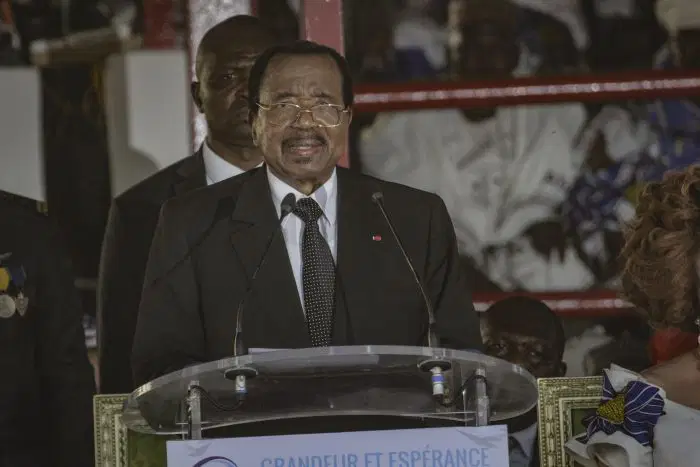
Cameroon’s 92-year-old President Paul Biya has been re-elected for an eighth term, securing 53.66% of the vote in the October 12 presidential election.
His main challenger, Issa Tchiroma Bakary, a former government minister, received 35.19% of the vote. Tchiroma had earlier claimed victory based on internal party data, but his assertions were dismissed by Biya and the electoral authorities.
The election was marked by significant unrest, particularly in Douala, Cameroon’s economic capital, where clashes between opposition supporters and security forces resulted in at least four deaths. Protesters demanded credible election results, leading to road blockages and violent confrontations. Security forces responded with force, detaining over 100 individuals and intensifying tensions across the country.
In the northern regions, including Garoua and Maroua, demonstrations intensified, with protestors accusing the government of electoral fraud and political marginalization. A teacher in Garoua was reportedly killed by stray bullets during a protest, prompting the University of Garoua to temporarily suspend classes. The government has denied allegations of vote-rigging, while opposition leaders vowed to continue challenging the results.

The Constitutional Council rejected all ten petitions contesting the election results, citing insufficient evidence or lack of jurisdiction. This included claims of ballot-stuffing and voter intimidation. Tchiroma, who did not submit a formal petition, stated that he would not accept what he described as “falsified results.”
Biya, in power since 1982, faced criticism over his advanced age and lengthy tenure. Opposition candidates accused him of manipulating the electoral process and disqualifying strong rivals. Despite these claims, the Cameroon People’s Democratic Movement maintained a strong grip on power, with Biya winning decisively. Biya’s victory underscores his continued dominance in Cameroon’s political landscape.
The re-election extends Biya’s rule into a 44th year, making him one of Africa’s longest-serving leaders. The outcome has sparked debates about democracy and governance in Cameroon, with citizens and international observers questioning the transparency and fairness of the election. Many are calling for reforms to strengthen the country’s electoral process and protect political freedoms.
