


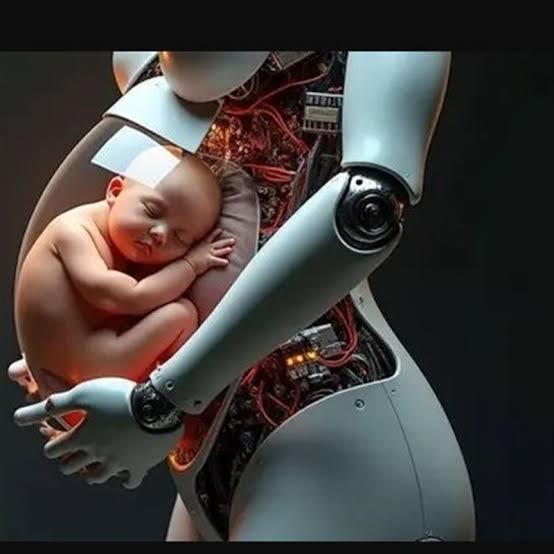
Chinese Firm Set To Launch World’s First Pregnancy-Simulating Humanoid Robot By 2026.
A Chinese technology company, Kaiwa Technology, based in Guangzhou, has announced plans to introduce a revolutionary humanoid robot capable of simulating human pregnancy through an artificial womb. The ambitious project, revealed at the 2025 World Robot Conference in Beijing, is expected to debut a working prototype in 2026, potentially transforming reproductive science and sparking global debate.

The humanoid robot, priced at under 100,000 yuan (approximately £10,000), is designed to replicate the full gestation process, from conception to delivery. Unlike traditional neonatal incubators, the robot’s artificial womb will use synthetic amniotic fluid and nutrient-delivery tubes to mimic the natural uterine environment. Dr Zhang Qifeng, founder of Kaiwa Technology, stated that the technology is at a “mature stage,” with the next phase focusing on integrating it into a humanoid form for an interactive pregnancy experience. The innovation builds on prior research, such as the 2017 trials in the United States where premature lambs were sustained in “biobags” for weeks, demonstrating the feasibility of artificial gestation systems.
The announcement has ignited widespread discussion, particularly in China, where the project addresses pressing demographic challenges. With infertility rates rising from 11.9% in 2007 to 18% in 2020, and a record-low birth rate in recent years, the robot could offer hope to couples struggling to conceive. It also presents a potential alternative for those wishing to avoid the physical and emotional burdens of biological pregnancy. Supporters on Chinese social media platforms like Weibo have praised the innovation, with one user commenting, “This could be a game-changer for families who’ve faced repeated failures with artificial insemination.”
However, the project has not been without controversy. Critics have raised ethical concerns, arguing that a fetus developing in a robotic womb could lack the maternal bond essential for psychological development. Questions also remain about the sourcing of eggs and sperm, as well as the legal status of children born via this method. Some social media users have called the concept “cruel” and “a violation of human ethics,” expressing fears about the commodification of childbirth or potential misuse, such as creating “designer babies.” In response, Kaiwa Technology has engaged with authorities in Guangdong Province, submitting proposals to navigate the ethical and legal complexities. Current Chinese regulations prohibit developing human embryos in artificial environments beyond 14 days, placing the project in a legal grey area.
The technical details of fertilisation and implantation remain unclear, with Dr Zhang yet to disclose how these processes will be achieved. Sceptics, including some international observers, have questioned the feasibility of a fully functional prototype by 2026, citing the significant scientific and regulatory hurdles. Fact-checkers have also noted discrepancies in claims about Dr Zhang’s affiliation with Nanyang Technological University in Singapore, casting doubt on some aspects of the project’s credibility.
Despite these challenges, the potential impact of Kaiwa’s pregnancy robot is undeniable. If successful, it could offer a more affordable alternative to traditional surrogacy, which can cost between $100,000 and $200,000 in the United States. It may also provide safer options for high-risk pregnancies and support China’s efforts to address its demographic crisis. As the world watches, the project raises profound questions about the future of reproduction, parenthood, and the role of technology in human life. With less than a year until the prototype’s expected unveiling, global attention remains fixed on Guangzhou, where Kaiwa Technology is pushing the boundaries of science and ethics.
