


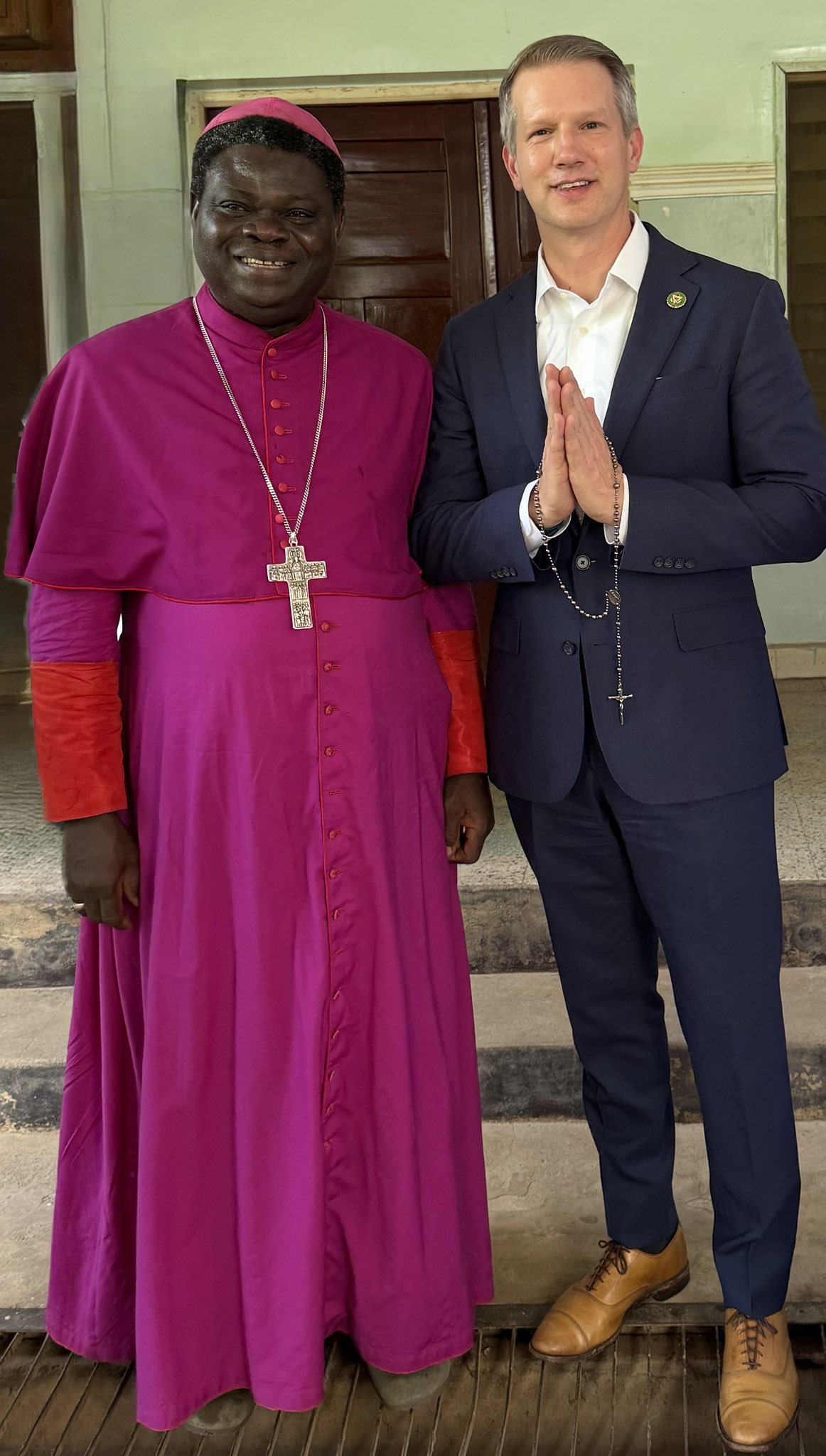
In early December 2025, U.S. Congressman Riley M. Moore, representing Virginia’s Second District in the House of Representatives, arrived in Nigeria on what he described as a mission “in the name of the Lord and on behalf of the American people.”
Although Moore did not disclose all the specifics of his trip, analysts believe it is closely linked to ongoing investigations into alleged Christian genocide in Nigeria — a topic that has drawn increasing attention from lawmakers and human rights advocates in the United States.
Purpose of the Visit
Moore is leading a delegation that includes several other U.S. lawmakers, such as Mario Díaz-Balart, Norma Torres, Scott Franklin, and Juan Ciscomani, accompanied by the U.S. Ambassador to Nigeria. The team’s mission is described as a “fact-finding” exercise to assess reports of systematic violence targeting Christians in the country.
During the visit, the delegation reportedly held meetings with key Nigerian officials, including the National Security Adviser Nuhu Ribadu, religious leaders, and state governors — notably in Benue State, a region frequently affected by attacks on Christian communities. These discussions focus on security challenges and the protection of vulnerable populations.


U.S. Lawmakers on Alleged Christian Genocide
Congressman, Moore has repeatedly framed the violence in Nigeria as a potential “genocide.”
Key points cited by Moore include:
-
Over 7,000 Christians killed in 2025 alone, averaging about 35 deaths per day.
-
Since 2009, between 50,000 and 100,000 Christians have reportedly been murdered, with more than 19,000 churches attacked or destroyed.
-
Attacks often target entire villages, clergy, and churches, sometimes timed to coincide with religious holidays.
Moore has called on the U.S. Secretary of State to officially designate Nigeria as a Country of Particular Concern (CPC), a move that could trigger sanctions or stricter diplomatic measures. He emphasized that the American delegation’s visit reflects both concern for religious freedom and a commitment to human rights.
Nigerian Government Response
The Nigerian government strongly rejects the “genocide” label, asserting that the violence is complex, often driven by terrorism, banditry, ethnic conflicts, and land disputes — not purely religious motives.
Nigeria’s House of Representatives has called for a coordinated diplomatic response to U.S. legislative efforts, warning that framing Nigeria’s security challenges as religious persecution oversimplifies the situation.
Some Nigerian civil society organisations and religious leaders have urged caution, emphasizing the need to avoid narratives that could further inflame tensions between communities.
Implications of the Visit
Moore’s visit highlights the international attention on Nigeria’s security and human rights situation.
Potential outcomes of the delegation’s assessment include:
-
Increased U.S. diplomatic pressure on Nigerian authorities to protect minority groups and address ongoing violence.
-
Greater visibility for victims and humanitarian organisations, potentially resulting in aid, monitoring, or other support.
-
Heightened political debate within Nigeria, balancing domestic sensitivities with the international demand for accountability.
However, questions remain about the precise scale and motivations of the attacks. Independent verification is limited, and the classification of events as “genocide” under international law — which requires evidence of intent to destroy a specific group — remains contested.
Conclusion
Congressman Moore’s visit to Nigeria, framed in religious and humanitarian terms, has reignited discussions about the vulnerability of Christians in parts of Nigeria.
While the Nigerian government maintains that violence in the country is multifaceted and not religiously motivated, U.S. lawmakers insist that Islamic extremist groups are disproportionately targeting Christian communities.
The coming weeks may provide further clarity on the delegation’s findings and potential diplomatic consequences.