


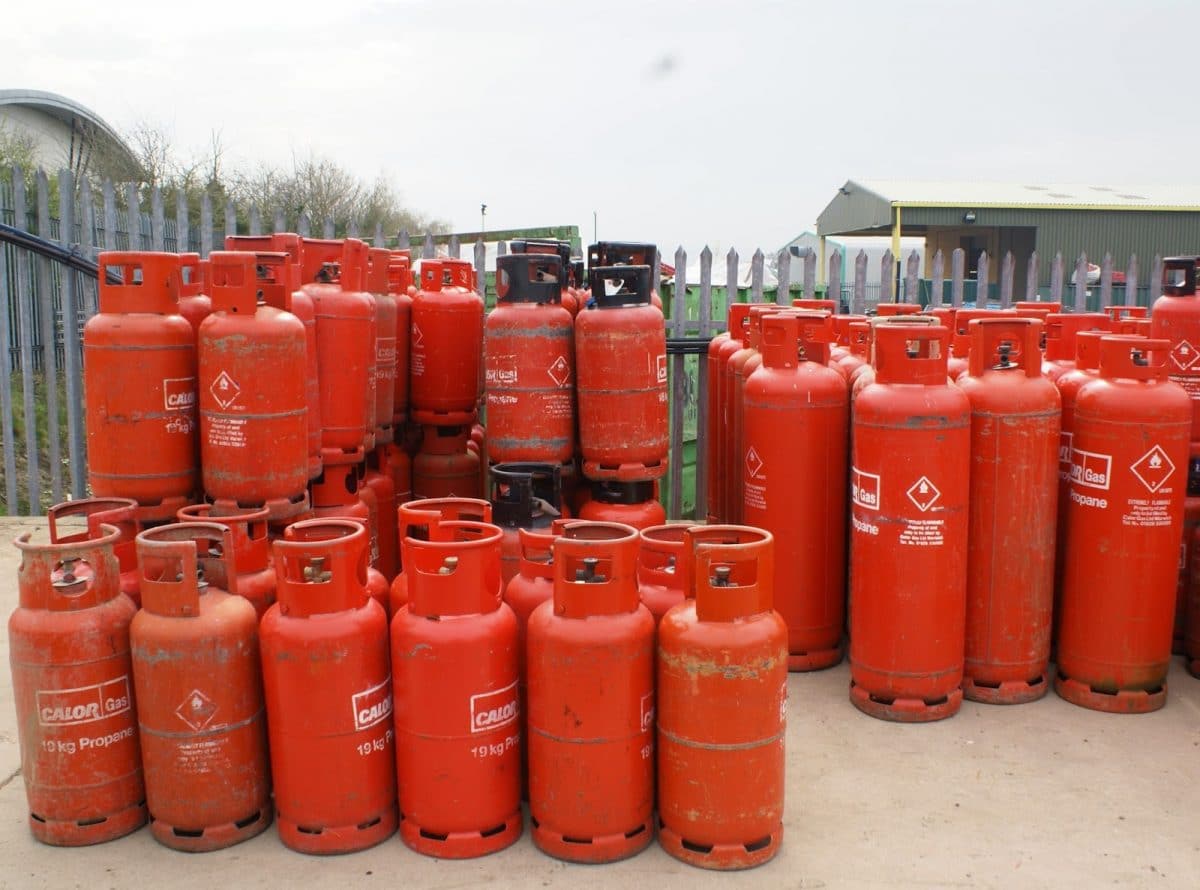
The cost of Liquefied Petroleum Gas also known as cooking gas has remained high across Nigeria, despite repeated assurances from marketers that prices would fall back to the N950 to N1,000 per kilogram range.
Checks at different gas refilling outlets showed that many homes are still struggling with the increased cost, which has persisted into the new month.
A market survey in Lagos revealed that most gas stations now sell between N1,200 and N1,400 per kilogram. Outlets such as Gasland in Igando and Mac Rich gas plant at Cele Okota sold the product at N1,200 per kilogram, while other retail points in different parts of Lagos were seen dispensing at N1,300 and N1,400 depending on location.
Some gas plant attendants who spoke anonymously said the continuous high cost was beyond their control. One of them said, “As at last month, we sold cooking gas at N900 and N950 per kg. Presently we retail at N1,200 per kg. This is the situation we find ourselves in the country. We hope the price drops further in the coming weeks.” Retailers buying in bulk quantities of 150 to 200 kilograms confirmed that they currently purchase at about N1,104 per kilogram.

In a phone interview, the outgoing President of the Nigerian Association of Liquefied Petroleum Gas Marketers Olatunbosun Oladapo explained that supply constraints and operational challenges were responsible for the price situation. He said there had been a backlog of unsupplied product and disruptions due to maintenance and logistics at LPG facilities, which affected availability in the market.
Oladapo however expressed optimism that the market would stabilise soon, stating that production from the Dangote Refinery and the entry of additional gas supply from Seplat Energy were expected to ease pressure. According to him, “Normalcy will return in the coming weeks,” as more volume becomes available.
He also noted that LPG consumption in Nigeria has continued to rise significantly under the Federal Government’s Decade of Gas initiative. He stated that consumption increased from about one million metric tonnes in 2021 to two million metric tonnes in 2025 and projected that it could hit three million metric tonnes by the first quarter of next year with a long term target of six million metric tonnes annually.
