


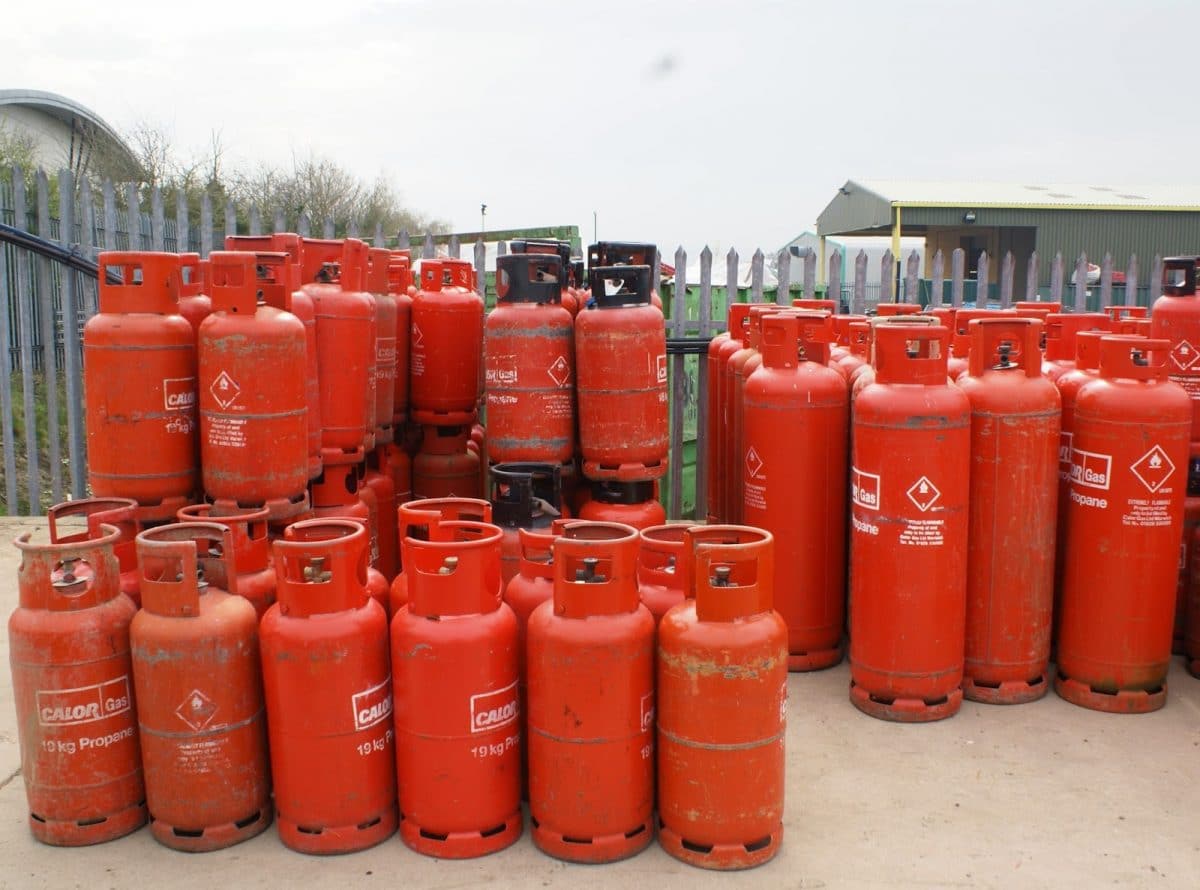
Weeks after the federal government pledged to curb the rising cost of liquefied petroleum gas (LPG), commonly known as cooking gas, the commodity remains expensive across Abuja and beyond.
A survey by the News Agency of Nigeria found that in parts of the capital cooking gas is still being sold for as much as N1,800 per kilogram at roadside outlets. According to the report, the price had jumped from N1,100 per kg to N1,800 following the industrial action by the Petroleum and Natural Gas Senior Staff Association of Nigeria (PENGASSAN).
In response, the government directed the Nigerian Midstream and Downstream Petroleum Regulatory Authority (NMDPRA) to intensify monitoring of LPG depots to discourage hoarding. The Ekperikpe Ekpo, Minister of State for Petroleum Resources (Gas), attributed the surge primarily to two factors: the PENGASSAN strike at Dangote Refinery and maintenance work at the Nigeria LNG train‑four facility, both of which reduced domestic supply of LPG. He stated that operations at the Dangote Refinery had resumed, while the Bonny River Terminal operated by Seplat Energy had also resumed loading.
A retailer, Mr Kingsley Paul, told NAN that he “could not sell below his purchase cost” and that because he was still selling old stock he was waiting for new deliveries before reducing his prices. At one major outlet cooking gas was reported at N1,450 per kg, though the manager said they “were still selling old stock” and hoped for a reduction once new supply arrived.


Meanwhile, Nigerian households and businesses continue to call on the government to deliver a lasting solution. Mr Christian Chibuzor, an environmentalist, said that while the use of cooking gas “will help lower carbon emissions compared to traditional firewood, charcoal, or kerosene … the government must demonstrate commitment to reducing the price” if the transition is to be achieved, particularly in rural areas.
As the cost of cooking gas remains high despite government intervention, many households reliant on LPG face the difficult choice of continuing to pay elevated rates or reverting to less clean fuels, undermining both affordability and environmental goals.