


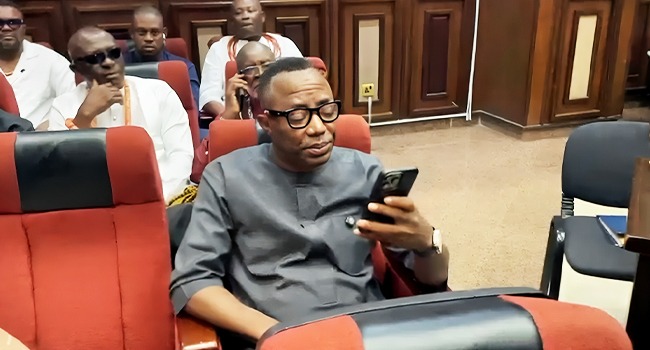
The Federal High Court in Abuja has scheduled October 27, 2025, for the arraignment of human rights activist Omoyele Sowore on a five-count charge bordering on alleged cybercrime.
The court adjourned the case after the scheduled arraignment was stalled due to the non-service of the charge sheet on Sowore.
Sowore’s lawyer, Marshal Abubakar, objected to the arraignment, stating that his client had not been served with the charges. The Director of Public Prosecutions from the Federal Ministry of Justice informed the court that the prosecution was fully prepared to arraign Sowore alongside X Corporation and Meta (Facebook) Inc.
The charges against Sowore include using his official X handle to publish an “offensive post” on August 25, 2025, within the jurisdiction of the Federal High Court. The post allegedly violates Section 24(2)(b) of the Cybercrimes Prohibition and Prevention Act, 2024. The Department of State Services (DSS) filed the charges against Sowore, accusing him of posting false and inciting statements about President Bola Tinubu.

In response, Sowore filed two separate fundamental rights suits at the Federal High Court in Abuja against the DSS, Meta, and X Corporation, challenging what his lawyers described as “unconstitutional censorship” of his accounts. His legal team, led by Tope Temokun, argued that the matter was about safeguarding free speech in Nigeria, warning that “if state agencies can dictate to global platforms who may speak and what may be said, then no Nigerian is safe, their voices will be silenced at the whims of those in power”.
The DSS had issued Sowore a one-week ultimatum to delete what it described as “false, malicious, and inciting” posts about President Tinubu from his X account. Sowore refused to comply, and the ultimatum expired on September 15 without the removal of the posts, prompting the DSS to proceed with legal action.
Sowore’s arraignment is now set for October 27, 2025, where he will face the charges against him. The case has sparked concerns about freedom of speech and the role of state agencies in regulating online content.
