


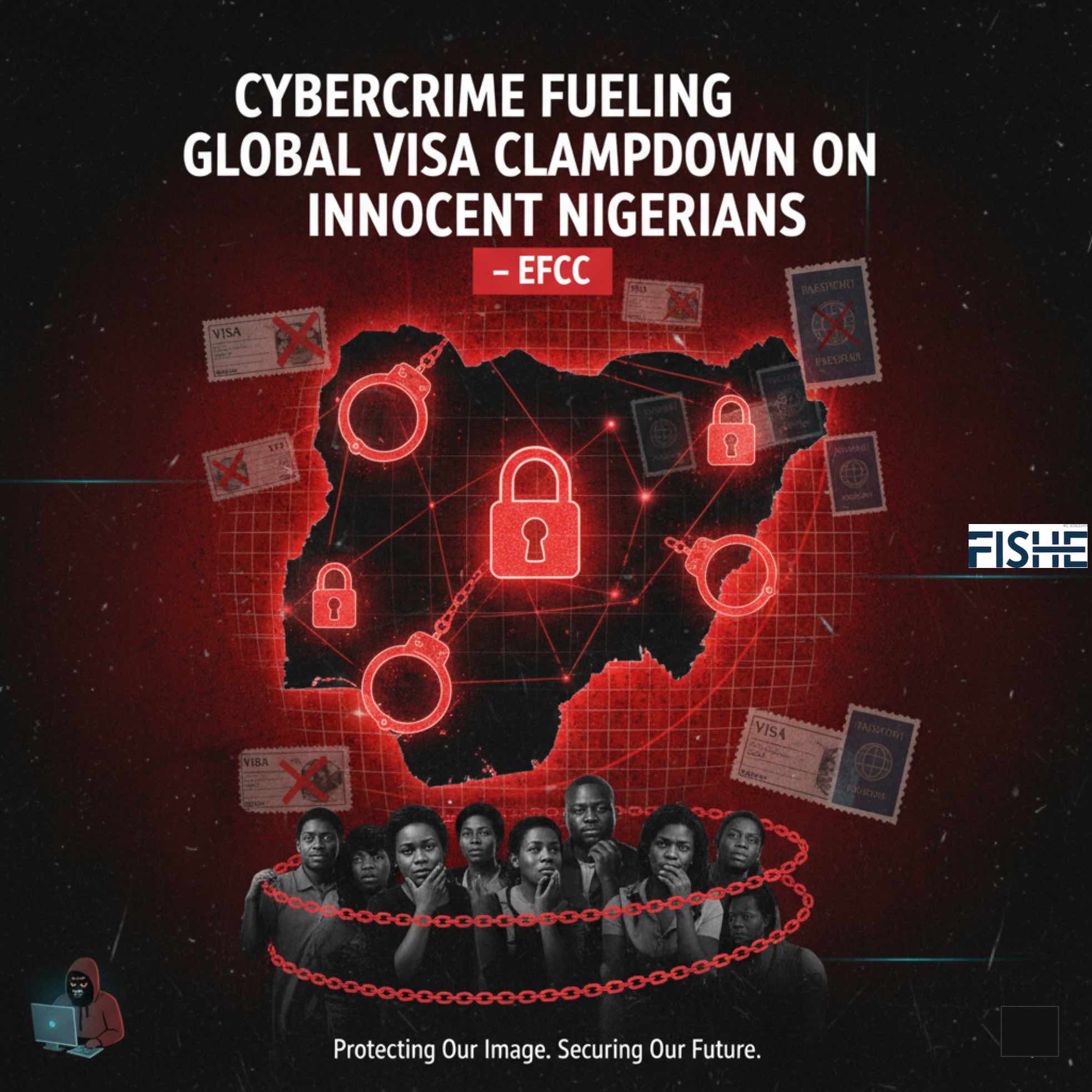
Online fraud, colloquially known in Nigeria as “Yahoo Yahoo”—has, over the years, grown from a fringe issue into a major national concern. The Economic and Financial Crimes Commission (EFCC), has now sounded the alarm about its cascading consequences, particularly in how the international community treats ordinary Nigerians applying for visas.
According to EFCC, the actions of fraudsters are degrading Nigeria’s global image and making visa access more difficult even for law‑abiding citizens.
What EFCC Is Saying
-
EFCC Chairman, Ola Olukoyede, speaking at an event in Port Harcourt organized by the Coalition of Nigerian Youth on Security and Safety Affairs, warned that internet fraud, money laundering, and economic sabotage are not just economic crimes but reputational.
-
He emphasized that these crimes cost Nigeria billions of naira annually, erode trust, weaken national growth, and deprive citizens of infrastructure, jobs, and opportunities.

-
A key part of Olukoyede’s message: innocent Nigerians who travel abroad are now facing stricter visa conditions—shorter visa durations, single‑entry visas, more rigorous scrutiny—because of Nigeria’s deteriorated international reputation caused by cyber fraud.
-
He urged youths (especially in the South‑South region) to avoid cybercrime and instead channel their talents into productive, legitimate sectors such as digital innovation, entrepreneurship, agriculture, and the creative industries.
Evidence of the Visa Restriction Changes
-
The United States recently revised its visa reciprocity schedule for Nigerian applicants: the validity of certain non‑immigrant visas (business/tourism, student, exchange visitor) has been reduced to three months, and in some cases the entry options have been limited to single entry.
-
These changes align with EFCC’s assertion that international bodies are reacting to growing cybercrime concerns by tightening travel requirements for Nigerians.
Broader Impacts
-
Reputation Damage: Olukoyede described the “Yahoo boys” phenomenon as a “national shame”, saying that the conduct of these fraudsters causes other Nigerians to be viewed with suspicion—green passport holders, for example, facing more scrutiny at borders.
-
Security Creep: According to the EFCC, many individuals who begin with internet fraud are now allegedly branching into more serious offenses such as money laundering, kidnapping, banditry, and ritual or violent crimes. These are no longer isolated fraud cases but part of broader criminal trends.
-
Economic and Social Costs: The losses from fraud and associated economic crimes reportedly hamper investment, reduce foreign trust, and limit the opportunities (like travel, business, education) for ordinary Nigerians.
Responses and Recommendations
-
EFCC is intensifying awareness/sensitization campaigns to discourage youths from engaging in fraud.
-
Enforcement is also being stepped up: more raids, arrests, prosecutions of internet fraudsters.
-
Olukoyede’s moral‑appeal urging citizens to shun “easy money” is tied to the idea that digital footprints never fade and that reputational harm is long lasting.
Challenges & Counterpoints
-
It is difficult to isolate exactly how much visa restrictions are due to fraud vs other factors (e.g. broader immigration policy, security concerns, bilateral relations).
-
Many Nigerians feel unfairly penalized for crimes committed by a minority. There is a concern about collective guilt and whether more precise actions could target fraud without penalizing the majority of law‑abiding Nigerians.
-
Some argue that socio‑economic conditions, unemployment, corruption, and lack of opportunity are root causes pushing some youth into crime; so addressing those might be as crucial as enforcement and awareness.
Concluding For A Pen-Drop
What emerges clearly from the EFCC’s statements is that the actions of a few can affect the many. Visa restrictions, which might once have been relatively relaxed for Nigerians in certain countries, are now tightening partly because of Nigeria’s rising profile as a source of internet fraud.
The challenge ahead is to restore trust: reduce cybercrime effectively, uphold the law, and rebuild international reputation, so that the travel opportunities of ordinary Nigerians are not compromised by the misdeeds of a few.
