


Historical and Cultural Background
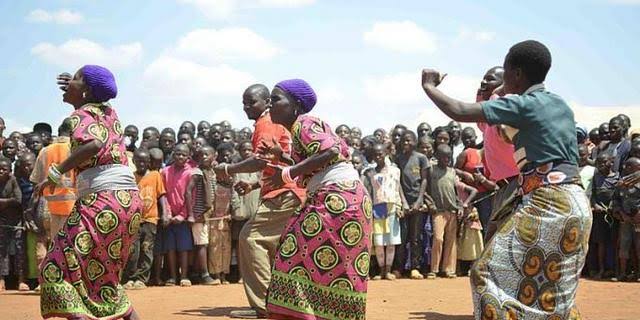
Vimbuza is a therapeutic dance tradition practiced by the Tumbuka people in northern Malawi, as well as parts of eastern Zambia. It is deeply rooted in the broader Ng’oma tradition, a system of healing found across many Bantu-speaking societies where music, rhythm, and spirit possession are central to diagnosis and treatment.
The origins of Vimbuza are commonly traced to the mid-19th century, during a period of profound disruption in Central and Southern Africa.
This era was marked by:
-
The expansion of long-distance trade networks
-
Slave raids and displacement

-
Inter-ethnic conflicts
-
Later, colonial intrusion by the British Empire

These conditions produced widespread psychological and social stress. Among the Tumbuka, illnesses categorised under “Vimbuza” were often understood not simply as individual pathology, but as manifestations of social and spiritual imbalance caused by trauma, grief, or injustice.
Colonial Suppression and Transformation
During colonial rule, especially under British administration in the late 19th and early 20th centuries, Vimbuza underwent significant transformation. Missionaries—particularly Protestant groups—viewed spirit possession and indigenous healing practices as incompatible with Christianity.
As a result:
-
Vimbuza ceremonies were actively discouraged or banned
-
Practitioners were sometimes labeled as “witch doctors”
-
Indigenous healing knowledge was marginalized in favor of Western medicine
Despite this, the practice survived underground and adapted over time. Its persistence reflects both cultural resilience and the community’s continued reliance on holistic approaches to health.
Understanding Mental Illness in Vimbuza
In the Vimbuza system, mental illness is not reduced to biological dysfunction alone. Instead, it is understood through a relational and spiritual framework:
-
Illness may be attributed to spirit possession (Vimbuza spirits)
-
These spirits are not always malevolent—they can represent unresolved tensions or ancestral messages
-
The afflicted person becomes a medium, expressing distress through movement, voice, and trance
This approach allows individuals—especially women, who historically faced social constraints—to externalise emotional suffering in a socially recognised and supported way.
Gender and Social Dimensions
In many Tumbuka communities:
-
Women are more frequently identified as sufferers of Vimbuza-related conditions
-
This is often linked to gendered stressors—marriage pressures, domestic roles, loss, and limited social power
-
The ritual provides a rare public space for expression and agency
Children may also participate, both as observers and as part of the communal support system.
The Healing Process
The healing journey typically unfolds in stages:
-
Diagnosis
A healer identifies the specific spirit or condition affecting the patient. -
Seclusion (Temphiri)
The patient may stay in a designated healing space, sometimes for weeks or months. -
Ritual Performance
The public ceremony involves:-
Drumming (central to inducing trance)
-
Call-and-response singing
-
Circular communal participation
-
Gradual escalation of rhythm and intensity
-
-
Trance and Expression
The patient enters a trance state and begins to “dance the illness,” expressing internal conflict through highly individualised movement. -
Resolution
Healing is achieved when the spirit is appeased, understood, or integrated.
Recognition and Modern Relevance
In 2008, Vimbuza was officially recognised by UNESCO as part of the Representative List of the Intangible Cultural Heritage of Humanity.
This acknowledgment highlights:
-
Its cultural importance
-
Its sophisticated understanding of mental health
-
Its role as both artistic expression and therapeutic system
A Different Model of Mental Health
What makes Vimbuza especially significant historically is that it represents an alternative model of mental healthcare:
-
It is communal rather than individualistic
-
It integrates body, mind, and spirit
-
It validates emotional suffering through performance and recognition, not suppression
In contrast to purely clinical frameworks, Vimbuza demonstrates how societies have long developed context-specific, culturally meaningful ways of addressing psychological distress.