


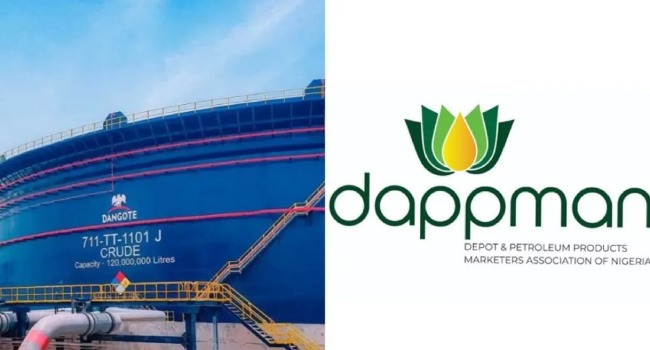
Nigeria’s downstream petroleum sector is witnessing a historic shift as oil marketers confirm that petrol importation has largely ceased, following the Dangote Petroleum Refinery’s ability to meet local demand for Premium Motor Spirit (PMS), commonly known as petrol.
The Independent Petroleum Marketers Association of Nigeria (IPMAN), says the availability of locally refined petrol has removed the need for imports, marking a significant turnaround for a country that depended heavily on foreign refined fuel for decades.
Abubakar Garima, IPMAN’s national president, is quoted to have said the Dangote refinery has been refining petroleum products consistently, including during peak demand periods such as the festive season, thereby preventing fuel scarcity nationwide.
“The fuel is available everywhere. So if the fuel is available everywhere, then what is the need of importing?” Garima asked.
Independent Marketers Dominate Retail Distribution
Garima noted that independent marketers control the bulk of Nigeria’s fuel retail market, placing IPMAN in a strong position to assess the true supply situation.

“We independent petroleum marketers already carry 85 percent of the retail outlets in the country.
So if you put Major Energies Marketers Association of Nigeria (MEMAN), and Depot and Petroleum Products Marketers Association of Nigeria (DAPPMAN), together, they have only 15 percent,” he said.
According to him, because IPMAN members own and operate the majority of filling stations across the country, they are best positioned to determine whether petrol importation is necessary.
“We are the owners of the filling stations,” Garima said.
“Sometimes some people will be very funny and say, let’s start importing. To import what? What are they going to import? That is the issue.”
Dangote Refinery Ends Import Dependence
Oil marketers say the Dangote refinery’s steady output has ensured nationwide availability of petrol, effectively eliminating the commercial and logistical justification for importing fuel. Most marketers now lift products directly from the refinery, strengthening domestic supply chains and reducing reliance on foreign sources.
This development represents a sharp departure from previous years when imported petrol accounted for the majority of Nigeria’s consumption, often straining foreign exchange reserves and exposing the economy to global supply shocks.
Call for Government Support and More Refineries
Garima urged the federal government to support the Dangote refinery in scaling up production, stressing that increased output would attract foreign investment and accelerate the establishment of additional refineries across the country.
He also called on the government to assist oil marketers in building more refineries, noting that such investments would help address Nigeria’s high unemployment rate through job creation.
“More refineries are coming. By next year, you will see a lot of refineries,” he said.
Beyond meeting domestic needs, Garima said Nigeria should begin positioning itself as a net exporter of refined petroleum products rather than an importer, especially as Dangote refinery already exports refined products.
IPMAN Backs Local Refining
IPMAN has consistently advocated for local refining. On December 19, the association formally declared its support for domestic crude refining, describing the continued importation of petrol as an unacceptable parallel business model.
With local capacity expanding and supply stabilising, marketers believe Nigeria is entering a new phase of energy self-sufficiency — one that could strengthen economic resilience, conserve foreign exchange, and reposition the country as a regional refining hub.
