


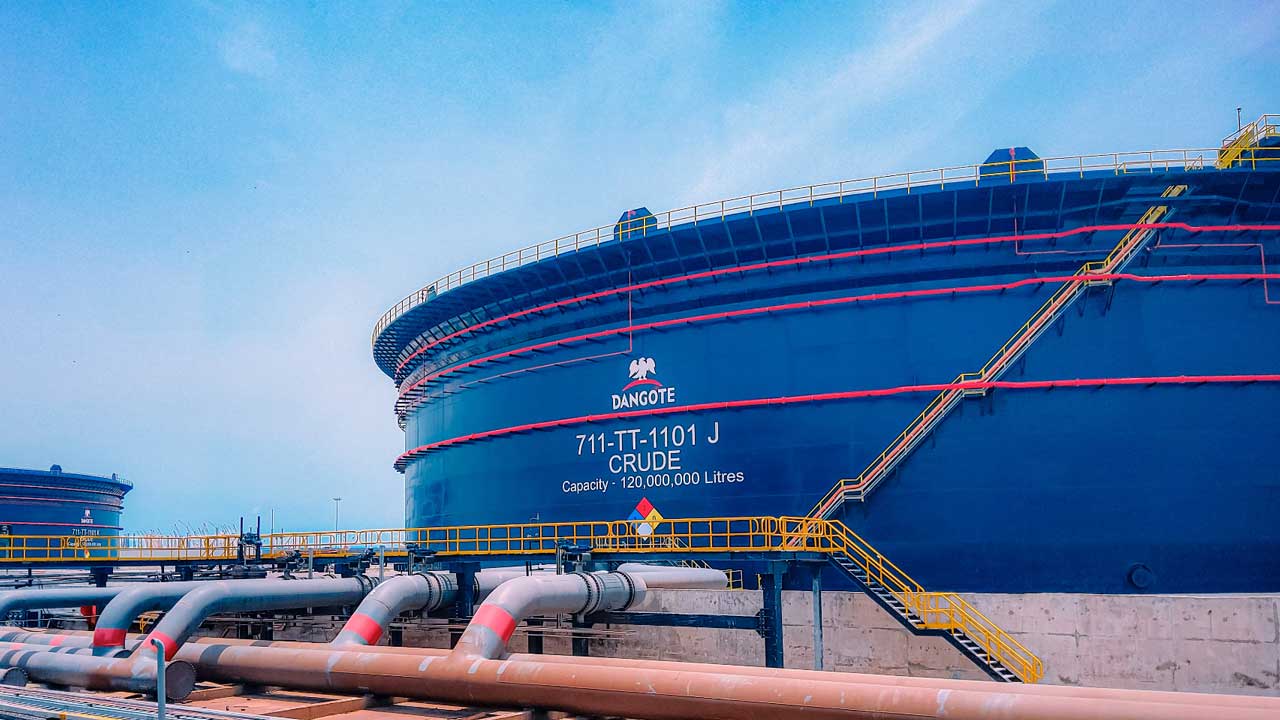
Aliko Dangote, President and Chief Executive of Dangote Petroleum Refinery, says Nigeria’s five-decade struggle with fuel queues has ended since his refinery began producing petrol one year ago.
Speaking at an event in Lagos to mark the refinery’s first anniversary, Dangote recalled that Nigerians had battled persistent fuel shortages since 1975. According to him, the situation changed after the 650,000 barrels-per-day facility started operations on September 3, 2024.
“We have been battling fuel queues since 1975, but today Nigerians are witnessing a new era,” he said.
The billionaire industrialist explained that the project carried huge risks, as many investors and officials warned that only governments could handle a refinery of such scale. “If it had gone wrong, lenders would have taken all our assets. But we believed in Nigeria and Africa,” he added.


Dangote noted that petrol prices dropped from nearly ₦1,100 before production began to about ₦841 in several states, with further reductions expected nationwide as 4,000 compressed natural gas (CNG) trucks are deployed. He said the trucks would also create at least 24,000 jobs for drivers, mechanics, and support staff.
Between June and early September 2025, the refinery exported more than 1.1 billion litres of petrol, proving its ability to meet local demand while generating foreign exchange.
He emphasised that the refinery was built to support Nigeria’s industrialisation, warning against the dumping of cheap imports. “Relying on imports means exporting jobs and importing poverty,” Dangote said, while calling for policies to protect local industries.
The refinery plans to increase capacity to 700,000 barrels per day in its second year of operation. Dangote also reiterated that the company has no plans to go into the retail business despite offers to acquire filling stations.
He expressed gratitude to the Federal Government, industry partners, and Nigerians for their support, adding that the project would help make the country Africa’s refining hub and a major exporter of petrochemicals and fertiliser.