


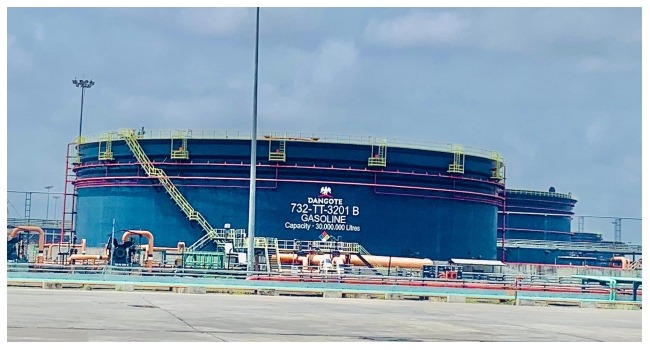
Major fuel consumers and filling stations are increasingly opting for Dangote’s free delivery service, bypassing intermediary suppliers.
This move has sparked criticism from Yusuf Othman, President of the National Association of Road Transport Owners, who expressed concerns that the free delivery service is undermining agreements between his members and their clients.
“We have our members who have signed agreements with so many companies. Some are even informal agreements, but we have formal agreements signed, and by that, we used those formal agreements to collect bank facilities to buy trucks and serve those companies,” Othman said. However, with Dangote’s direct supply, these agreements are now at risk. “But now, those agreements are at stake because a big brother is coming to supply directly to them, not minding the fact that they have signed agreements with us.”
The Dangote refinery has introduced a free fuel delivery service, utilizing 4,000 compressed natural gas-powered trucks to enhance distribution efficiency and reduce costs. This initiative aims to stabilize fuel prices and improve energy access nationwide. According to Abubakar Shettima, President of the Independent Petroleum Marketers Association of Nigeria, the free delivery service has already led to a decrease in pump prices in areas where Dangote has started direct delivery. “Prices have started coming down already. Wherever the refinery discharges, independent marketers reduce their pump prices accordingly.”


Othman argues that this practice is illegal, citing Section 212 of the Petroleum Industry Act. “That is one of the reasons why we are calling on the Federal Government, especially the NMDPRA, which has told all of us clearly that this act is an illegal act by virtue of Section 212 of the PIA,” he stated. The NMDPRA’s stance on the matter has further complicated the situation, with transport owners questioning the long-term implications of Dangote’s free delivery service.
As the situation unfolds, transport owners and marketers are closely watching the developments, aware that Dangote’s move could significantly alter the fuel distribution landscape in Nigeria.