


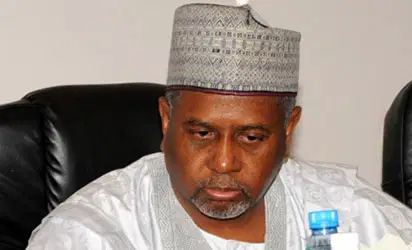
The trial of former National Security Adviser, Col. Sambo Dasuki, has taken a new turn as the Federal Government seeks to tender additional evidence against him.
Dasuki is facing a seven count charge bordering on money laundering and unlawful possession of firearms. The Federal Government alleged that Dasuki was found in possession of various firearms and large sums of money at his residences in Abuja and Sokoto.
During the hearing, prosecution counsel Oladipupo Okpeseyi, SAN, sought the court’s permission to tender further proof of evidence. He also requested that the court move its sitting to the Department of State Services headquarters to inspect a vehicle allegedly recovered from Dasuki’s home in 2015. Okpeseyi argued that the exhibits, earlier rejected, could now be admitted as proper foundation had been laid.
However, defence counsel A.A. Usman strongly opposed the application, insisting that the exhibits had already been marked rejected by the court and could not be re tendered. “The attempt to reintroduce the exhibits is baseless, ill conceived, and an abuse of court process,” Usman said. He argued that the prosecution’s only lawful option was to appeal the earlier ruling.


The second prosecution witness, DSS operative Musa Duniyor, testified that he participated in searches conducted at Dasuki’s Abuja residences in July 2015. During the search, bank statements, flash drives, vehicles, and other items were recovered. Duniyor’s testimony provided insight into the investigation process and the evidence gathered.
After listening to both sides, trial judge Justice Peter Lifu adjourned till October 14 for ruling. Dasuki has pleaded not guilty to the charges and is also facing two separate money laundering cases before the High Court of the Federal Capital Territory.
The case has sparked interest in the country’s justice system, with many following the developments closely. As the trial continues, the court will determine the admissibility of the additional evidence and the implications for Dasuki’s case.