


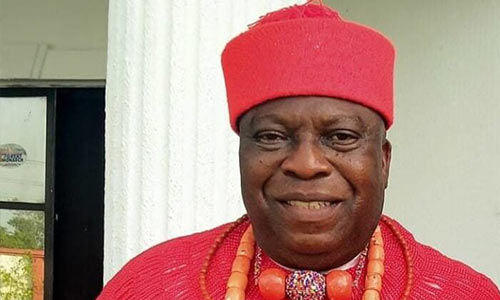
The Vice President of the Nigerian Body of Benchers and Senior Advocate of Nigeria (SAN), Albert Akpomudje, has been proclaimed the 14th Ohworode of the ancient Olomu Kingdom in Delta State — a development many have hailed as a remarkable fusion of tradition, law, and modern leadership.
Akpomudje, who previously held the esteemed position of Otota (Traditional Prime Minister) of the kingdom, will be formally crowned on Saturday, November 15, 2025, at Otorere (Agbon) Olomu in the Ughelli South Local Government Area of Delta State.
This development has sparked interest among the people, traditional institutions and the wider public about how modern credentials and ancient royal customs now intersect.
The Context of Traditional Kingship in Delta
Delta State is home to a rich tapestry of traditional kingdoms and royal stools, each with its own lineage, customs and processes. Among these: the Olomu Kingdom, for example, is one of the oldest among the Urhobo ethnic nationality, with its stool rotated among three ruling houses.

Traditional rulers in the state often carry significant socio-cultural influence, and in many cases serve as custodians of customs, heads of social development in their domains, and intermediaries between government and the grassroots. For instance, one monarch urged his subjects to “serve Nigeria selflessly” and stressed transparency in community-development projects.
A SAN in the Throne Room: Significance and Implications
The prospect of installing a SAN as monarch is noteworthy for several reasons:
-
Modern Credentials Meeting Traditional Legitimacy: SANs are senior legal practitioners recognised for excellence in our legal profession clime. Their training, experience and standing confer a distinct modern legitimacy. To ascend a traditional throne means bridging legal professionalism with deep cultural authority.
-
Expectations of Leadership Style: With legal training, one might expect this new monarch (once crowned), to emphasise rule-of-law, dispute resolution, administrative transparency and formal institutional links. This could herald a more structured leadership within the kingdom.
-
Precedent-Setting: Although traditional rulers may today hold formal education and professional backgrounds, crowning a SAN could raise the bar for qualifications, responsibilities and public expectations for the role.
-
Challenges of Dual Roles: The monarch must navigate dual identities — as traditional ruler and as a person with significant professional credentials. Managing time, expectations, potential conflicts of interest or perceived preferential treatment could pose real demands.
Key Steps & Potential Hurdles
Here are some of the likely procedural and cultural steps, and the challenges that may accompany them:
Steps
-
Selection by Ruling Houses/Kingmakers: Traditional systems often require king-making by kingmakers drawn from ruling houses, elders and chiefs. Whether the SAN candidate comes from the recognised ruling house will be crucial.
-
Government and Statutory Recognition: In South-South Delta State, as in other Nigerian states, traditional rulers are often gazetted and issued a “Staff of Office” by the state government, thereby obtaining formal recognition. Failure in this step can engender disputes.
-
Coronation/Installation Rites: Rituals including presentation of symbols of office, performing of ancestral rites, obeisance of subjects, and other ceremonies.
-
Commencement of Reign: Once installed, the monarch begins functioning formally, with roles in conflict resolution, community leadership, liaison with government, etc.
Hurdles
-
Lineage/Ruling House Conflicts: If the candidate does not belong to the correct ruling house or if the traditional process is perceived to have been bypassed, the legitimacy of the monarch may be challenged.
-
Government Interference or Perception Thereof: The balance between community traditions and state approval is delicate. Some communities reject government-imposed monarchs when they feel their customs were bypassed.
-
Public Expectations and Scrutiny: With the candidate being a SAN, the subject-population may expect high ethical standards, modern governance of palace affairs, development orientation and reforms.
-
Balancing Professional and Royal Roles: If the SAN retains professional practice or other commitments, there may be concerns about time, focus or conflict with traditional duties.
Potential Impact on the Kingdom and Region
-
Development Boost: A monarch with legal training and a broad network may mobilise resources, partnerships, and advocacy for the kingdom’s infrastructure, education, dispute-management systems and social welfare.
-
Strengthened Social Order: Through trained leadership, issues such as land disputes, youth unemployment, customary law reform or local governance could be handled more effectively.
-
Symbolic Message: It sends a message that tradition can evolve, that modern education and professional achievement can sit alongside ancient authority — potentially inspiring younger generations in the kingdom to value both heritage and schooling.
-
Increased Political Relevance: The kingdom may gain a louder voice in the state traditional-rulers council, state government interactions, and regional development forums, given the elevated profile of the new monarch.
Conclusion
The forthcoming crowning of a SAN as monarch in a Delta kingdom marks a compelling juncture where tradition meets modernity. It underscores a belief that the leadership of ancient institutions must adapt, evolve and integrate new forms of expertise to remain relevant in our 21st-century context.
However, much will depend on how the process is handled — from selection to installation — how well the new monarch fulfils his expanded role, and how the community supports and holds him accountable. If managed well, this could be a model of progressive traditional leadership; if not, it may become another case study in kingship disputes and unmet expectations.
