


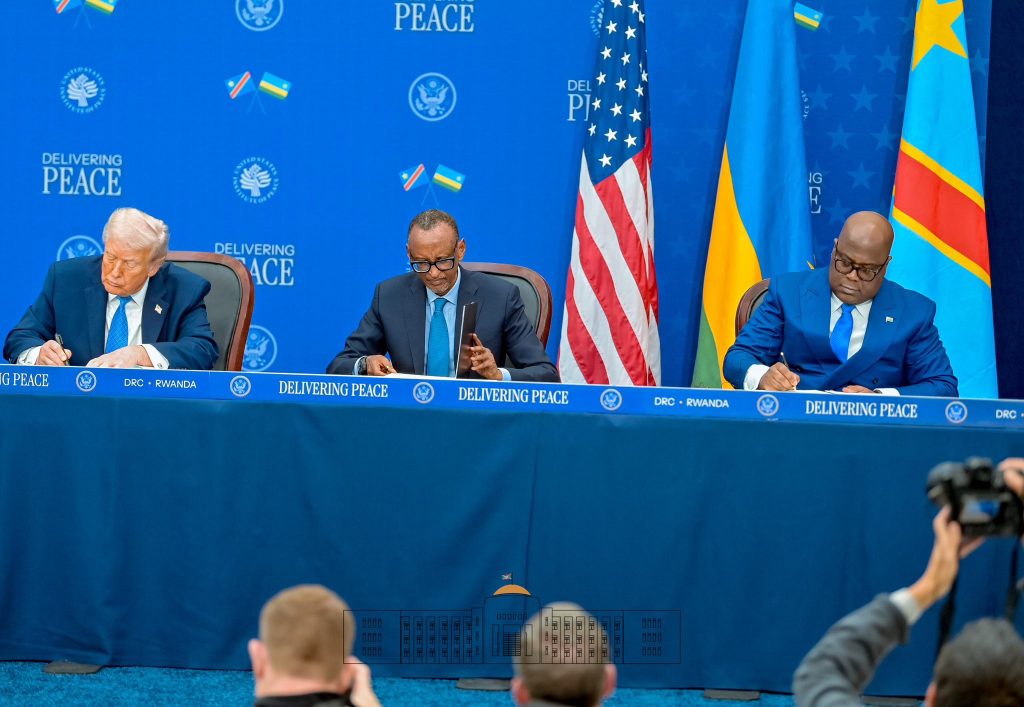
On April 23, 2026, representatives from the Democratic Republic of the Congo (DRC), and the Rwanda convened in Washington, DC for the fifth session of the Joint Oversight Committee (JOC). This meeting forms part of the institutional framework established to monitor and guide the implementation of the Peace Agreement signed on June 27, 2025.
The Committee meeting brought together key international stakeholders, including the United States of America, the Qatar, the Togo acting as the African Union mediator, and the African Union Commission. The meeting aimed to assess progress, address challenges, and reinforce commitments toward peace and stability in the eastern DRC and the wider Great Lakes region.
Background of the Peace Agreement
The Peace Agreement of June 27, 2025, was signed in Washington, DC, amid longstanding tensions and intermittent conflict between the DRC and Rwanda, particularly related to insecurity in eastern Congo.
The agreement seeks to:
- De-escalate military tensions between both nations
- Address the presence of armed groups in eastern DRC
- Promote regional stability and cooperation
- Establish monitoring mechanisms such as the Joint Oversight Committee
The JOC serves as a platform for periodic review and accountability, ensuring that both parties adhere to agreed commitments.


Review of Progress Since March 2026
During the April 2026 meeting, the Committee evaluated developments following the March 17–18, 2026 sessions.
Both the DRC and Rwanda presented updates on their respective efforts to:
- Reduce hostilities and prevent escalation
- Implement confidence-building measures
- Improve security conditions on the ground
The Committee acknowledged progress made by both parties, though it emphasized the importance of sustained efforts to consolidate gains and avoid regression.
Role of International and Regional Partners
Mediation and Facilitation
The role of international and regional actors was central to the discussions:
- Qatar provided updates on ongoing negotiations involving the DRC and the armed group AFC/M23.
- Togo continued its role as mediator under the African Union framework.
- The African Union Commission maintained oversight and coordination support.
Doha Negotiation Process
The Committee highlighted the importance of the Doha process, facilitated by Qatar, in addressing conflict dynamics involving non-state armed actors.
The Committee:
- Expressed strong support for ongoing negotiations
- Recognised Switzerland for hosting recent rounds of talks
- Emphasized that success in these negotiations is critical to the broader peace process
Commitment to Continued Engagement
All participating parties reaffirmed their commitment to maintaining momentum in the peace process.
Key elements of this commitment include:
- Continued dialogue and diplomatic engagement
- Strengthening implementation mechanisms
- Sustained cooperation with international partners
The governments of the DRC and Rwanda expressed gratitude toward supporting partners, including the United States, Qatar, the African Union Commission, and Togo, for their consistent efforts in promoting peace.
Significance for the Great Lakes Region
The outcomes of the fifth Joint Oversight Committee meeting have broader implications for the Great Lakes region of Africa.
Continued progress in the DRC-Rwanda peace process is expected to:
- Enhance regional security
- Reduce cross-border tensions
- Promote economic stability and cooperation
- Support long-term peacebuilding initiatives
Conclusion
The fifth meeting of the Joint Oversight Committee represents a significant step in the ongoing implementation of the 2025 Peace Agreement between the Democratic Republic of the Congo and Rwanda. While progress has been made, sustained commitment, effective mediation, and successful negotiations with armed groups remain essential to achieving lasting peace.
The continued involvement of international and regional partners underscores the complexity of the conflict and the shared responsibility in resolving it. The Committee’s work remains crucial in ensuring accountability, fostering trust, and guiding the peace process toward durable stability.