

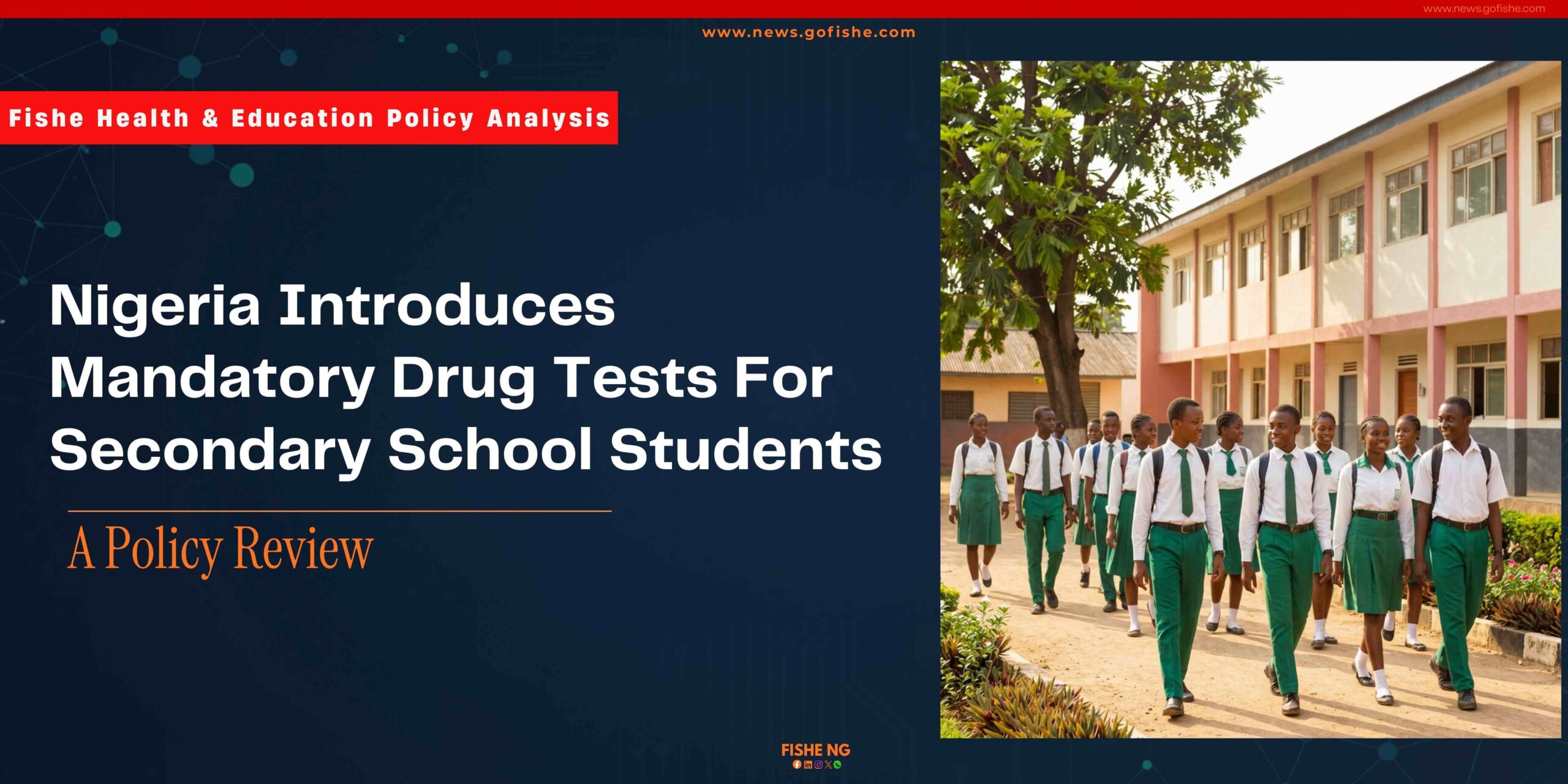
The Federal Government (FG), of Nigeria has rolled out a sweeping national policy that requires drug and substance abuse testing for secondary school students. This initiative is part of a larger effort to tackle the growing issue of substance abuse among the youth.
It falls under the National Implementation Guidelines Against Drug and Substance Use in Schools and stands out as one of the most extensive anti-drug measures ever introduced in the education system.
Led by the Federal Ministry of Education in partnership with the National Drug Law Enforcement Agency (NDLEA), this initiative aims to foster safer and healthier learning environments by identifying, preventing, and managing substance abuse among students. The policy includes mandatory drug testing for new students, as well as periodic and random testing for all students. Additionally, it offers counseling and rehabilitation programs, and students who repeatedly test positive after several interventions may face temporary suspension.
This policy has sparked a nationwide conversation, garnering support from education stakeholders and anti-drug advocates, while also raising concerns about its implementation, students’ rights, privacy issues, potential stigmatisation, and whether schools and healthcare institutions are adequately prepared to handle these changes.


The issue of drug and substance abuse among youths has escalated into a significant public health and social challenge. Over the last ten years, we’ve seen a surge in reports from the NDLEA, schools, healthcare providers, and civil society groups, all pointing to a troubling trend of narcotics and controlled substances being widely used by adolescents.
Some of the most commonly abused substances include:
– Cannabis
– Tramadol
– Codeine syrup
– Methamphetamine
– Alcohol-based mixtures
– “Monkey tail”
– “Skuchies”
– Other locally mixed psychoactive substances.
The Federal Government recognises this trend as a serious threat to various aspects of society, including:
– Academic performance
– Mental health
– School discipline
– National security
– Youth productivity
– Social stability.
In response to this alarming situation, the Federal Ministry of Education has put together guidelines aimed at establishing drug prevention and intervention programs in schools across the country. The policy has gained significant national attention, especially after statements from the Minister of Education, Dr. Tunji Alausa and NDLEA Chairman, Brigadier General Mohamed Buba Marwa (retd.), who labeled drug abuse among youths as a national emergency that demands immediate preventive measures.
Objectives of the Policy
The National Implementation Guidelines Against Drug and Substance Use in Schools in Nigeria outline several key goals for the policy, which include:
– Fostering a supportive environment for teaching and learning,
– Mitigating the adverse effects of substance abuse on students’ mental well-being,
– Enhancing academic success,
– Preventing violence and misconduct associated with drug use,
– Promoting early detection and intervention,
– Ensuring safer school settings.
The guidelines emphasize that these measures are aimed at:
“Creating a supportive environment for teaching and learning in educational institutions by minimising the negative impact that substance abuse has on the mental health and academic performance of students/learners.”
Key Provisions of the Policy
1. Mandatory Drug Testing for Newly Admitted Students
A significant aspect of the policy is the requirement for all newly admitted students entering secondary schools to undergo mandatory drug integrity testing.
The testing process is expected to be carried out:
– In partnership with authorised federal or state health facilities,
– Utilizing recognised medical procedures,
– Under the oversight of designated authorities.
This provision aims to identify students who may already be engaged in substance abuse before they fully join the school community.
2. Periodic and Random Drug Testing
In addition to initial screenings, schools are mandated to perform:
– Periodic drug tests,
– Random or surprise screenings,
– At least one drug test during each academic session.
The document further clarifies that:
“All students/learners shall undergo periodic drug tests as recommended by appropriate authorities.”
The goal here is to deter drug use on school grounds and to maintain ongoing monitoring of students.
3. Prohibition of Drug Possession and Use
This policy is clear: students are not allowed to:
- Use narcotic drugs,
- Possess controlled substances,
- Carry any substances of abuse without proper approval.
As stated in the guidelines:
“All students/learners are prohibited from using or being in possession of narcotic drugs, controlled drugs, or substances of abuse without approval from the school authority.”
That said, students who need medically prescribed controlled medications must inform their parents or guardians during the admission process.
Three-Stage Intervention Framework
A key feature of this policy is its well-structured three-stage intervention model for students who test positive for drug use.
The guidelines emphasize that the goal is:
“To identify students who may need help and to promote a safe and healthy school environment.”
Stage One: Counseling and Initial Treatment
If a student tests positive for the first time, they won’t face immediate punishment. Instead, they will receive:
- Counseling,
- Initial treatment,
- Behavioural intervention programs.
The guidelines specify:
“Persons found to be positive to drugs shall undergo the initial intervention and treatment, which shall include counseling as might be found appropriate by the school authority.”
This approach shows the government’s intention to present the policy as more rehabilitative than strictly disciplinary.
Stage Two: Professional Referral
If students test positive again after the initial intervention, they will be directed to specialists for professional treatment and closer monitoring.
The document states:
“If a student tests positive again, the school authority will refer them to a professional for the necessary treatment and attention.”
This could include:
– Psychologists
– Addiction specialists
– Mental health professionals
– Rehabilitation centers
Stage Three: Temporary Suspension and Rehabilitation
Should a student continue to test positive after multiple interventions, the policy allows for a temporary separation from the school environment. The guideline specifies:
“If a student is found to be positive again, they will be temporarily suspended from school to receive treatment from a professional and undergo rehabilitation deemed appropriate by that professional.”
This suspension aims to facilitate intensive rehabilitation while safeguarding the wider school community.
Mandatory Counseling Procedures
The policy mandates:
– Pre-test counseling
– Post-test counseling
Pre-Test Counseling
The purpose of pre-test counseling is to:
– Prepare students mentally
– Clarify the testing process
– Alleviate anxiety
– Foster trust
– Encourage cooperation
The guideline describes it as:
“The guidance provided before someone undergoes a drug integrity test.”
Post-Test Counseling
Post-test counseling takes place after the results are released, regardless of whether they are positive or negative. The goal is to:
– Help students comprehend and accept their results
– Offer emotional support
– Connect affected students to treatment and support services
The guideline clarifies:
“The aim is to assist the individual in accepting the result and linking them to the appropriate help.”
School Disciplinary Structures
To make sure everything runs smoothly, every school needs to set up a disciplinary committee led by the school administrator. This committee will:
– Keep an eye on compliance,
– Coordinate interventions,
– Oversee counseling procedures,
– Work with health professionals and authorities.
The policy also requires schools to report any violent incidents related to substance abuse to law enforcement. Some examples of these incidents include:
– Fighting,
– Physical assault,
– Causing injuries,
– Violent behavior linked to drug use.
Role of Key Stakeholders
1. Federal Ministry of Education
The Ministry is in charge of:
– Creating policies,
– Coordinating efforts,
– Monitoring how things are implemented,
– Reforming the curriculum,
– Raising awareness nationwide.
They also aim to enhance drug education within the school curriculum.
2. National Drug Law Enforcement Agency (NDLEA)
The NDLEA has a crucial role in:
– Running drug awareness campaigns,
– Providing technical support,
– Implementing prevention programs,
– Advocating for change,
– Collaborating on policy enforcement.
NDLEA Chairman, Brigadier General Mohamed Buba Marwa (retd.), has been a strong proponent of mandatory drug integrity testing as a preventive measure.
He believes that early detection is key to:
– Reducing addiction,
– Preventing criminal behavior,
– Saving lives,
– Safeguarding educational institutions.
3. Schools and Administrators
School authorities are expected to:
– Organise testing procedures,
– Set up disciplinary committees,
– Coordinate counseling,
– Keep everything confidential,
– Refer students for treatment when needed.
4. Health Facilities and Professionals
Approved federal and state health facilities will:
– Conduct testing,
– Provide treatment,
– Handle rehabilitation,
– Offer psychological support services.

5. Parents and Guardians
Parents are expected to:
– Share their children’s medical conditions and medications,
– Work together with schools during interventions,
– Support rehabilitation efforts,
– Keep an eye on their children’s behavior outside of school.
Reasons Behind the Policy
The Federal Government rolled out these measures in response to growing worries about:
– Increasing drug abuse among teenagers,
– A rise in cult activities and violence in schools,
– A drop in academic performance,
– Deteriorating mental health,
– Criminal activities tied to substance abuse.
Experts have cautioned that substance abuse plays a major role in:
– School dropout rates,
– Depression and anxiety,
– Youth violence,
– Sexual abuse,
– Gang activities,
– Long-term addiction.
Potential Benefits of the Policy
1. Early Detection of Drug Abuse
This policy helps schools spot students who need assistance before their addiction escalates.
2. Safer Learning Environments
Drug testing could lead to a decrease in:
– Violence,
– Bullying,
– Cult-related activities,
– Drug distribution within schools.
3. Improved Academic Performance
Students who are free from substance abuse are more likely to:
– Attend classes regularly,
– Focus better,
– Achieve higher academic results.
4. Increased Awareness
Mandatory counseling and anti-drug education can enhance students’ understanding of:
– The risks of drugs,
– The mental health impacts,
– The dangers of long-term addiction.
5. Rehabilitation-Oriented Approach
This three-stage intervention framework focuses on:
– Counseling,
– Treatment,
– Rehabilitation,
instead of jumping straight to punishment.
Criticisms and Concerns
Even with its good intentions, the policy has faced a lot of backlash.
1. Privacy and Human Rights Concerns
Many critics believe that mandatory testing could infringe on:
– Students’ privacy,
– Their bodily autonomy,
– Confidentiality rights.
There are also serious questions about:
– Consent procedures,
– How medical information is handled,
– The protection of minors.
2. Risk of Stigmatisation
Students who test positive might endure:
– Bullying,
– Emotional trauma,
– Discrimination,
– Social isolation.
3. Implementation Challenges
A lot of public schools are lacking:
– Medical facilities,
– Qualified counselors,
– Sufficient funding,
– Testing infrastructure.
There are worries about whether rural schools can actually put this policy into practice.
4. Financial Burden
Nationwide testing and rehabilitation programs could demand a hefty financial investment. Costs could include:
– Laboratory equipment,
– Training for personnel,
– Counseling services,
– Monitoring systems,
– Rehabilitation support.
5. Possibility of Abuse and Corruption
There are concerns about potential:
– Manipulation of results,
– Extortion of parents,
– Selective enforcement,
– Abuse of disciplinary powers.
Public Reactions
The public’s response has been mixed. Supporters argue that:
– Drug abuse among students is at an alarming rate,
– Strong preventive measures are essential,
– Schools need to be safe havens,
– Early intervention can save lives.
On the flip side, critics contend that:
– The policy might criminalize vulnerable youth,
– The socioeconomic roots of drug abuse are being overlooked,
– Mental healthcare systems are still weak,
– Schools aren’t ready for this.
Civil society organisations and human rights advocates are calling for safeguards to ensure:
– Confidentiality,
– Fair treatment,
– Professional counseling,
– Protection against discrimination.
When we look at drug testing in schools from an international perspective, we see that several countries have adopted this practice, including:
– The United States
– China
– Singapore
– Various European nations
Global research presents a mixed bag of results:
– Simply testing students doesn’t fully stop substance abuse,
– Prevention and education often yield better results,
– Counseling and family support play vital roles.
Experts typically suggest a well-rounded approach that includes:
– Prevention
– Rehabilitation
– Education
– Community support
– Mental health services
Here are some recommendations to ensure these strategies are effectively put into action:
1. Enhance Counseling Services
Schools should hire qualified counselors and psychologists to support students.
2. Safeguard Students’ Rights
It’s essential to have clear legal protections in place that cover:
– Consent
– Confidentiality
– Data protection
– Non-discrimination
3. Upgrade School Healthcare Infrastructure
The government should invest in:
– School clinics
– Testing facilities
– Mental health programs
– Rehabilitation partnerships
4. Boost Public Awareness Campaigns
Nationwide awareness initiatives should engage:
– Parents
– Religious leaders
– Community organizations
– Youth groups
5. Tackle the Root Causes of Drug Abuse
Long-term solutions need to focus on:
– Poverty
– Unemployment
– Peer pressure
– Mental health issues
– Social instability
The Federal Government’s new mandatory drug testing policy for secondary school students represents a major change in Nigeria’s strategy to tackle youth substance abuse. Implementing the compulsory testing, along with counseling, treatment, rehabilitation, and disciplinary actions, the government hopes to curb drug use and foster safer educational environments across the country.
This policy comes in response to the increasing national concern about how drugs affect students’ mental health, academic success, discipline, and overall safety. While the initiative provides a chance for early detection and rehabilitation, its effectiveness will largely hinge on thoughtful execution, sufficient funding, trained staff, respect for students’ rights, and access to quality counseling and rehabilitation services.
In the end, experts believe that effectively addressing drug abuse among the youth will require more than just testing and discipline; it will also need ongoing investments in education, healthcare, mental health support, family involvement, and socioeconomic development.